
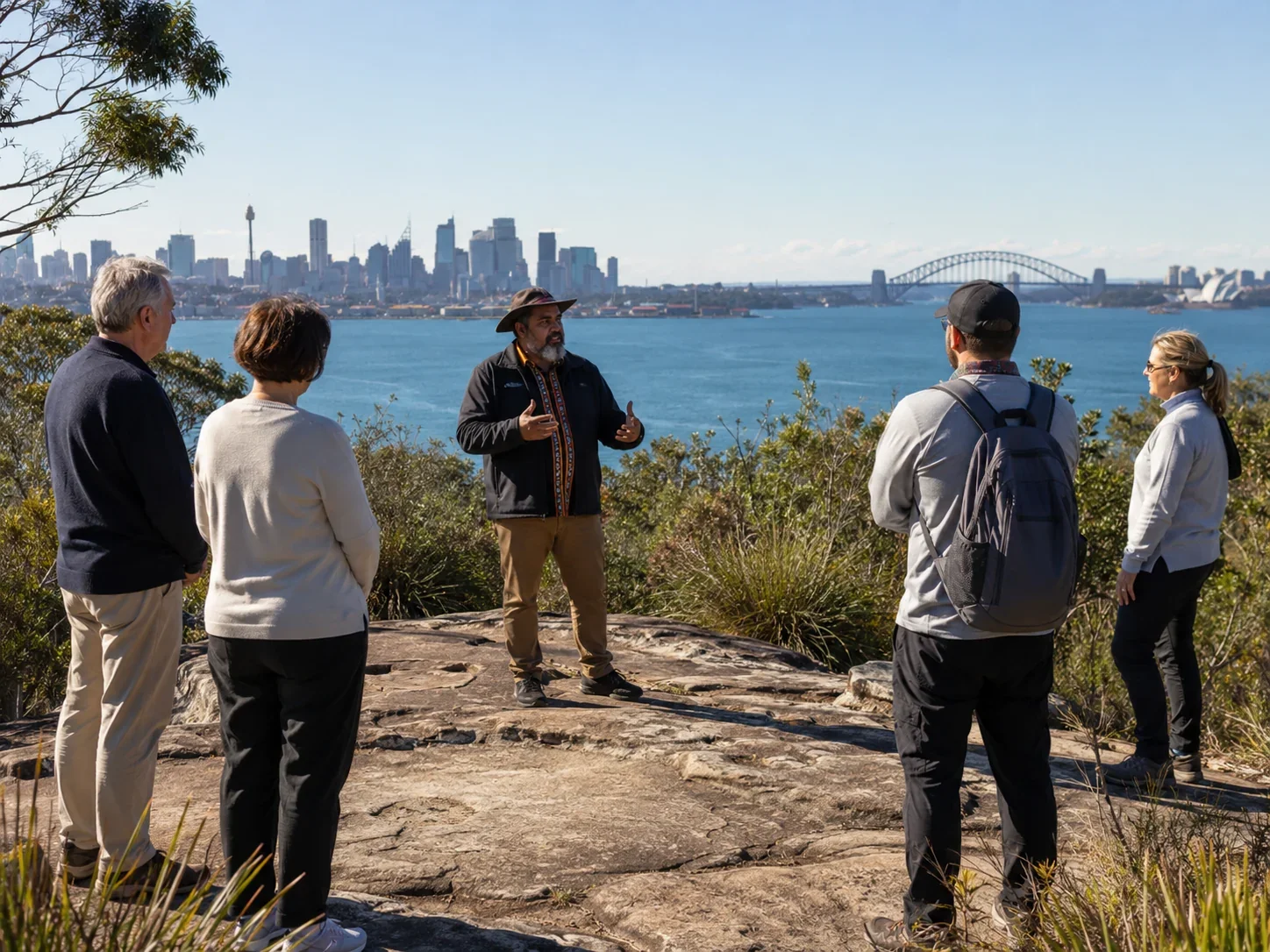
Sydney’s Aboriginal history begins long before the city skyline, harbour ferries and the arrival of the First Fleet. The Gadigal people and other Aboriginal peoples connected with the Sydney region have lived with harbour, coast, rivers, sandstone, plants and animals for thousands of years.
This history did not end in 1788. It continues today through Country, culture, community, memory, language, family, activism, teaching and connection to place.
This beginner’s guide introduces the Aboriginal history of Sydney in a respectful and accessible way. It explains who the Gadigal people are, what changed after 1788, why places such as Warrane, Kamay, La Perouse, Redfern and Ku-ring-gai matter, and how visitors can learn about Country with greater care.
Who Are the Original People of Sydney?
The original Aboriginal inhabitants of the City of Sydney local area are the Gadigal people. Gadigal Country includes the southern side of Port Jackson, now known as Sydney Harbour.
The wider Sydney region is home to many Aboriginal peoples, clans, families and language connections. Sydney’s Aboriginal history includes many groups and place-based connections, with the clans of the Sydney region often discussed through names such as Darug, Dharawal, Darginung, Gundungurra, Gadigal, Bidjigal and Wangal.
Early records, cultural heritage resources and community knowledge help piece together Aboriginal lives, families and continuing presence in Sydney after contact. But Sydney’s Aboriginal history should never be treated as one simple story. It is connected to many places, many communities and many relationships with Country.
When learning about Aboriginal history in Sydney, it helps to understand a few key ideas.
Gadigal
Gadigal refers to Aboriginal people connected with the southern side of Sydney Harbour. Gadigal Country includes areas around what is now central Sydney, as well as places connected with the harbour, waterways and surrounding landscape.
Country
Country is more than land. It includes people, ancestors, waters, plants, animals, memory, care, responsibility and connection. When Aboriginal people speak about Country, they are speaking about a living relationship.
Connection
Connection refers to the deep relationship between Aboriginal people and place. It includes family, knowledge, memory, responsibility, cultural practice and care for Country.
These ideas matter because Sydney’s Aboriginal history is not only about dates and events. It is about people, place and continuing connection.
Aboriginal Sydney Before 1788
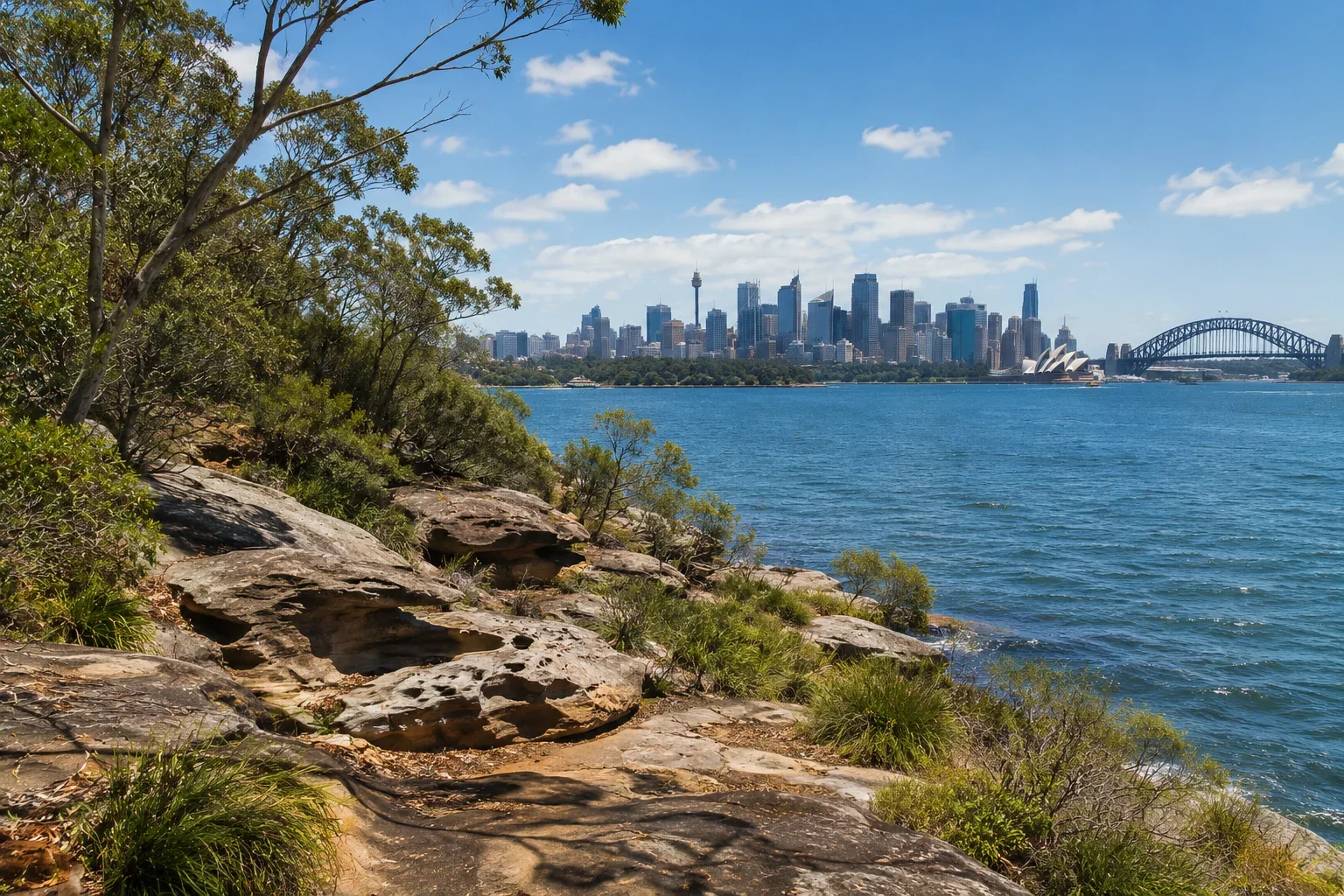
Before colonisation, Aboriginal people lived throughout the Sydney region in deep relationship with Country. Around the coast, harbour and estuaries, people fished, gathered shellfish, harvested plants, hunted and moved with seasonal changes.
The harbour, bays and coast were rich food sources. Fish and fishing were central to daily life for many coastal Sydney communities. Men and women both fished, often using different tools and methods. Men used fishing spears from rock platforms and canoes, while women used hook and line from canoes. Shellfish, crustaceans, marine animals, birds and plant foods also formed part of a varied diet.
Archaeological evidence, including rock engravings, shell middens, shelters and food remains, helps show the long presence of Aboriginal people of coastal Sydney. Rock engravings, shell middens, shelters, tools and food remains hold traces of Aboriginal life across the region.
These places are not just old sites. They are cultural places connected to living history, memory and ongoing care.
This is why Aboriginal sites should always be treated with respect. They are evidence of deep occupation, but they are also part of continuing Aboriginal cultural heritage.
A Timeline of Aboriginal Sydney
This timeline is a simple beginner’s guide. It cannot capture every family history, place, community or lived experience, but it gives a clear overview of key moments.
| Period | What happened |
|---|---|
| Deep time | Aboriginal peoples lived across the Sydney region for thousands of years, caring for Country, fishing, hunting, gathering, trading, teaching and maintaining cultural life. |
| Before 1788 | The Gadigal people and other Aboriginal communities lived around Sydney Harbour, Botany Bay, Broken Bay and inland areas. Country supported food, water, shelter, connection and cultural life. |
| January 1788 | The First Fleet arrived and British colonisation began at Sydney Cove, known as Warrane. |
| 1789 | A smallpox epidemic devastated Aboriginal communities around Sydney. Many people died, though Aboriginal people and culture survived. |
| 1790s to early 1800s | Aboriginal resistance continued across the Sydney region. Pemulwuy, a Bidjigal man, became one of the most recognised resistance leaders. |
| 1800s | Dispossession, disease, violence and settlement changed Aboriginal life across Sydney, but Aboriginal people continued to live, adapt and maintain connection. |
| 20th century | Redfern became a powerful centre for Aboriginal community, political organising, civil rights, land rights, education, health and cultural expression. |
| Today | Aboriginal Sydney is living, continuing and present. Culture, community, memory, language, art, activism and care for Country remain central. |
The key point is survival. Aboriginal history in Sydney is not a closed chapter. It is a continuing story of Country, culture, resistance, strength and connection.
What Happened in 1788?
In January 1788, the First Fleet arrived in Sydney and British colonisation began. For Aboriginal people, this was not the discovery of an empty land. Sydney was already Country. It was already named, lived in, cared for and connected to Aboriginal people.
The arrival of the British brought immediate and long-lasting change. Land was taken. Freshwater sources were occupied. Trees were cleared. Campsites, fishing places and movement routes were disrupted.
Aboriginal people around the harbour met the newcomers in different ways. Some encounters were cautious or generous. Others were tense or violent. These early interactions took place during a period of enormous disruption.
By 26 January 1788, the British had moved from Botany Bay to Sydney Cove and established the settlement that would become Sydney. For many Aboriginal and Torres Strait Islander people today, 26 January is marked as Invasion Day or Survival Day because it represents the beginning of colonisation and its ongoing impacts.
This history should be told plainly. It should not be softened. But it should also not be told as if Aboriginal people disappeared. The Gadigal people and other Aboriginal peoples of Sydney survived.
The 1789 Smallpox Epidemic
In 1789, a devastating smallpox epidemic spread through Aboriginal communities around Sydney. Historical accounts describe severe loss of life around the harbour and nearby areas.
The source of the epidemic is still debated by historians. For a beginner’s guide, the safest and most respectful approach is to say that smallpox devastated Aboriginal communities after the arrival of the First Fleet, while avoiding unsupported claims about exactly how it began.
The effect was catastrophic. Families, communities and knowledge systems were deeply affected. Aboriginal people who had already faced the shock of colonisation now faced disease on a scale they had not encountered before.
But this part of Sydney’s history must always be paired with survival. Aboriginal communities were not erased. People survived, adapted, resisted, maintained relationships and continued cultural life under extreme pressure.
Life Around Sydney Harbour
Sydney Harbour was not just a scenic place. It was, and remains, part of a living cultural landscape.
Before and after 1788, Aboriginal people used harbour Country for fishing, gathering, travel, teaching, connection and daily life. Bays, coves, beaches, rock platforms and estuaries all mattered. The water held food. The sandstone held engravings and shelters. Plants provided fibre, medicine, tools and food. Seasonal changes shaped movement and activity.
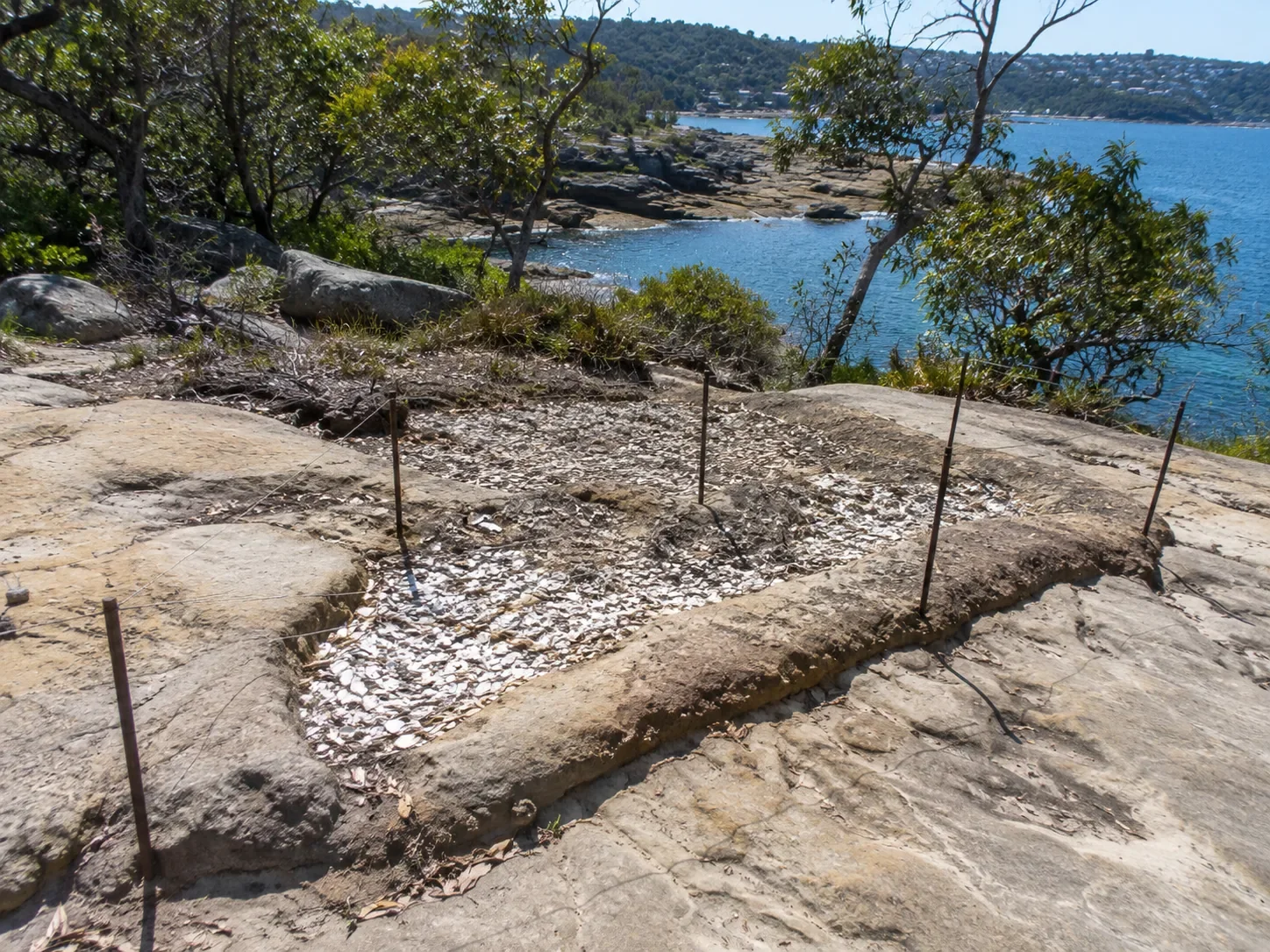
Fishing was especially important along coastal Sydney. People caught fish from canoes, rock platforms and shallow waters. Shellfish were gathered from rocky, sandy and muddy shorelines. Shell middens across the region show long histories of harvesting, eating and returning to place.
Marine animals also held meaning and practical importance. Whales, seals, dolphins, turtles, seabirds and shellfish appear in archaeological and historical records. Whale engravings around Sydney’s coastal rock platforms show that large marine animals were part of cultural knowledge, place and connection.
This is one reason a place-based approach matters. Sydney’s Aboriginal history is not only found in books. It is held in sandstone, water, plants, tracks, headlands, harbour edges and living memory.
Bennelong and Pemulwuy: Two Names Beginners Often Encounter
Two figures often appear in beginner histories of Aboriginal Sydney: Bennelong and Pemulwuy. They should not be treated as the whole story, but they help people understand the complexity of early colonial Sydney.
Bennelong
ennelong was an Aboriginal man from the Sydney Harbour area whose life became closely connected with the early colony. He learned English, spent time with Governor Arthur Phillip and travelled to England in 1792. Bennelong Point, where the Sydney Opera House now stands, carries his name.
His life is often discussed as part of the early contact period. It is also a story of disruption, negotiation, loss, survival and identity during a time of enormous change.
Pemulwuy
Pemulwuy was a Bidjigal man and resistance leader. From around 1790 until his death in 1802, he led resistance against British colonists in the Sydney region.
For beginners, Pemulwuy’s story is important because it challenges the idea that colonisation was simply accepted. Aboriginal people resisted. They defended Country, families and ways of life.
Pemulwuy’s story also connects Sydney history to Bidjigal Country and to the wider truth that Aboriginal resistance was part of the early colonial period.
Redfern and Aboriginal Sydney in the 20th Century
Aboriginal history in Sydney did not stop in the 1800s. In the 20th century, Sydney became home to a strong urban Aboriginal community, with Redfern playing a central role.
Many Aboriginal people came to Sydney for work, shelter, family connection and community. Inner-city suburbs became places where people built support networks, organised politically, raised families, created art and fought for rights.
Redfern became especially important. It was a centre for Aboriginal activism, civil rights, land rights, health, legal support, education, theatre, music and community-controlled services.
This matters because Aboriginal Sydney is not only about first contact and early settlement. It is also about self-determination, creativity, leadership and community strength.
A beginner’s guide should not present Aboriginal people only as victims of the past. The fuller story includes survival, resistance, adaptation, cultural pride and continuing leadership.
Aboriginal History You Can Visit in Sydney
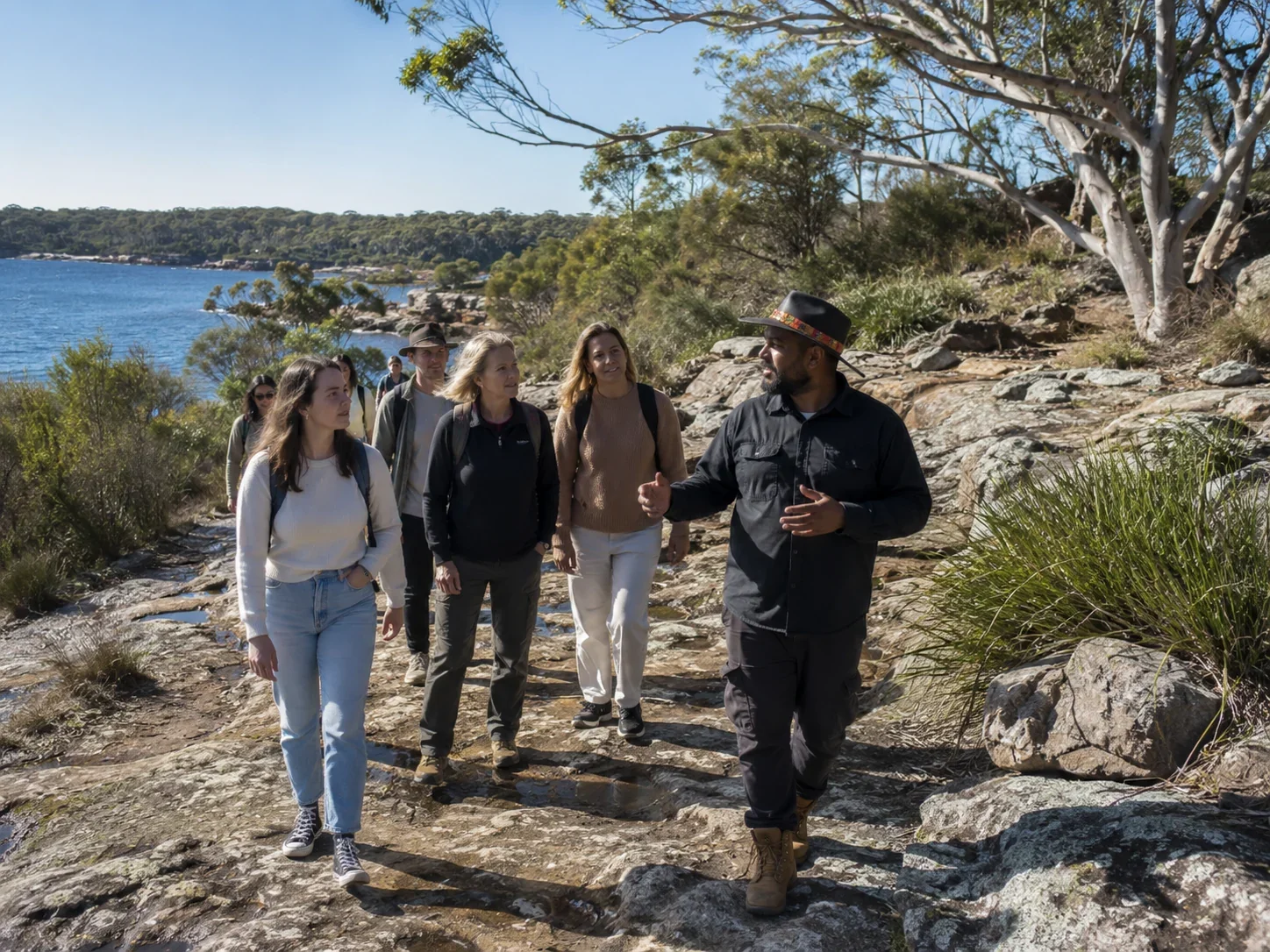
Sydney’s Aboriginal history is easier to understand when it is connected to place. Many locations across the city and surrounding national parks hold deep cultural meaning.
Warrane / Sydney Cove
Warrane, now known as Sydney Cove, is central to the story of 1788. It was already Aboriginal Country before the British settlement began. Today, visitors often see it as the heart of colonial Sydney, but its Aboriginal history is much older.
Bennelong Point
Bennelong Point is now associated with the Sydney Opera House, but its name carries the memory of Bennelong and early contact history. It reminds visitors that well-known city landmarks often sit on much older Aboriginal places.
Kamay / Botany Bay and La Perouse
Kamay, now known as Botany Bay, is central to early contact history. La Perouse continues to hold strong Aboriginal community and cultural significance.
A La Perouse Aboriginal walking tour can help visitors understand coastal Country through Aboriginal-led teaching, place and presence.
Ku-ring-gai Chase
Ku-ring-gai Chase is known for sandstone landscapes, rock engravings and cultural sites. These places show deep histories that long predate modern Sydney.
A Ku-ring-gai Aboriginal walking tour is a strong way to connect deep-time history with Country, place and cultural care.
Royal National Park
Royal National Park sits within a wider cultural landscape connected with Dharawal Country. Bush tracks, waterways, sandstone and coastal places help visitors understand how culture and ecology are connected. The Royal National Park Aboriginal walking tour gives visitors a place-based way to learn respectfully.
Redfern
Redfern is central to modern Aboriginal Sydney. Its history includes activism, community-controlled organisations, civil rights, land rights, arts and urban Aboriginal identity.
These places show why a map of Sydney should not only be read through colonial names and landmarks. It should also be read through Country, memory and continuing Aboriginal presence.
Why Aboriginal Cultural Tours Matter
AnAboriginal cultural tour helps visitors learn history in a way that is grounded in place. Instead of treating Aboriginal history as a list of dates, a guided experience connects people to Country, story, plants, animals, water, sandstone and cultural protocols.
This matters because Sydney’s Aboriginal history is often hidden in plain sight. Visitors may walk past rock engravings, shell middens, old gathering places, harbour edges or significant headlands without understanding what they are seeing.
Learning with an Aboriginal guide can help visitors ask better questions:
Whose Country is this?
What was this place before the city was built?
What stories are appropriate to share here?
How should visitors behave around cultural places?
How does this history continue today?
For visitors who want a broader overview of options, Sydney has a growing range ofAboriginal cultural experiences, from guided walks to cultural education, school excursions and private group experiences.
Aboriginal History, Country and Respect
Aboriginal history should not be treated as a tourist theme. It is the history of living peoples, families and communities.
Respect begins with language, and the Australian Government Style Manual provides guidance onrespectful language for Aboriginal and Torres Strait Islander peoples. Use Aboriginal people, First Nations people, Elders, Traditional Custodians and Country carefully. Avoid outdated terms such as “Aborigine” or using “Aboriginals” as a noun.
Respect also means recognising cultural boundaries. Some stories are public. Some are not. Some places can be visited. Others should not be entered or photographed. Some knowledge belongs to specific families, Elders, communities or Countries.
When visiting Aboriginal cultural places:
Stay on marked paths: This protects fragile sites and surrounding Country.
Do not touch engravings or rock art: Oils from hands and physical contact can damage them.
Do not remove shells, stones, plants or artefacts: Leave Country as you found it.
Listen to guidance: Follow the instructions of Aboriginal guides, rangers and local signs.
Avoid making assumptions: One place, story or protocol does not represent all Aboriginal people.
Respect is not an extra part of learning Aboriginal history. It is part of the learning itself.
Aboriginal Sydney Today
Aboriginal Sydney is living culture.
It is seen in community organisations, art, theatre, music, education, language work, cultural tourism, political leadership, family histories, ceremony, sport, land care and continuing connection to Country.
Sydney is also a place where Aboriginal people from many Nations have gathered, worked and built community. The city’s Aboriginal history includes the Gadigal people, but it also includes generations of Aboriginal people from across NSW and Australia who have made Sydney home.
This is important for beginners. Aboriginal history is not only “ancient history” and not only “colonial history.” It is also contemporary Sydney.
When visitors join anAboriginal walking tour in Sydney, they are not simply looking back. They are learning from living culture and continuing connection.
Aboriginal History, Country and Respect
Aboriginal history should not be treated as a tourist theme. It is the history of living peoples, families and communities.
Respect begins with language, and the Australian Government Style Manual provides guidance on respectful language for Aboriginal and Torres Strait Islander peoples. Use terms such as Aboriginal people, First Nations people, Elders, Traditional Custodians and Country carefully. Avoid outdated terms such as “Aborigine” or using “Aboriginals” as a noun.
Respect also means recognising cultural boundaries. Some knowledge is shared publicly. Some is not. Some places can be visited. Others should not be entered or photographed. Some knowledge belongs to specific families, Elders, communities or Countries.
When visiting Aboriginal cultural places:
Stay on marked paths: This protects fragile sites and surrounding Country.
Do not touch engravings or rock art: Oils from hands and physical contact can damage them.
Do not remove shells, stones, plants or artefacts: Leave Country as you found it.
Listen to guidance: Follow the instructions of Aboriginal guides, rangers and local signs.
Avoid making assumptions: One place, practice or protocol does not represent all Aboriginal people.
Respect is not an extra part of learning Aboriginal history. It is part of the learning itself.
Aboriginal Sydney Today
Aboriginal Sydney is living culture.
It is seen in community organisations, art, theatre, music, education, language work, cultural tourism, political leadership, family histories, sport, land care and continuing connection to Country.
Sydney is also a place where Aboriginal people from many Nations have gathered, worked and built community. The city’s Aboriginal history includes the Gadigal people, but it also includes generations of Aboriginal people from across NSW and Australia who have made Sydney home.
This is important for beginners. Aboriginal history is not only ancient history and not only colonial history. It is also contemporary Sydney.
When visitors join an Aboriginal walking tour in Sydney, they are not simply looking back. They are learning from living culture and continuing connection.
Quick Summary: Aboriginal History of Sydney
Sydney’s Aboriginal history begins with the Gadigal people and other Aboriginal peoples connected with the harbour, coast, rivers, sandstone and bushland of the wider Sydney region.
In 1788, the First Fleet arrived and British colonisation began at Sydney Cove. The following years brought disease, dispossession, violence and major disruption, including the devastating 1789 smallpox epidemic. Aboriginal people resisted, survived and continued cultural life.
Today, Aboriginal Sydney is not a memory of the past. It is a living community connected to Country, culture, activism, art, teaching and place.
What Sydney’s Aboriginal History Teaches Us
Sydney’s Aboriginal history is not only a story of what happened in 1788. It is a much older and much wider history of Country, culture, family, resistance, survival and continuity.
The harbour, coast, sandstone, rivers and bushland all hold traces of this history. So do the names, communities, memories and cultural practices that continue today.
For beginners, the most important lesson is this: Sydney was never empty, and Aboriginal Sydney never ended. Country remains. Culture remains. Connection continues.
FAQs About Aboriginal History in Sydney
1. Who are the original people of Sydney?
The original Aboriginal inhabitants of the City of Sydney local area are the Gadigal people. Gadigal Country includes the southern side of Port Jackson, now known as Sydney Harbour.
2. Why is Country important to Aboriginal history in Sydney?
Country is central because Aboriginal history is connected to place. Harbour, coast, rivers, sandstone, plants, animals, family memory and cultural knowledge are all part of how history is understood and carried.
3. What happened on 26 January 1788?
On 26 January 1788, the First Fleet established the British settlement at Sydney Cove. For many Aboriginal and Torres Strait Islander people, this date marks the beginning of colonisation and is observed as Invasion Day or Survival Day.
4. What happened to the Gadigal people after 1788?
After 1788, the Gadigal people and other Aboriginal communities around Sydney faced disease, dispossession, violence and disruption to Country. Despite this, Aboriginal people survived and continue to live, teach and maintain connection today.
5. Who was Bennelong?
Bennelong was an Aboriginal man from the Sydney Harbour area whose life became closely connected with early colonial Sydney. He learned English, spent time with Governor Arthur Phillip, travelled to England in 1792 and is remembered in the name Bennelong Point.
6. Who was Pemulwuy?
Pemulwuy was a Bidjigal man and resistance leader who fought against British colonisation in the Sydney region from around 1790 until he was killed in 1802.
7. Where can I learn about Aboriginal history in Sydney?
You can learn through trusted Aboriginal-led experiences, cultural sites, museums, local history resources and guided walks on Country. A guided tour helps connect history to the places where it happened.
8. Can visitors experience Aboriginal history on Country?
Yes. Visitors can experience Aboriginal history respectfully through guided walks, cultural education and private group programs. A private Aboriginal cultural tour can be especially useful for schools, teams and groups who want more time for discussion and place-based learning.
9. How can visitors show respect when learning about Aboriginal history?
Visitors can show respect by staying on marked paths, not touching rock engravings or rock art, not removing natural or cultural materials, listening to Aboriginal guides and avoiding assumptions about places, people or cultural knowledge.
