
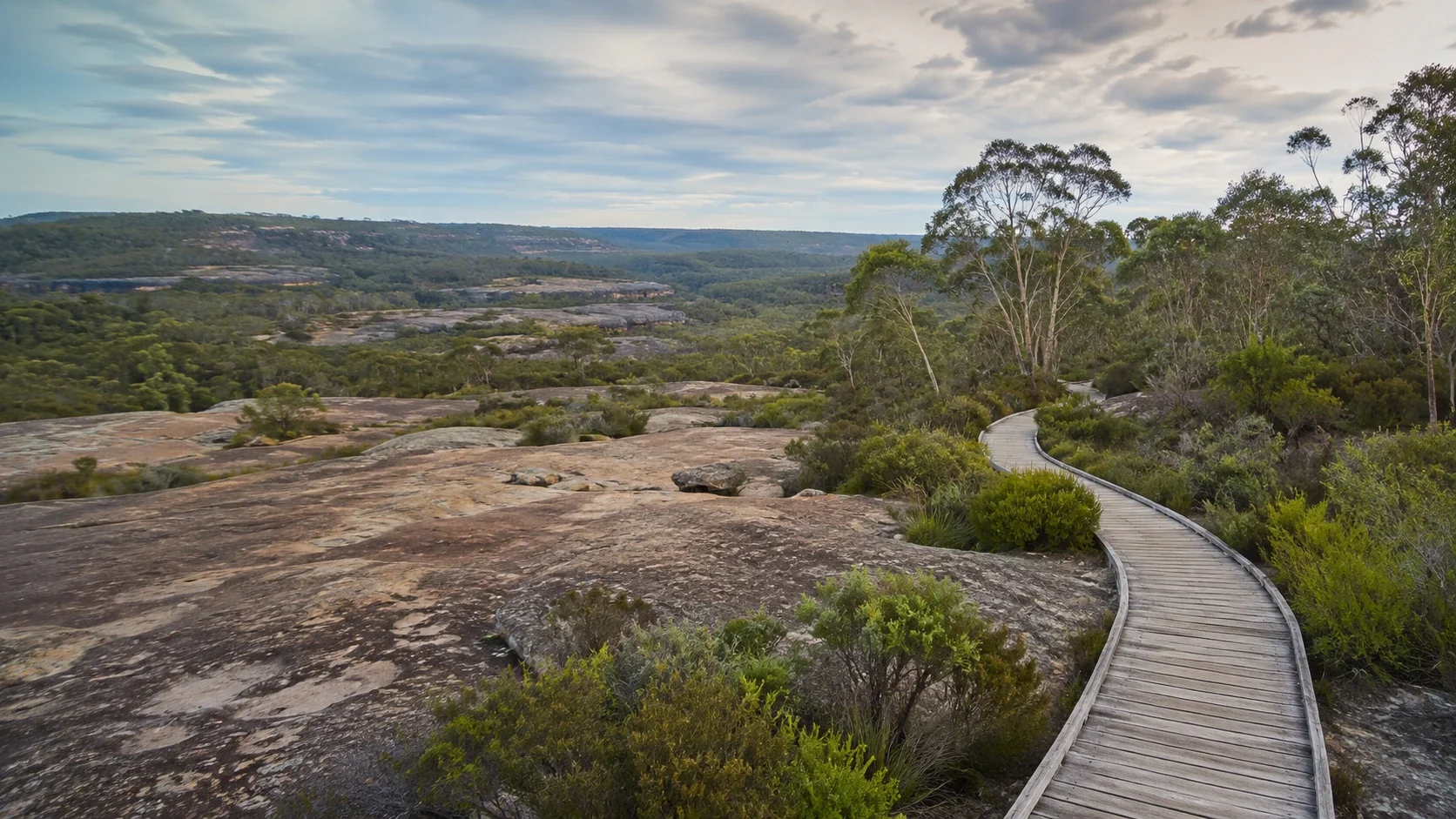
Aboriginal sacred sites are places of deep cultural, spiritual and ancestral significance. They may be connected to Country, Dreaming stories, ceremony, law, ancestors, burial, teaching, water, plants, animals or cultural responsibility. Some sacred sites are public and interpreted for visitors. Many others are restricted, private or not publicly identified.
This guide explains what Aboriginal sacred sites are, why they matter and how visitors can show respect. It is not a list of sacred sites to visit. The right approach is to learn from Aboriginal-led sources, follow Traditional Owner guidance and understand that some places and knowledge are not for everyone.
What Is an Aboriginal Sacred Site?
| Question | Quick answer |
|---|---|
| What is an Aboriginal sacred site? | A place of special cultural, spiritual or ancestral significance under Aboriginal tradition and law. |
| Are all sacred sites open to visitors? | No. Some are public, but many are restricted, private or not publicly identified. |
| Why do sacred sites matter? | They connect people to Country, ancestors, law, story, ceremony, identity and living culture. |
| How should visitors behave? | Follow Traditional Owner guidance, stay on marked paths, do not touch, climb, remove objects, photograph restricted areas or share sensitive locations. |
What Is an Aboriginal Sacred Site?
An Aboriginal sacred site is a place with special significance under Aboriginal tradition. The Aboriginal Areas Protection Authority explains that sacred sites can include natural features such as hills, rocks, waterholes, trees, plains, lakes, billabongs and coastal or sea places.
A sacred site does not need to look like a monument. It may be a natural feature, a rock formation, a water place, a cave, a ceremonial ground, a burial place, a cultural route or a wider landscape.
Aboriginal sacred sites can include:
Mountains and rock formations: places connected to ancestral beings, law or Creation stories.
Waterholes, rivers and springs: places connected to life, story, ceremony and survival.
Caves and rock shelters: places that may hold art, cultural material, memory or teaching.
Burial places: highly sensitive places connected to ancestors and family.
Ceremonial grounds: places used for cultural practice, law and community gathering.
Rock art and engraving sites: places where cultural knowledge is recorded in stone or on shelter walls.
Songlines and cultural routes: pathways of story, law and connection across Country.
Cultural landscapes: broader places where land, water, plants, animals, people and story are connected.
The most important point is that a sacred site is not only important because of what visitors can see. Its meaning may sit in story, law, responsibility and relationship to Country.
Why Are Aboriginal Sacred Sites Important?
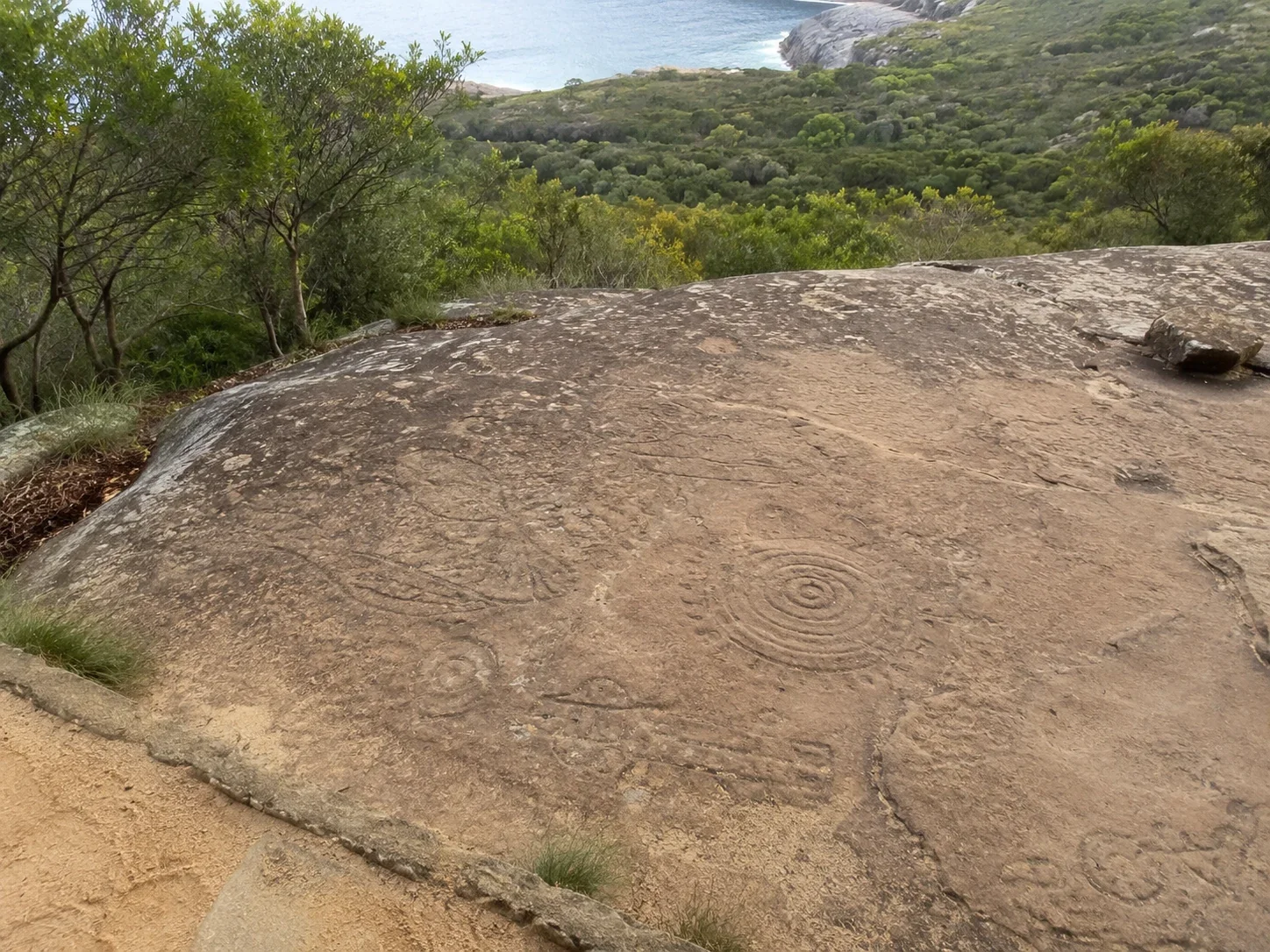
Aboriginal sacred sites are important because they connect people, Country, ancestors, law and living culture. They are not simply historical remains. They are part of continuing Aboriginal identity and responsibility.
For many Aboriginal people, Country is not separate from culture. Country includes land, waters, plants, animals, seasons, stories, ancestors, language and obligations to care for place. Sacred sites sit within that wider relationship.
Respecting sacred sites matters because:
They are connected to ancestors: Some places hold stories and responsibilities passed through generations.
They are part of living law: Cultural rules may govern who can visit, what can be shared and how the place is cared for.
They hold restricted knowledge: Some stories, images or meanings are not public.
They support identity and belonging: Sites can connect families, clans and communities to Country.
They need protection: Damage to sacred sites can be physical, cultural and spiritual.
They remain significant today: Sacred places are not only part of the past. They continue to matter now.
Aboriginal peoples are diverse, and protocols vary across Country. A rule that applies in one place may not apply in another. This is why visitors should always defer to Traditional Owners and local Aboriginal guidance.
Why Respect Matters
Respect matters because sacred sites are living cultural places. They are not attractions to collect, hidden places to find or photo backdrops for social media.
Some sacred sites are open to visitors under clear rules. Others are restricted. Some should not be photographed. Some stories can be shared publicly. Others cannot. Some places may be appropriate for certain people only, according to cultural law.
A respectful visitor accepts that they are not entitled to know everything.
That can be difficult for people used to open-access tourism, where every place is mapped, reviewed, photographed and shared. Aboriginal cultural heritage works differently. Some knowledge is protected because it belongs to specific people, families, Elders, custodians or communities.
Respect also means understanding harm. Damage to a sacred site is not only damage to stone, soil or landscape. It can be damage to law, story, identity, memory and responsibility.
The 2020 destruction of the Juukan Gorge rock shelters in Western Australia showed why this matters. The federal parliamentary inquiry described the destruction of the 46,000-year-old caves as a nationally significant event. For the Puutu Kunti Kurrama and Pinikura peoples, the loss was not only archaeological. It was cultural, ancestral and irreversible.
The lesson is clear: sacred sites need more than casual respect. They need strong protection, Traditional Owner authority and public understanding.
Uluru: What It Teaches Us About Respect
Uluṟu is one of the best-known examples of a sacred site in Australia. It is sacred to Aṉangu, the Traditional Owners of Uluṟu-Kata Tjuṯa National Park.
The right way to discuss Uluṟu is not as a tourist landmark first, but as a living cultural landscape. Aṉangu law and culture, known as Tjukurpa, guides the care of Uluṟu and the surrounding Country.
The title deeds for Uluṟu-Kata Tjuṯa National Park were handed back to Aṉangu on 26 October 1985. The park is jointly managed, with Aṉangu knowledge and responsibility central to its care.
The Uluṟu climb closed permanently from 26 October 2019.Parks Australia explains that climbing Uluṟu was not generally permitted under Tjukurpa and that Aṉangu had long asked visitors not to climb.
Uluṟu also teaches visitors about photography. Parks Australia notes that some areas of Uluṟu and Kata Tjuṯa are culturally sensitive and that Aṉangu ask visitors not to photograph those areas. TheUluṟu photography guidance shows how visitors can enjoy the landscape while avoiding restricted rock formations.
The lesson applies beyond Uluṟu:
If Traditional Owners ask visitors not to climb, do not climb.
If signs say not to photograph, do not photograph.
If a place is restricted, do not enter.
If cultural guidance is offered, listen.
If you do not understand the reason, still respect the rule.
Respect does not depend on visitors fully understanding every cultural meaning. It begins with accepting Traditional Owner authority.
Are All Aboriginal Sacred Sites Open to Visitors?
No. Some Aboriginal sacred sites are open to visitors, but many are not.
Public sites may have boardwalks, signs, guided tours, visitor centres or park interpretation. These places can help visitors learn respectfully. Even then, access usually comes with rules.
Restricted sites may not be named publicly. Their locations may not be mapped. Their stories may not be shared. Some places may only be accessed by certain Traditional Owners or people with cultural authority.
Visitors should never:
search for hidden sacred sites
enter restricted areas
climb fences or barriers
ignore signs
share GPS points for sensitive places
post “secret location” content online
pressure Aboriginal people to explain restricted knowledge
assume that public access means cultural permission for every activity
A public site is not an open invitation to do anything. It is a place where visitors are being trusted to follow clear boundaries.
How Are Aboriginal Sacred Sites Protected?
Aboriginal sacred sites and cultural places are protected through a mix of federal, state and territory laws. These laws are complex, and protection varies across Australia. The simple point is that visitors, land users, developers and organisations have responsibilities.
| Law or system | Where it applies | What it does in plain language |
|---|---|---|
| Aboriginal and Torres Strait Islander Heritage Protection Act 1984 | Commonwealth level | Allows the federal minister to protect significant Aboriginal and Torres Strait Islander areas or objects from injury or desecration in certain circumstances. |
| Environment Protection and Biodiversity Conservation Act 1999 | Commonwealth level | Protects matters of national environmental significance, including places on national and world heritage lists. |
| Northern Territory Aboriginal Sacred Sites Act 1989 | Northern Territory | Protects sacred sites in the Northern Territory and is administered by the Aboriginal Areas Protection Authority. |
| National Parks and Wildlife Act 1974 | New South Wales | Protects Aboriginal objects and declared Aboriginal places in NSW. |
| State and territory heritage laws | Across Australia | Each state and territory has its own system for protecting Aboriginal cultural heritage. |
The Australian Government explains that the Aboriginal and Torres Strait Islander Heritage Protection Act can protect areas and objects of particular significance from threats of injury or desecration.
In the Northern Territory, the Aboriginal Areas Protection Authority plays a specific role in protecting sacred sites under the Northern Territory Aboriginal Sacred Sites Act.
In NSW, the Aboriginal Heritage Office explains that Aboriginal sites are protected under the National Parks and Wildlife Act 1974, and that damaging or destroying them is an offence.
Legal protection matters, but law alone is not enough. Respectful behaviour, Traditional Owner authority and public education are also essential.
How to Visit Aboriginal Sites Respectfully
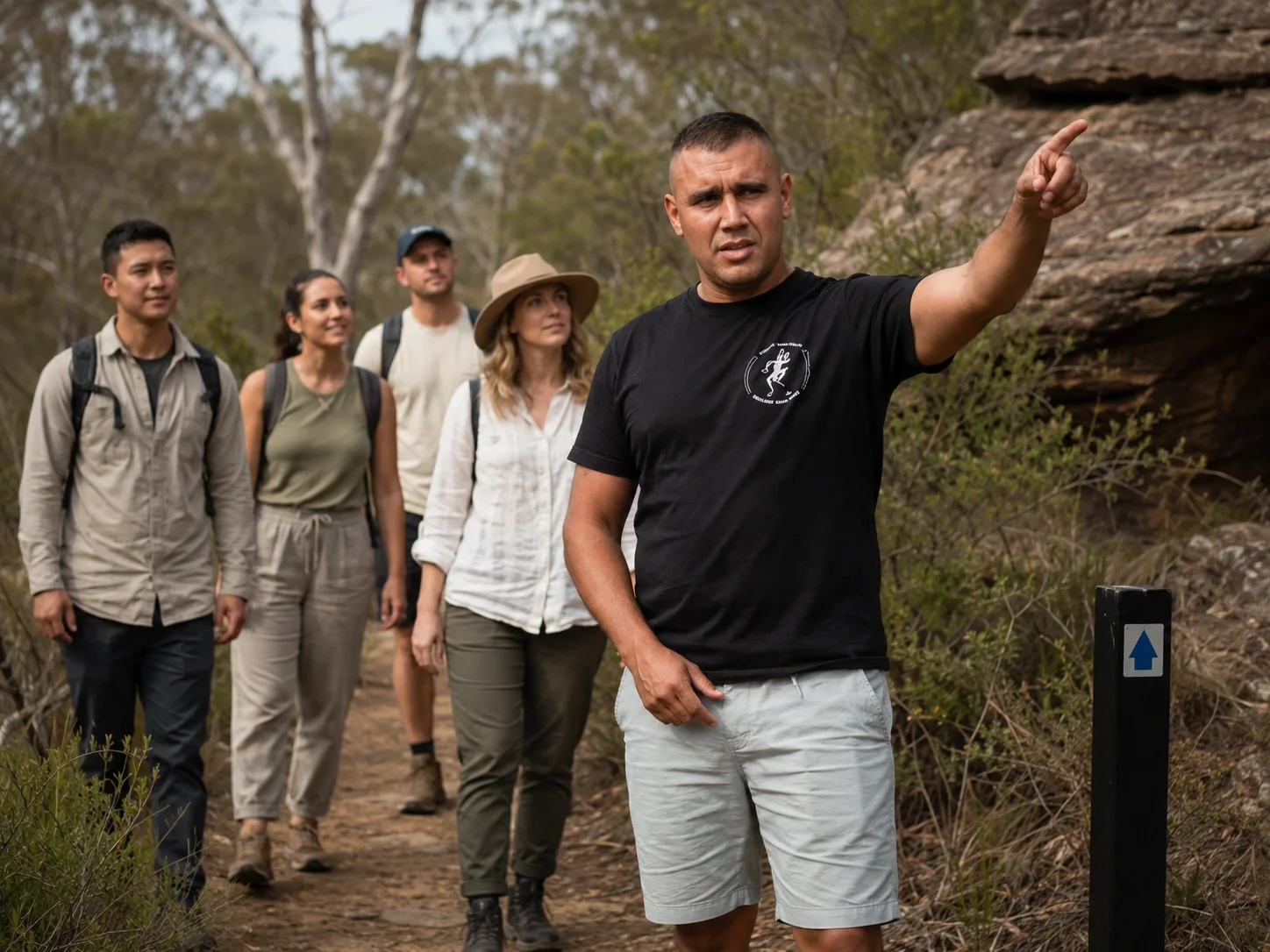
The safest way to visit Aboriginal sites respectfully is to visit public, managed sites, follow Traditional Owner guidance and avoid treating cultural places as ordinary sightseeing stops.
Use this checklist.
Visit Only Places That Are Open to Visitors
Do not seek out restricted, hidden or unmarked sacred sites. If a site is not publicly promoted by Traditional Owners, official parks, land councils or local Aboriginal organisations, leave it alone.
Follow Traditional Owner Guidance
Traditional Owners are the cultural authority for their Country. Their wishes should guide how visitors behave, even when visitors do not fully understand the cultural reasons.
Stay on Marked Paths
Tracks, boardwalks and barriers protect fragile cultural places. Do not step over ropes, walk across rock art, enter closed areas or climb restricted formations.
Do Not Touch Rock Art or Engravings
Touching, rubbing, wetting, chalking or tracing rock art can cause harm. Oils from hands and repeated contact can damage surfaces over time.
Do Not Remove Anything
Leave stones, shells, ochre, plants, bones, artefacts and natural materials where they are. What looks ordinary may be part of a cultural place.
Ask Before Taking Photos
Do not photograph ceremony, people, children, Elders, restricted places or cultural materials unless permission is clear. If signs say not to photograph, put the camera away.
Do Not Share Sensitive Locations
Avoid posting GPS points, hidden tracks or “secret site” directions. Sharing a location can lead to crowding, damage and disrespect.
Listen More Than You Speak
If you join an Aboriginal-led experience, listen carefully. Ask respectful questions, but do not expect every story or meaning to be shared.
Support Aboriginal-Led Learning
Where possible, learn from Aboriginal guides, Traditional Owner organisations, cultural centres and local Aboriginal businesses. AnAboriginal cultural tour can help visitors understand why Country, story and protocol matter.
Public Sacred and Cultural Places Visitors May Learn About
This article does not list hidden or restricted sacred sites. But some public cultural places in Australia are managed for respectful visitor learning.
| Public example | What it can teach visitors |
|---|---|
| Uluṟu-Kata Tjuṯa National Park | Respect for Traditional Owner guidance, Tjukurpa, photography restrictions and the end of climbing Uluṟu. |
| Kakadu National Park | The importance of rock art, living culture, ranger guidance and cultural landscapes. |
| Budj Bim Cultural Landscape | How a cultural landscape can reflect thousands of years of engineering, aquaculture, Country and Gunditjmara knowledge. |
| NSW sandstone engraving sites | Why public rock art and engraving places need boardwalks, signs and visitor restraint. |
UNESCO describes Budj Bim Cultural Landscape as located in the traditional Country of the Gunditjmara people and as one of the world’s oldest and most extensive aquaculture systems. This is a useful reminder that Aboriginal cultural places are not only “spiritual” in a narrow sense. They can also show technology, engineering, food systems, law, Country and long-term care.
The best way to approach public cultural places is to treat them as learning opportunities, not photo opportunities.
Aboriginal Sacred Sites and Cultural Places in NSW
Natcha Cultural Tours is based in NSW, so it is useful to connect the national topic back to local cultural landscapes.
New South Wales has many Aboriginal cultural places, including rock engravings, art sites, middens, shelters, grinding grooves, ceremonial places and broader cultural landscapes. Some are public and signposted. Many are not.
Visitors should always defer to the relevant Traditional Owners for each place. No single Aboriginal person, guide or organisation speaks for every Country in NSW.
For visitors in Sydney, learning with an Aboriginal guide can help explain why cultural places must be approached through Country, permission and respect. Natcha’s Ku-ring-gai Chase Aboriginal walking tour is one way to learn about sandstone Country and cultural places in a guided setting. The Royal National Park Aboriginal walking tour also connects visitors with Country, bushland, story and respectful learning in NSW.
For people planning a broader cultural experience, Natcha’s Aboriginal cultural experiences in Sydney guide can help compare respectful ways to learn on Country.
What Respect Looks Like in Practice
Respect is not only a feeling. It is behaviour.
It looks like staying behind the sign when everyone else steps forward. It looks like putting your phone away when a place is marked as sensitive. It looks like not asking for secret stories. It looks like accepting that some knowledge is not yours to access.
Respect also means recognising Aboriginal authority. Traditional Owners have the right to speak for Country, protect sites, set boundaries and decide how culture is shared.
Visitors do not need to be experts to behave well. They need to be humble, careful and willing to listen.
Learning With Respect on Country
Aboriginal sacred sites are not simply places from the past. They are part of living culture, law, Country and responsibility.
Some sacred places can be visited. Others cannot. Some stories can be shared. Others remain restricted. Respect means accepting those boundaries.
The best approach is simple: follow Traditional Owner guidance, stay on marked paths, avoid touching or photographing sensitive places, never seek out restricted sites and learn from Aboriginal-led sources wherever possible.
When visitors approach Country this way, they help protect sacred places and show respect for the people who have cared for them across generations.
FAQs
1. What is an Aboriginal sacred site?
An Aboriginal sacred site is a place of special cultural, spiritual or ancestral significance under Aboriginal tradition. It may be a natural feature, ceremonial place, burial place, rock art site, waterhole, cultural route or broader landscape.
2. Why are Aboriginal sacred sites important?
Aboriginal sacred sites are important because they connect people to Country, ancestors, law, story, ceremony, identity and living culture. They are not only historical places. They continue to hold meaning today.
3. Can tourists visit Aboriginal sacred sites in Australia?
Some public sacred and cultural sites can be visited, but many are restricted, private or not publicly identified. Visitors should only go to places that are open to the public and follow Traditional Owner and official guidance.
4. Why are some Aboriginal sacred sites closed to the public?
Some sites are closed because they hold restricted cultural knowledge, are fragile, are connected to ceremony or burial, or are only appropriate for certain Traditional Custodians to access.
5. Why can’t you climb Uluru?
Climbing Uluṟu is permanently closed. Uluṟu is sacred to Aṉangu, and climbing was not generally permitted under Tjukurpa. Aṉangu had long asked visitors not to climb, and the climb closed permanently on 26 October 2019.
6. Is it disrespectful to photograph Aboriginal sacred sites?
It depends on the place and local protocol. Some public places allow photography. Others restrict it. Visitors should follow signs, ask before photographing people or ceremony, and never photograph restricted or sensitive areas.
7. Are Aboriginal sacred sites protected by law?
Yes. Aboriginal sacred sites, objects and cultural places are protected through federal, state and territory laws. The rules differ across Australia, but damaging, disturbing or entering restricted places can be unlawful and deeply harmful.
8. What should you never do at an Aboriginal sacred site?
Never climb, touch, remove objects, enter restricted areas, ignore signs, photograph where restricted, share sensitive locations or pressure Aboriginal people to explain restricted knowledge.
9. How can visitors learn respectfully?
Visitors can learn respectfully through Aboriginal-led tours, Traditional Owner organisations, cultural centres, national parks with proper interpretation and official local guidance. The key is to learn with permission, not curiosity alone.
