
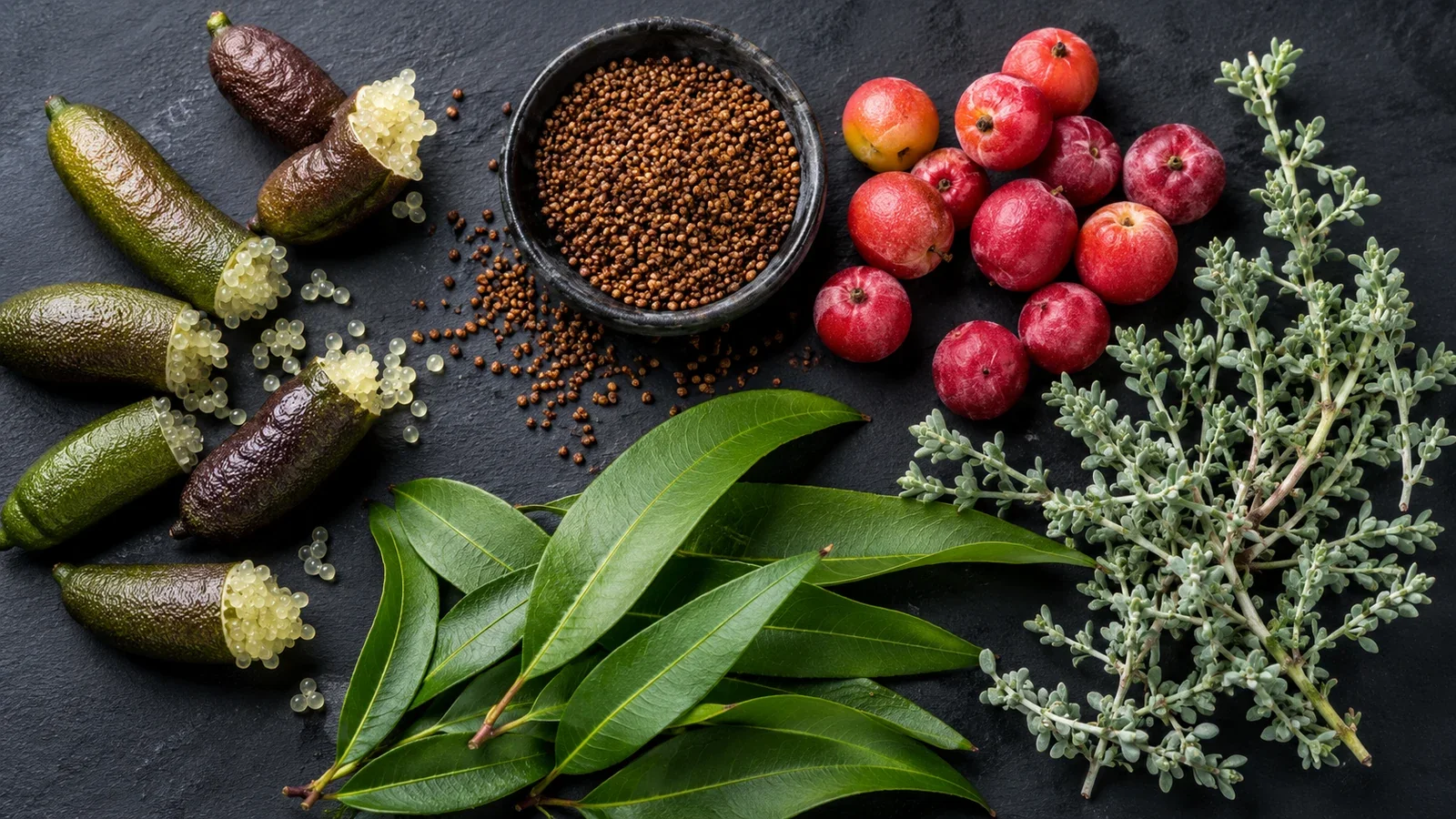
Bush tucker is the native plants, animals and seafood that Aboriginal and Torres Strait Islander peoples have gathered, prepared and eaten across Australia for tens of thousands of years. It includes fruits, seeds, greens, roots, game, fish and insects, and it carries deep knowledge about Country, the seasons and how to care for the land.
This guide explains what bush tucker is, gives clear examples, looks at why it matters culturally, and shows how to learn about it respectfully near Sydney.
What is bush tucker?
Bush tucker, also called native food or bush food, is food sourced from Australia's native plants and animals that Aboriginal people have relied on as a complete and managed food system for millennia. It is not a single cuisine. The foods, names and methods vary widely between nations and Countries, because what grows in the rainforest of the north is very different from what grows around Sydney's sandstone coast.
Bush tucker falls into a few broad groups:
Plant foods: fruits, berries, seeds, nuts, greens, roots and tubers such as quandong, wattleseed and warrigal greens.
Animal foods: kangaroo, emu, goanna, possum and witchetty grubs.
Seafood and freshwater foods: fish, shellfish, mud crab and eel, which are central to coastal and river Countries.
Flavour and medicine plants: lemon myrtle, native mint and others used to season food or treat ailments.
What does "bush tucker" mean?
The term bush tucker combines bush, meaning the natural Australian landscape, with tucker, an informal Australian word for food. It came into wider everyday use in the late twentieth century to describe foods sourced from the land. The words are recent, but the foods and the knowledge behind them are among the oldest living food traditions in the world.
Bush tucker, native foods or bush foods: which term should you use?
Bush tucker is the most common and most searched term, but many Aboriginal people and First Nations food businesses prefer native foods or bush foods. Some feel that tucker sounds too casual for a sophisticated, carefully managed food culture built on generations of knowledge. We use bush tucker here because it is the term most people search for, while recognising that native foods and bush foods are equally correct and often preferred. Whichever term you use, the respect belongs to the people and the knowledge behind the food.
Why is bush tucker important to Aboriginal culture?
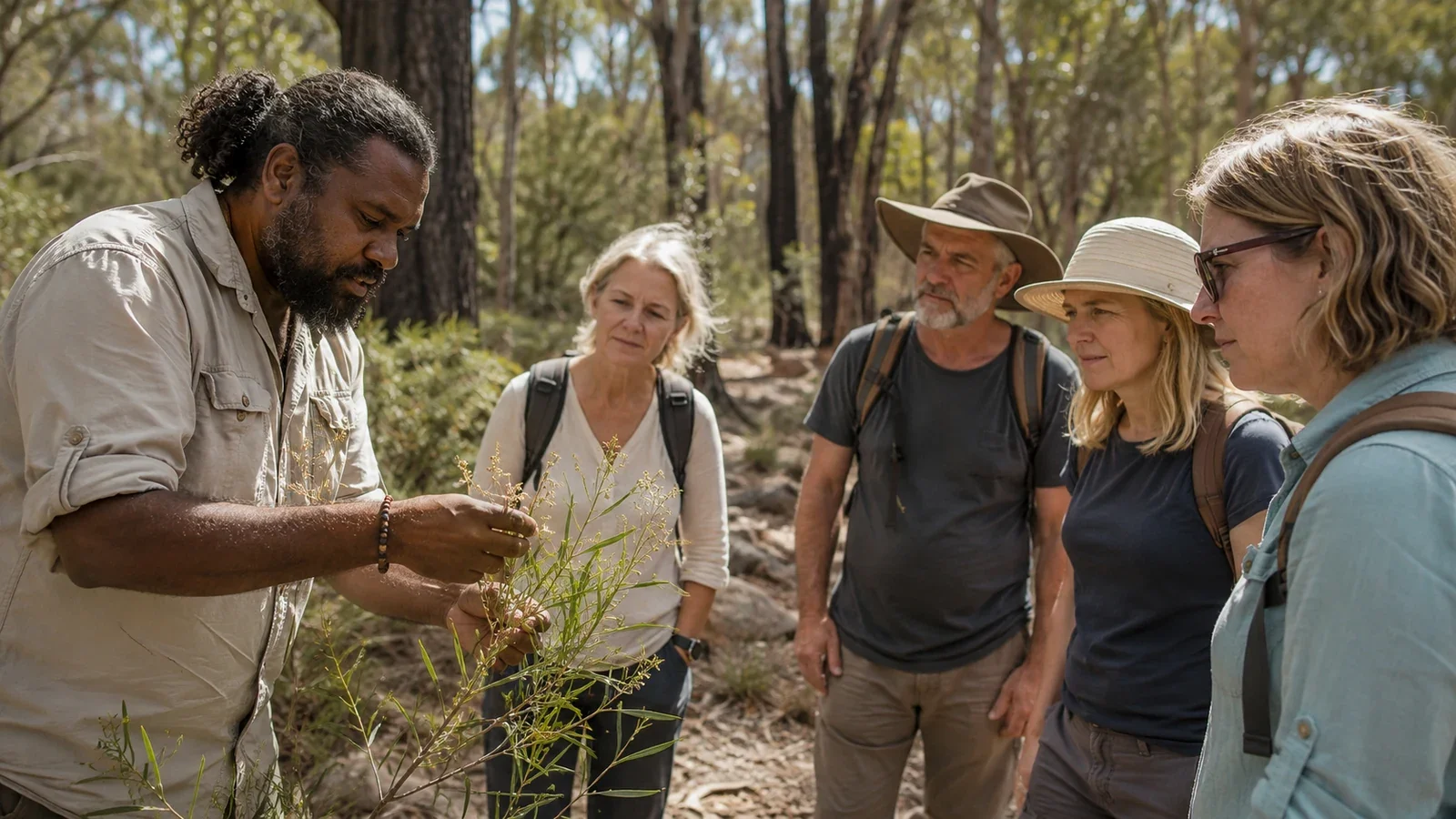
For Aboriginal people, bush tucker is about far more than eating. It connects people to Country, to the seasons, to family and to thousands of years of knowledge about how to live well on the land. Food, place and culture are woven together, which is part of what makes a guided cultural experience on Country so different from reading a list of ingredients.
A few of the ways bush tucker carries meaning:
Connection to Country: knowing which foods grow where, and when, ties people to specific places and the Country they belong to.
Seasonal knowledge: the flowering of one plant or the fruiting of another signals what to harvest next and where to find it.
Sharing and kinship: gathering, preparing and sharing food carries responsibilities and relationships between people.
Caring for Country: harvesting is managed so that plants and animals keep thriving for the seasons and generations to come.
Bush tucker and the seasons
Aboriginal seasonal calendars read the land far more closely than the four European seasons. Across many Countries, the appearance of certain flowers, winds or animal behaviour signals when particular foods are ready, when fish are fat, or when it is time to move to another area. Bush tucker sits inside this seasonal knowledge, which is one reason it is best understood in place rather than from a book.
Food, medicine and materials
Many native plants served as food, medicine and raw material at the same time. Lemon myrtle, for example, is used as a flavouring and has a long history of medicinal use, while other plants provided fibre, tools or shelter. This overlap reflects a practical, detailed understanding of how each plant could be used and cared for.
Examples of bush tucker
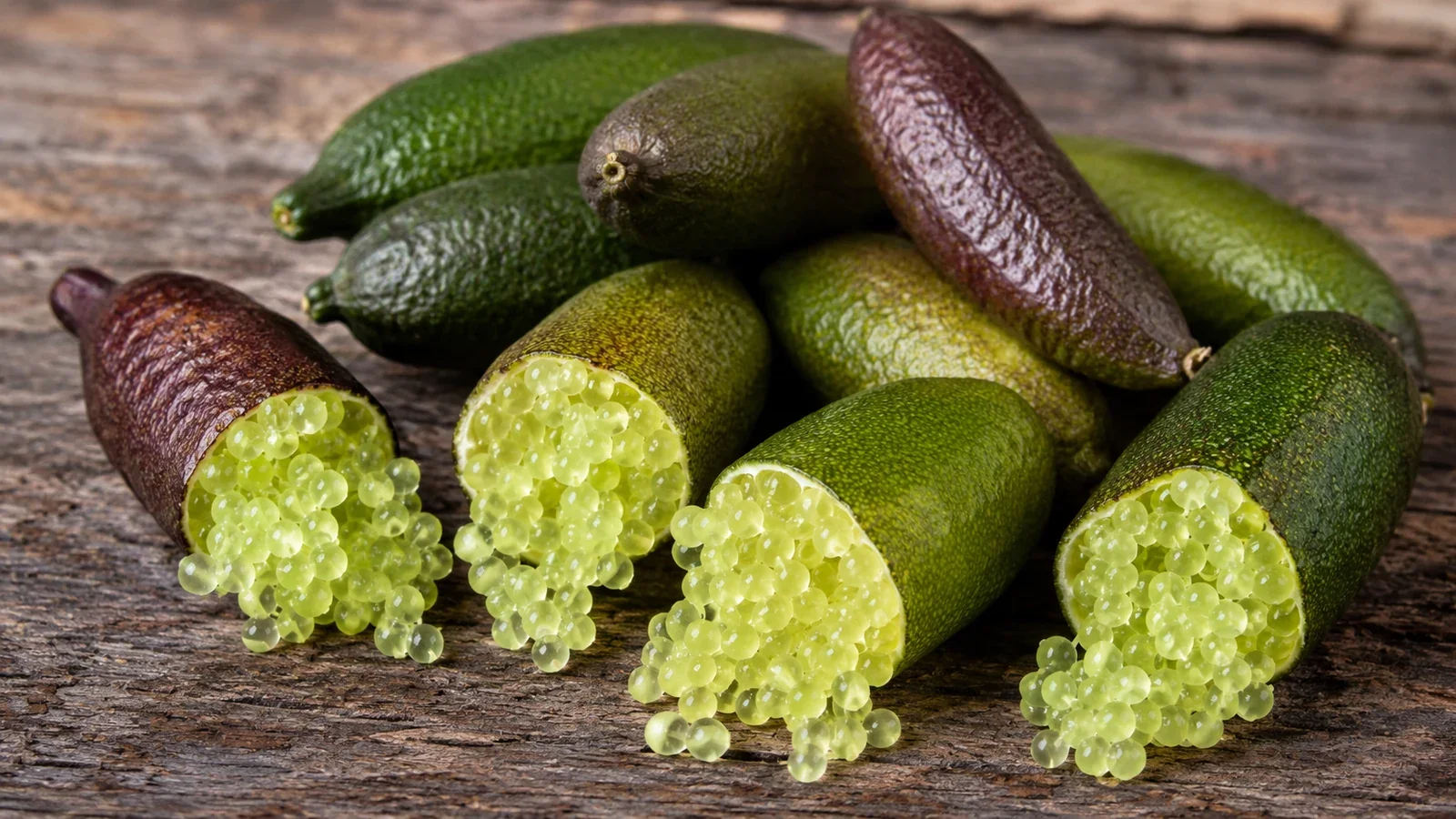
Australia has thousands of edible native species, and the table below introduces some of the best known. Several of these now appear on restaurant menus and in native food products, which has helped more people learn about them.
| Food | Type | Where it grows | Traditional and modern use | Flavour |
|---|---|---|---|---|
| Kakadu plum | Fruit | Northern Australia | Eaten fresh; now valued for its very high vitamin C | Tart, citrus-like |
| Finger lime | Fruit | NSW and QLD rainforest edges | Eaten fresh; used in cooking and drinks | Sharp, citrus “caviar” |
| Quandong | Fruit | Arid and semi-arid inland | Eaten fresh or dried; used in pies and sauces | Tangy, peach-like |
| Lemon myrtle | Leaf | Subtropical east coast | Flavouring and tea; medicinal use | Strong lemon |
| Wattleseed | Seed | Across much of Australia | Ground and roasted; used in baking | Nutty, coffee-like |
| Warrigal greens | Leafy green | Coastal NSW and beyond | Cooked like spinach after blanching | Mild, salty green |
| Saltbush | Leaf | Inland and coastal | Seasoning and wrapping for meat | Salty, savoury |
| Witchetty grub | Insect larva | Inland, in roots of certain shrubs | Eaten raw or lightly cooked | Nutty when cooked |
Bush tucker plants you might recognise
Several bush tucker plants are now grown in home gardens and farms, including warrigal greens, finger lime, lemon myrtle and midyim berry. Growing native food plants at home is a good way to learn about them, though it is a separate thing from harvesting on Country, which follows cultural protocols and local rules.
Bush tucker around Sydney and NSW
The Sydney region has its own native foods shaped by its sandstone Country, coast and bushland. Examples you may come across include warrigal greens along the coast, lilly pilly berries, native raspberry and the seeds of the Burrawang. The Burrawang is a useful warning as well as a food: its seeds are toxic when raw and were only made safe through careful, lengthy traditional processing, which is exactly why knowledge matters so much.
Is bush tucker safe to eat, and how do you try it responsibly?
Some bush tucker is safe to eat straight from the plant, but other foods are toxic until they are correctly prepared, so you should never forage without proper knowledge. The safe, respectful way to learn is with someone who knows the plants, the Country and the right methods.
A few practical points to keep in mind:
Do not forage blind: many native plants have look-alikes, and some common species are unsafe raw.
Some foods need processing: foods such as Burrawang seeds require specific preparation to remove toxins before they can be eaten.
Respect Country and the rules: national parks, reserves and private land all have rules, and harvesting on Country follows cultural protocols.
Learn from knowledge holders: the safest and most respectful path is to learn from an Aboriginal guide rather than experimenting.
Why learn bush tucker with an Aboriginal guide
Learning bush tucker with an Aboriginal guide means the knowledge is accurate, in context and shared with permission. A guide can show you a plant in the place it grows, explain how it was used and cared for, and connect it to the wider story of Country. It also supports Aboriginal people to share culture on their own terms, which sits at the heart of what an Aboriginal walking tour in Sydney is about.
Where to experience bush tucker near Sydney
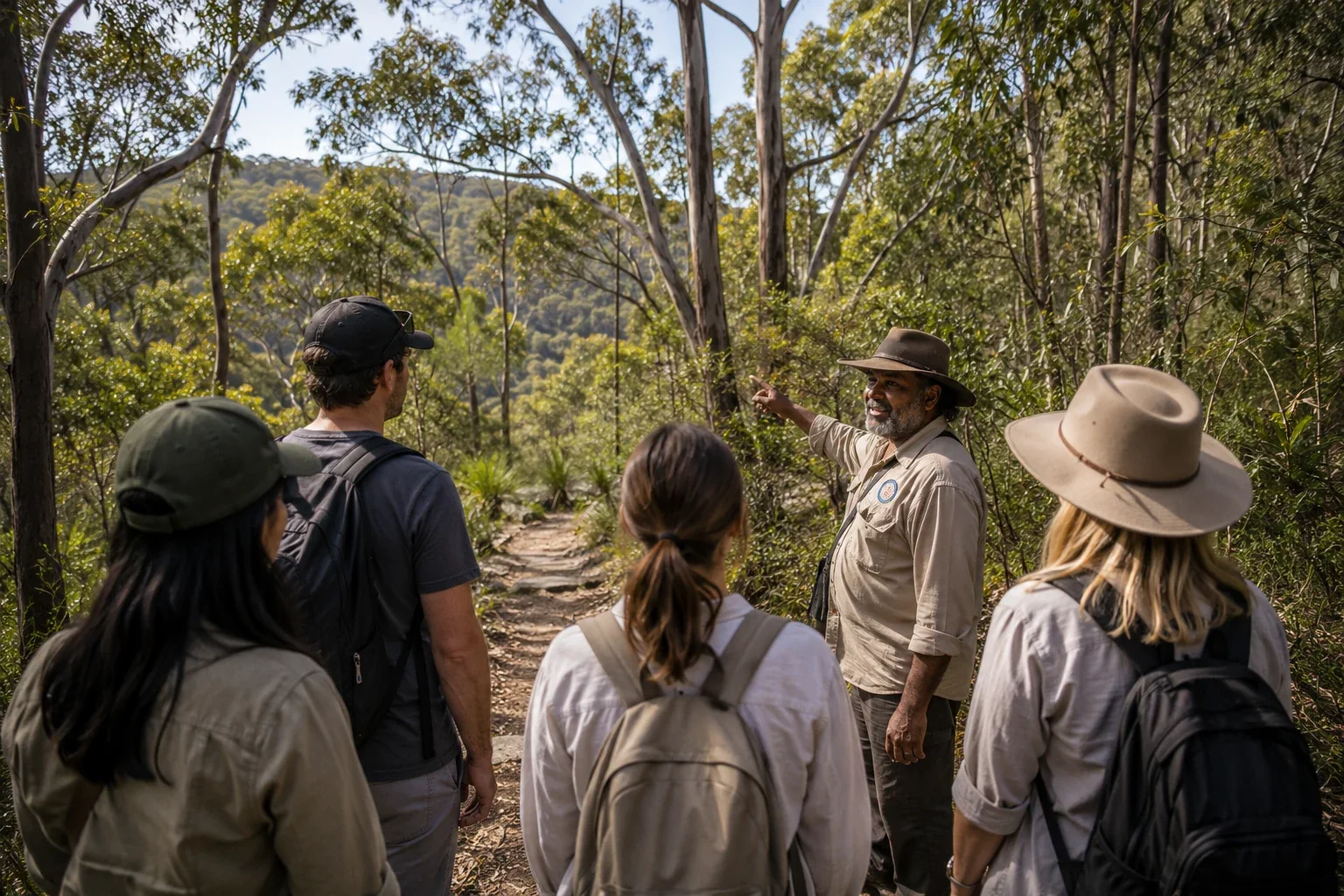
The best way to understand bush tucker is on Country with an Aboriginal guide who can point out the plants in place and explain how they were used. Natcha Cultural Tours is an Aboriginal-owned business led by Eric Brown, a descendant of the Yuin, Bidjigal, Dharawal and Gundungarra peoples, and our walking tours share knowledge of native plants and Country as part of the experience.
You can join a guided walk on Country at several locations around Sydney:
Ku-ring-gai Chase: the Ku-ring-gai Chase Aboriginal walking tour takes in sandstone Country rich in bushland and water.
Royal National Park: the Royal National Park walking tour takes you through coastal and bush landscapes on Dharawal Country.
La Perouse: the La Perouse Aboriginal walking tour looks at culture and Country on the shores of Botany Bay.
On any of these walks you can ask your guide about the native plants you pass and how they were traditionally used. You can see all of the options on the Natcha tours page or browse our cultural nature experiences in Sydney for more ways to learn on Country.
Frequently asked questions
1. What is bush tucker in simple terms?
Bush tucker is food that comes from Australia's native plants and animals, which Aboriginal and Torres Strait Islander peoples have eaten for tens of thousands of years. It includes fruits, seeds, greens, game, seafood and insects, along with the knowledge of how to find, prepare and care for them.
2. What are some examples of bush tucker?
Common examples include Kakadu plum, finger lime, quandong, lemon myrtle, wattleseed, warrigal greens, saltbush, kangaroo and witchetty grubs. The foods vary from region to region, so the bush tucker around Sydney differs from that of the desert or the tropics.
3. Is bush tucker still eaten today?
Yes. Aboriginal communities continue to gather and eat native foods, and native ingredients now appear in restaurants, cafes and products across Australia. Interest in bush tucker has grown, which has also raised important questions about Aboriginal people benefiting from the native food industry.
4. Why do some people prefer "native foods" to "bush tucker"?
Some Aboriginal people and food businesses prefer native foods or bush foods because they feel tucker sounds too casual for a knowledge-rich food culture. Both terms are widely used, and the most important thing is respect for the people and knowledge behind the food.
5. Is it safe to forage for bush tucker yourself?
Not without proper knowledge. Some native foods are safe to eat fresh, while others are toxic until they are correctly prepared, and several edible plants have unsafe look-alikes. The safe and respectful way to learn is with an Aboriginal guide or another qualified expert.
6. Where can I try bush tucker near Sydney?
You can learn about native foods on Country with an Aboriginal guide on a walking tour at locations such as Ku-ring-gai Chase, Royal National Park and La Perouse. A guided walk lets you see the plants in place and understand how they fit into Country and culture.
