
What to Expect on an Aboriginal Walking Tour in Sydney
An Aboriginal walking tour in Sydney is not just a sightseeing walk. It is a guided experience in Country, where visitors learn about the place, story, ecology, history, and continuing culture from an Aboriginal guide.
Where many walks point at scenery, an Aboriginal walking tour invites you to slow down, listen, and connect with the oldest living culture in the world. This guide explains what to expect before you book.
It covers what an Aboriginal walking tour involves, what happens on the day, what you will learn, where tours take place across Sydney, what to bring, and how to join a tour respectfully. Whether you are a visitor to Sydney or a local seeing your city with fresh eyes, knowing what to expect helps you arrive ready to get the most from the experience.
What Is an Aboriginal Walking Tour in Sydney?
An Aboriginal walking tour is a guided cultural experience led by an Aboriginal guide or cultural educator. Visitors walk through a significant landscape while learning about the country, cultural stories, traditional knowledge, historical events, native plants, wildlife, and the continuing culture of the Aboriginal people connected with that place.
This explains how it differs from a normal walking tour. A regular sightseeing walk moves through a landscape and points out views, buildings, or natural features. An Aboriginal walking tour reads the same landscape through a far older lens. The guide interprets the land itself, sharing how it has been lived on, cared for, and understood by Aboriginal people across countless generations.
These tours are not classroom-based. The learning happens on Country, in the places the stories belong to. As you walk, the guide shares knowledge in the setting where it makes the most sense, whether that is beside a rock engraving, near a freshwater source, or among native plants traditionally used for food and medicine. The result is an experience grounded in place, guided by culture, and shaped by genuine connection rather than a scripted commentary.
What Happens on an Aboriginal Walking Tour?
You arrive at the meeting point: Guests gather at the starting location, meet their Aboriginal guide, and receive a brief introduction to the walk ahead. This helps everyone understand the pace, setting, and purpose of the experience.
The group is welcomed to Country: The tour may begin with a cultural welcome. On some Natcha walks, this can include a Welcome Smoking Ceremony where appropriate, helping guests enter the experience with respect and awareness.
The guide explains the cultural setting: Your guide introduces the Country you are standing on, the Aboriginal people connected to that place, and why the landscape holds cultural, historical, and spiritual meaning.
You walk through significant places: Depending on the tour location, the walk may move through bushland tracks, coastal areas, lookouts, rock engravings, middens, water places, or other sites connected to Aboriginal culture.
You learn through story, ecology, and observation: As you walk, the guide connects landscape, culture, plants, wildlife, seasons, stories, and traditional knowledge in a way that makes the place easier to understand.
The experience closes with questions or reflection: Many tours finish with time to ask questions, reflect on what was shared, and consider your connection to Country before the group returns.
What Will You Learn During an Aboriginal Walking Tour?
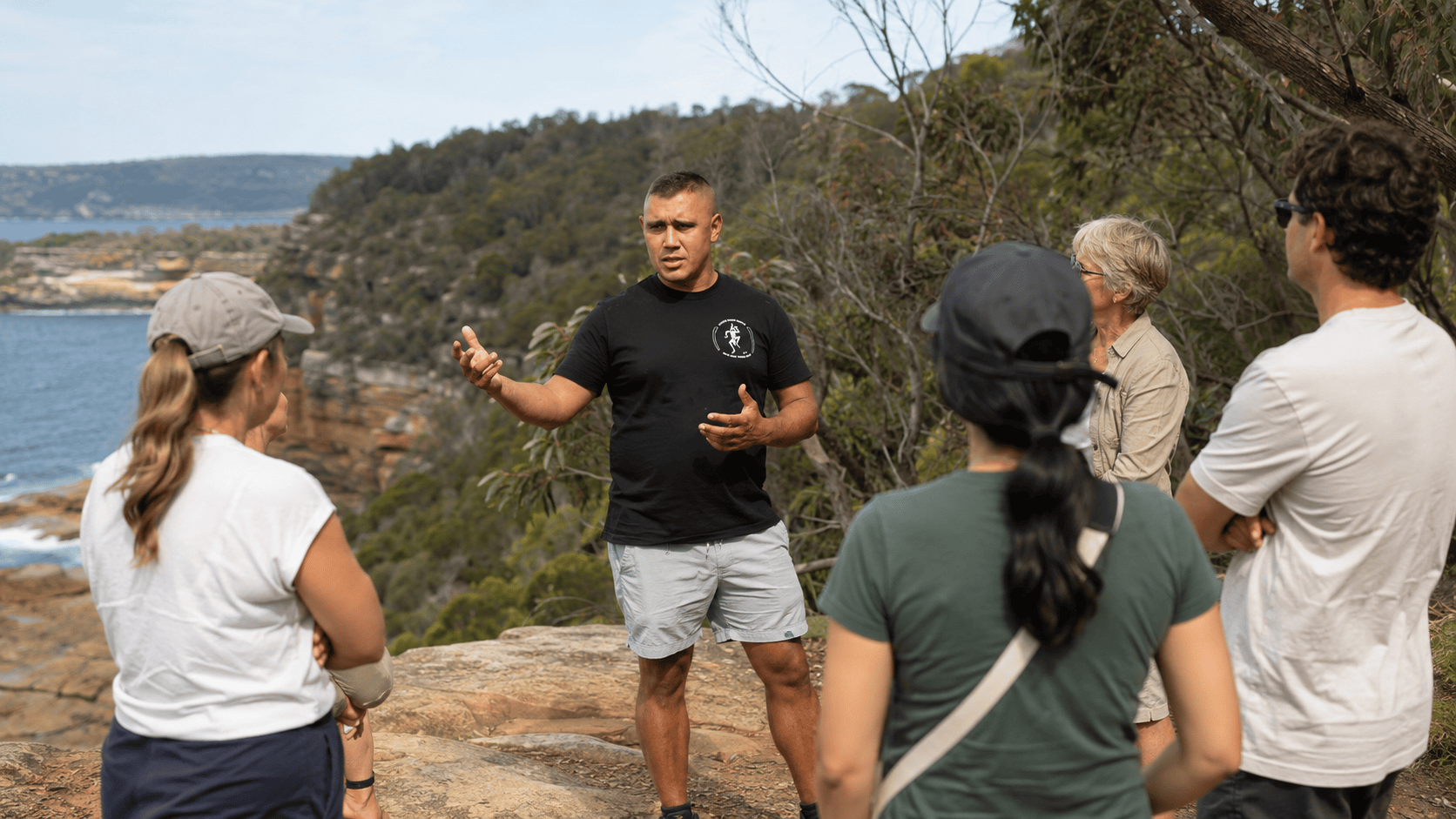
An Aboriginal walking tour is rich with knowledge passed down over tens of thousands of years. Here is what you can expect to learn as you walk.
1. Connection to Country
Country is more than land. It is a living relationship between people, place, story, and identity. On an Aboriginal walking tour, you learn what Country means to Aboriginal people and how that connection has been maintained and cared for across countless generations. Understanding Country reshapes the way you see the landscape around you, turning a familiar park or coastline into a place with deep meaning and ongoing cultural life.
2. Cultural Stories Connected to Place
Cultural stories are tied to specific landscapes and places. As you walk, your guide shares stories that belong to the Country you are standing on, explaining how they connect to features in the land.
This is cultural knowledge interpreted by an Aboriginal guide, told in the place where it belongs, which gives the stories a depth and resonance that no book or museum display can match.
3. Rock Engravings, Middens, and Significant Sites
Sydney's landscapes hold thousands of Aboriginal sites, including rock engravings, middens, and other places of significance.
On tour, your guide helps you understand what these sites are, how to recognise them, and why they matter. Learning to read the land this way reveals a living cultural record that has been part of Sydney for tens of thousands of years, hidden in plain sight.
4. Native Plants, Wildlife, and Seasonal Knowledge
Aboriginal knowledge of native plants, animals, and seasons is detailed and practical. Your guide shares how plants were traditionally used for food and medicine, how seasonal change shapes life on Country, and how people lived sustainably with the land.
This knowledge connects ecology, culture, and daily life, showing how deeply Aboriginal people understand the landscapes they belong to.
Where Do Aboriginal Walking Tours in Sydney Take Place?
Aboriginal walking tours take place across some of Sydney's most significant natural landscapes. The table below compares the main locations to help you choose the right tour.
| Location | Best For | What Visitors May Experience |
|---|---|---|
| Ku-ring-gai Chase National Park | Rock engravings, national park landscapes, and coastal views | Sacred rock engravings, bushland, and Country interpretation |
| Royal National Park | Coastal Country, bushland, and cultural landscapes | Walking through one of Sydney’s most significant cultural landscapes with Country interpretation |
| La Perouse, Kamay Botany Bay | First-contact history, coastal heritage, and accessible cultural learning | Coastal sites, local history, and Country interpretation at a place of deep cultural meaning |
| Bondi | Coastal walking, whale season, and visitor-friendly experiences | Seasonal whale-focused coastal storytelling and connection to coastal Country |
What Should You Bring and Wear?
An Aboriginal walking tour is an outdoor experience on Country, so a little preparation helps you stay comfortable and get the most from the day. Here is what to bring and wear.
Comfortable walking shoes: Choose enclosed shoes with a good grip. Tracks can be uneven, with natural surfaces underfoot, so sturdy footwear matters.
Sun protection: Pack a hat, sunscreen, and sunglasses. The Australian sun is strong, and much of the walk is in open landscapes.
Weather-appropriate clothing: Dress for the conditions on the day. Light, breathable layers suit warmer months, with a jacket added for cooler or coastal weather.
Drinking water: Bring enough water to stay hydrated across the walk, particularly in warmer months.
A small backpack: A light, comfortable backpack keeps your hands free and carries water, sun protection, and personal items.
A camera or phone: You may want to capture the landscape, though always follow your guide's directions about where photography is appropriate.
An open mind: Perhaps the most important thing to bring. Arrive ready to listen, slow down, and connect with the country and culture.
How to Join an Aboriginal Walking Tour Respectfully
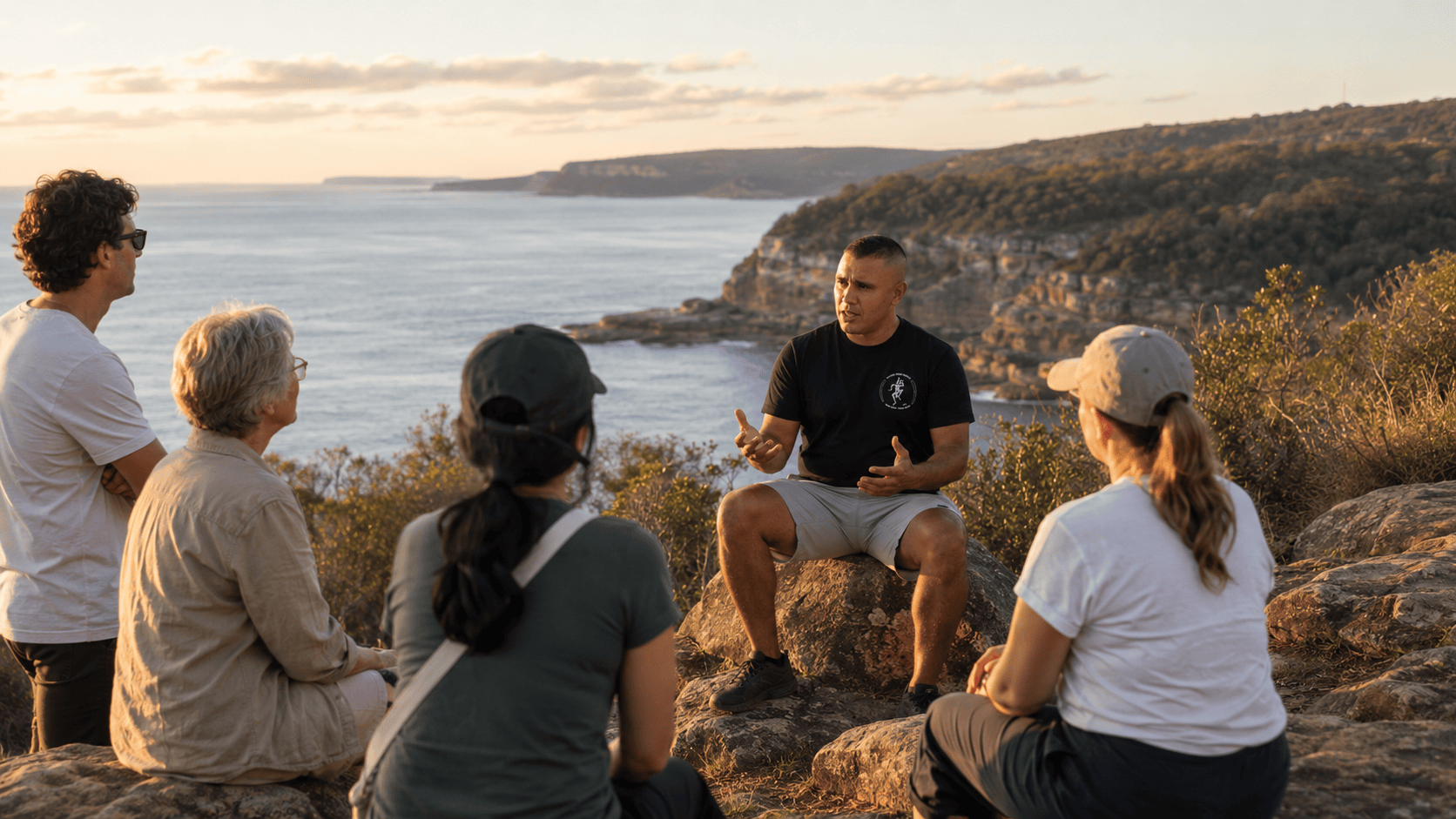
An Aboriginal walking tour is a cultural experience, not only a recreational one. Joining a tour with respect makes the day richer for you and honours the culture and Country you are visiting. Here is how to take part the right way.
1. Respectful Things to Do
Listen before you speak: Give your guide space to share knowledge. Questions are welcome, but listening first helps you absorb the cultural context.
Follow your guide's directions: Some places may be sensitive, and some content carries cultural protocol. Following your guide's guidance shows respect for the country and culture.
Ask thoughtful questions: Genuine, considered questions are welcome and often lead to the most meaningful moments of the tour.
Stay with the group: Walking on Country is guided for a reason. Staying together keeps the group safe and respects the places you pass through.
Be present: Slow down, pay attention, and allow yourself to connect with the landscape and the stories shared within it.
2. Things to Avoid
Do not touch engravings or cultural objects: Significant places and objects should be observed, not handled. Touching can cause lasting damage.
Do not collect stones, shells, or plants: Leave the landscape as you find it. What belongs to the country should stay on Country.
Do not treat the experience as a performance: This is living culture, not a show. Engage with it as a genuine cultural exchange.
Do not rush or talk over others: Give the guide and fellow visitors the space to share and listen without interruption.
Who Is an Aboriginal Walking Tour Best For?
Aboriginal walking tours suit a wide range of people. Here is who gets the most from the experience.
1. Visitors to Sydney
For visitors, an Aboriginal walking tour offers far more than standard sightseeing. Rather than viewing Sydney from a bus window or a lookout, you step into the landscape and understand it through Aboriginal culture, guided by people whose connection to the place runs across countless generations. It is one of the most meaningful ways to experience the city, connecting you to the deep history beneath the modern skyline.
2. Local Sydney Residents
Locals often walk past significant Country every day without knowing it. An Aboriginal walking tour gives Sydney residents the chance to see familiar parks, coastlines, and bushland with a fresh understanding. Many locals leave a tour feeling more connected to the place they call home and more aware of the cultural history that surrounds them.
3. Families and Young People
Aboriginal walking tours can be a rich, hands-on learning experience for families. Children connect with story, land, and culture in a way that stays with them, away from screens and out on Country. Confirm suitability and age recommendations with Natcha when booking, as this varies by tour and location.
4. Corporate, School, and Community Groups
Aboriginal walking tours work well for corporate teams, school groups, and community organisations. The shared experience builds connection, cultural understanding, and reflection. Natcha offers private and corporate experiences designed for groups, making it a strong option for team days, cultural learning, and meaningful group outings.
How to Choose the Right Aboriginal Walking Tour in Sydney
With several locations and tour types available, a few simple checks help you choose the right Aboriginal walking tour for your group and your interests.
Choose the right location: Match the tour to the landscape you want to experience. Ku-ring-gai Chase and Royal National Park offer bushland and national park Country, La Perouse offers coastal heritage and first-contact history, and Bondi offers seasonal coastal walking.
Check who leads the tour: An authentic experience is led by an Aboriginal guide. Natcha tours are led by Aboriginal guides, with Founder Eric Brown bringing deep cultural knowledge and connection to Country.
Consider your group: Think about who is coming. Some tours suit families, others suit corporate teams or community groups. Confirm suitability with Natcha when booking, particularly for children and larger groups.
Look at what is included: Check tour duration, walk distance, meeting points, and what to bring, so the experience matches your group's fitness and expectations.
Match the tour to your purpose: A relaxed visitor walk, a school cultural program, and a corporate team day are all different. Choose the tour that fits why you are booking.
Book with respect: Choose an Aboriginal-owned operator. Booking with Natcha means your experience supports Aboriginal culture, community, and healing.
Ready to Walk on Country in Sydney?
An Aboriginal walking tour in Sydney gives you a deeper way to experience the city beyond its beaches, lookouts, and walking tracks. Guided by an Aboriginal cultural educator, the experience helps you understand Country through story, ecology, history, and living culture.
By knowing what to expect before you arrive, you can take part with more confidence and respect. From the welcome at the start to the places you visit, the stories you hear, and the questions you ask, each part of the walk helps you connect more meaningfully with the landscape.
To experience Sydney through Aboriginal knowledge, place, and culture, book an Aboriginal walking tour with Natcha Cultural Tours and walk on Country with guidance, respect, and purpose.
Frequently Asked Questions
1. How long does an Aboriginal walking tour in Sydney take?
Most tours run for several hours, though the length varies by location and tour type. Confirm the exact duration with Natcha when booking, as each walk and location is different.
2. Do I need to be very fit to join?
Tours involve walking on natural, sometimes uneven ground, but most are accessible to people with a reasonable level of fitness. Check the walk distance and difficulty with Natcha before booking.
3. Are Aboriginal walking tours suitable for children?
Many tours suit families, and children often connect strongly with the story and the country. Suitability and age recommendations vary by tour, so confirm with Natcha when booking.
4. Can I take photos during the tour?
In most places, yes. Some sites and cultural content should not be photographed, so always follow your guide's directions on where photography is appropriate.
5. What is the difference between an Aboriginal walking tour and a regular walking tour?
A regular walking tour points out views and landmarks. An Aboriginal walking tour interprets the same landscape through culture, story, history, and connection to Country, guided by an Aboriginal guide.
6. What should I bring on an Aboriginal walking tour?
Bring comfortable walking shoes, sun protection, weather-appropriate clothing, drinking water, and a small backpack. Most importantly, bring an open mind and a willingness to listen and connect.
