
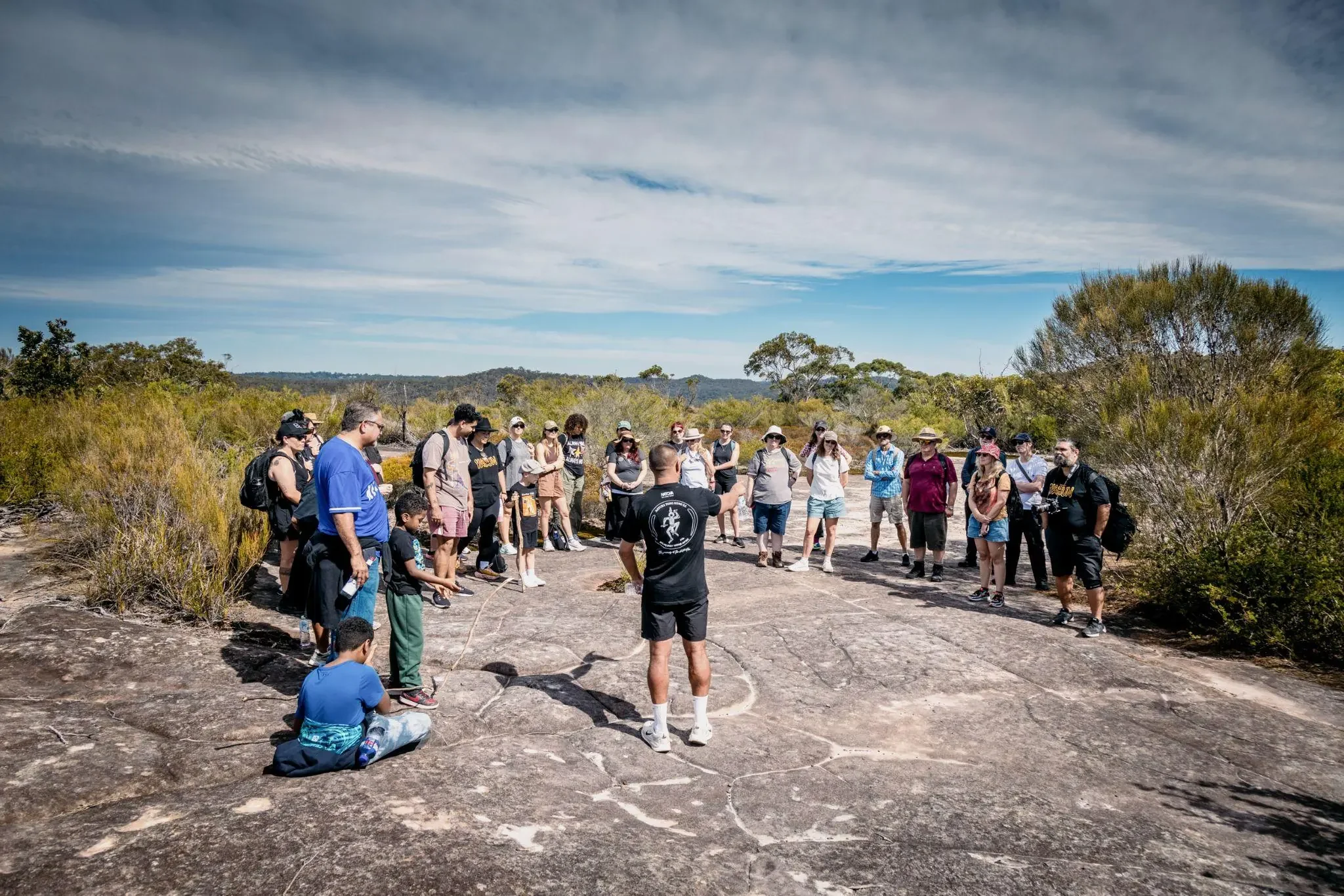
Aboriginal sites in NSW are places that hold Aboriginal cultural heritage, from rock engravings and shell middens to ceremonial grounds and Dreaming tracks. Many are protected by law. Some are open to the public and signposted in national parks, and others are culturally sensitive and not for public visiting. This guide explains what these places are, the main types you will find, why they matter, how they are protected, and how to experience them respectfully.
Quick answer
What they are: Places that hold Aboriginal cultural heritage, including art, objects, and areas of ongoing significance to Aboriginal people.
Main types: Rock engravings, paintings and stencils, shell middens, grinding grooves, scarred trees, fish traps, and more.
Protection: Aboriginal objects and places are protected under NSW law, and many are recorded on the AHIMS register held by Heritage NSW.
How to visit: Treat public, signposted sites with care, and experience culturally sensitive places with an Aboriginal guide.
What is an Aboriginal site?
An Aboriginal site is any place that holds evidence of Aboriginal cultural heritage or ongoing significance to Aboriginal people. That can be a single object, such as a stone tool, or a whole landscape connected by story and use over time.
These places are part of a living culture, not only a record of the past. Aboriginal people have cared for Country across what is now NSW for tens of thousands of years, and many sites remain in active cultural use today. If you are new to the subject, it helps to understand what an Aboriginal cultural tour involves before you visit, so you arrive with the right context and respect.
What types of Aboriginal sites are found in NSW?
NSW holds a wide range of Aboriginal site types, shaped by the Country they sit on. The table below sets out the most common ones and where you might come across them.
| Site type | What it is | Where you might see it in NSW |
|---|---|---|
| Rock engravings | Figures and designs pecked into sandstone, including animals, people and ancestral beings. | Sydney sandstone Country, including Ku-ring-gai Chase and the Royal National Park. |
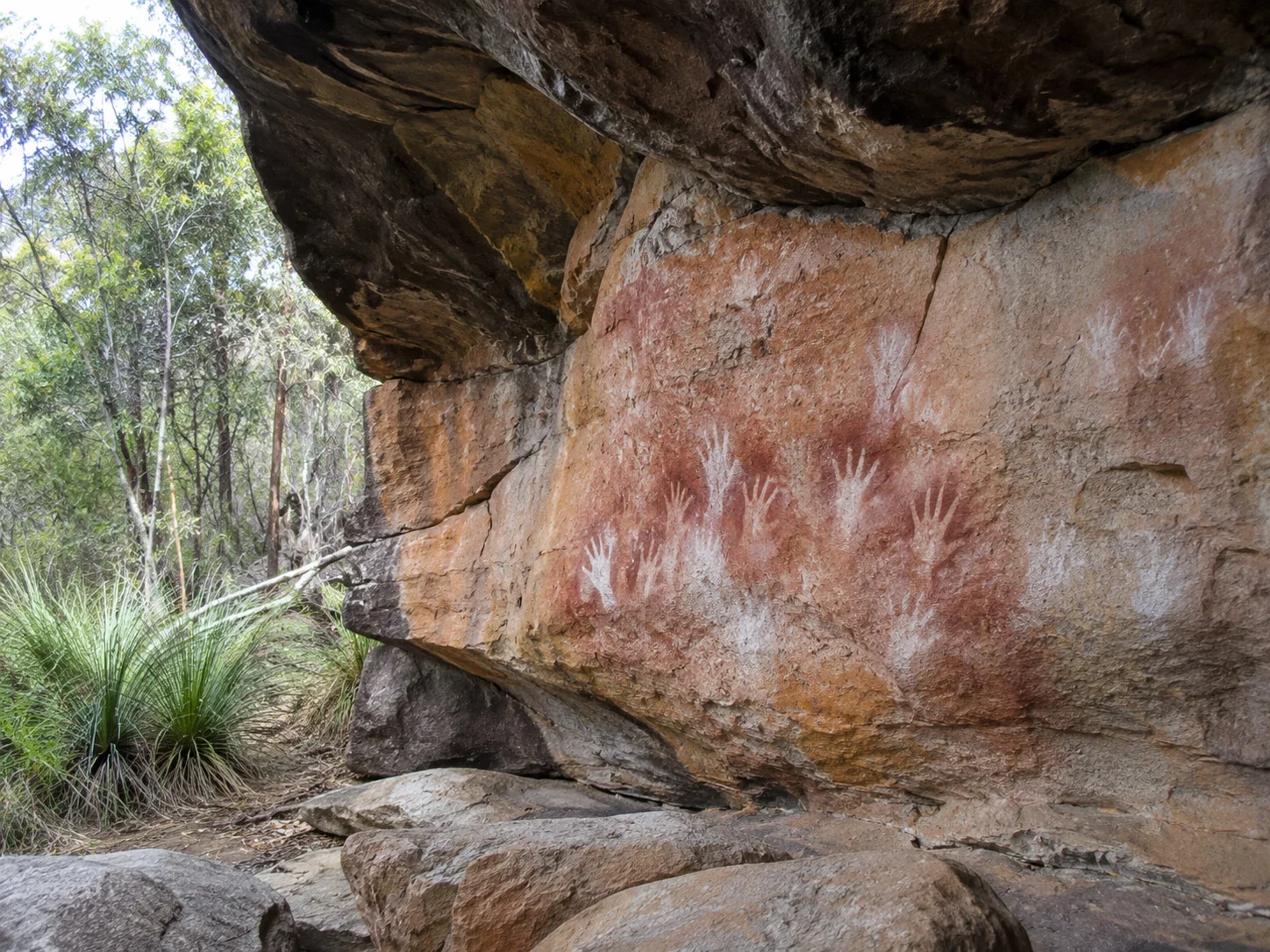
| Rock paintings and stencils | Images made with ochre and charcoal, including hand stencils on shelter walls. | Red Hands Cave, Ku-ring-gai Chase. |
| Shell middens | Layers of shell, bone and charcoal left from generations of meals near the coast and rivers. | Coastal headlands and estuaries along the Sydney and South Coast. |
| Grinding grooves | Grooves worn into rock where stone tools and axes were shaped and sharpened, often near water. | Sandstone platforms across greater Sydney. |
| Scarred and carved trees | Trees where bark was removed for canoes, shields or containers, or carved for ceremony. | River red gum Country and inland NSW. |
| Stone arrangements and ceremonial grounds | Arranged stones and cleared areas used for ceremony and teaching. | Inland and regional NSW. |
| Fish traps | Stone weirs built to catch fish, among the oldest known human-made structures. | Brewarrina Fish Traps, Baiame's Ngunnhu, north-west NSW. |
| Occupation shelters | Overhangs and caves used for shelter, often holding art, tools or midden material. | Sandstone escarpments across the state. |
| Burial places | Resting places of ancestors, deeply significant and protected. These are not visitor destinations. | Located across NSW and not publicised. |
| Dreaming tracks (songlines) | Routes across Country that link important places and carry knowledge through song. | The Bundian Way and Bingi Dreaming Track. |
Why do Aboriginal sites matter? Cultural meaning and connection to Country
Aboriginal sites matter because they hold knowledge, law, and story, and they connect people to Country. Country is not only land. It includes waterways, sky, plants, animals, and the relationships and responsibilities that come with them.
Many sites sit along songlines, the routes that link places across the landscape and pass on knowledge through song and story. An engraving, a midden, or a ceremonial ground can be one part of a much larger cultural map. This is why a site is understood in its wider context, not as an isolated object.
Two cultural protocols are often confused. A Welcome to Country is delivered by a Traditional Owner or Elder of that Country to welcome visitors onto their land. An Acknowledgement of Country can be given by anyone to show respect to the Traditional Owners. You can read more about how Natcha delivers Welcome to Country and a smoking ceremony for groups and events.
Are Aboriginal sites protected by law in NSW?
Yes. Aboriginal objects and places are protected under the National Parks and Wildlife Act 1974 (NSW), and harming or disturbing them can be an offence. Protection applies whether or not a site is recorded, and whether or not it sits on public land.
AHIMS: The Aboriginal Heritage Information Management System is the register of recorded Aboriginal sites and objects, maintained by Heritage NSW.
Aboriginal Places: Land can be formally declared an Aboriginal Place by the Minister because of its special significance to Aboriginal culture.
Why it matters: The law recognises that these places hold cultural value that cannot be replaced once it is damaged or lost.
This is general information, not legal advice. If your work or property may affect an Aboriginal site, seek guidance from Heritage NSW and the relevant Aboriginal Land Council.
How do you visit Aboriginal sites respectfully?
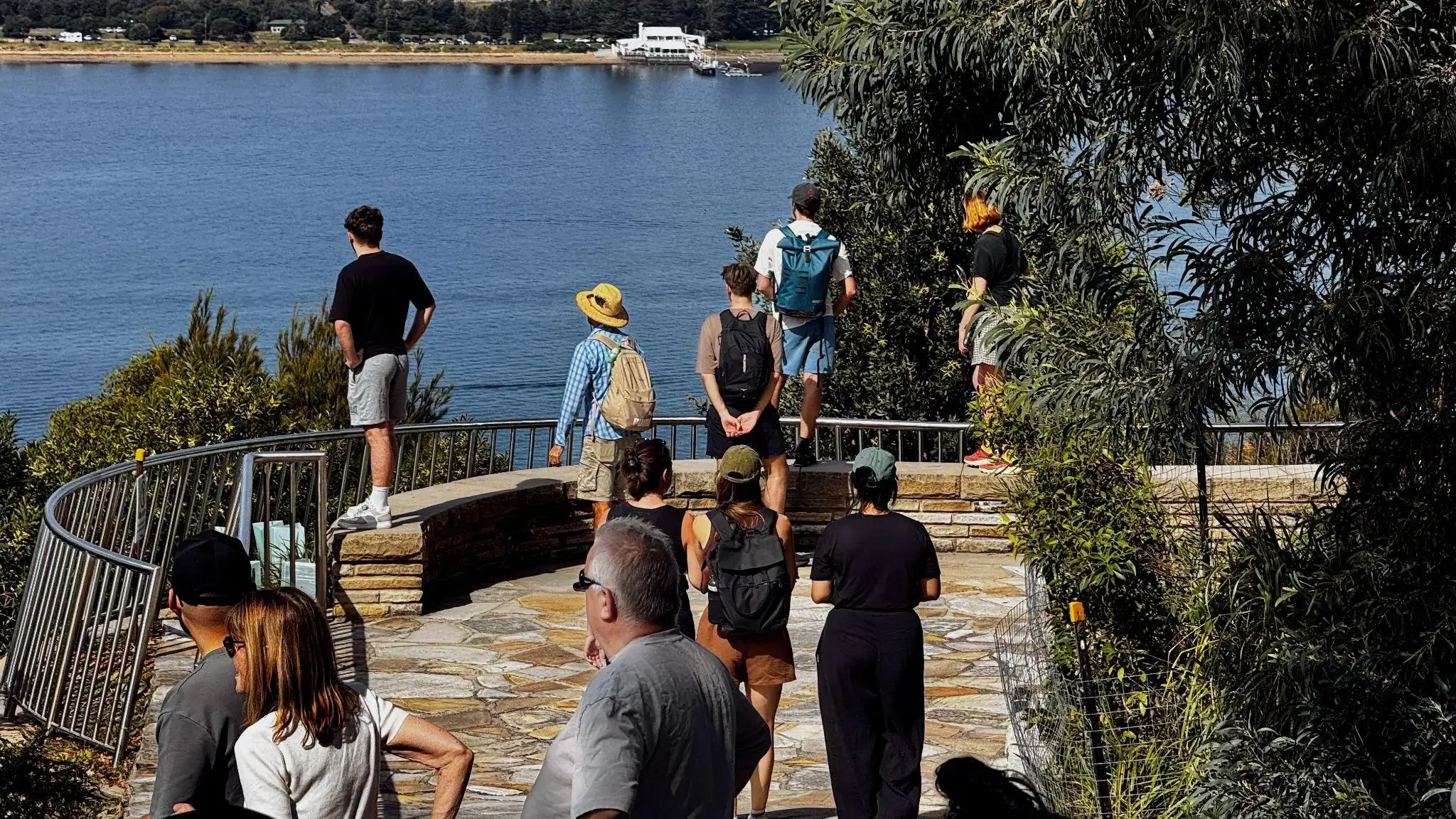
Visit public, signposted sites with care, and treat every site as a place of ongoing cultural significance. Following a few clear protocols protects both the site and the knowledge it holds, as advised by NSW National Parks.
Do
Stay on tracks: Keep to marked walking tracks and viewing platforms.
Follow guidance: Observe all signs, and any direction from Traditional Owners or rangers.
Visit sensitive places with permission: See restricted or culturally sensitive areas only by invitation or with an Aboriginal guide.
Leave no trace: Take your rubbish with you and leave the site exactly as you found it.
Do not
Do not touch the art: Oils and moisture from skin break down rock surfaces and pigments over time.
Do not walk on engravings: Avoid standing or climbing on engraved or painted surfaces.
Do not remove anything: Leave artefacts, stone, shell, and other material in place.
Do not reveal locations: Avoid sharing the exact locations of lesser-known sites online, where this can lead to damage.
Where can you experience Aboriginal sites in NSW?
You can experience Aboriginal sites at a number of public, signposted places, with several best understood alongside an Aboriginal guide. The table below lists well-known sites that are already promoted for visitors.
| Place and area | What you can see | How to visit |
|---|---|---|
| Ku-ring-gai Chase National Park (Sydney's north) | Rock engravings and the ochre hand stencils of Red Hands Cave. | Self-guided walks, or a guided Aboriginal walking tour. |
| Brisbane Water National Park (Central Coast) | The Bulgandry Art Site, with well-preserved engravings of animals and an ancestral figure. | Self-guided, signposted site. |
| Royal National Park (Bundeena) | The Jibbon Head engravings on the coastal headland walk. | Self-guided, or a guided Aboriginal walking tour. |
| La Perouse and Kamay Botany Bay (Sydney) | Coastal middens, engravings and a living Aboriginal community. | Guided Aboriginal walking tour recommended. |
| Murramarang Aboriginal Area (South Coast) | One of the largest recorded midden sites on the South Coast. | Self-guided, signposted. |
| Brewarrina Fish Traps, Baiame's Ngunnhu (north-west NSW) | Ancient stone fish traps still visible in the Barwon River. | Guided tour recommended. |
| Mungo National Park (far west, Willandra Lakes) | A World Heritage landscape with very old evidence of Aboriginal life. | Guided tour or NPWS Discovery program. |
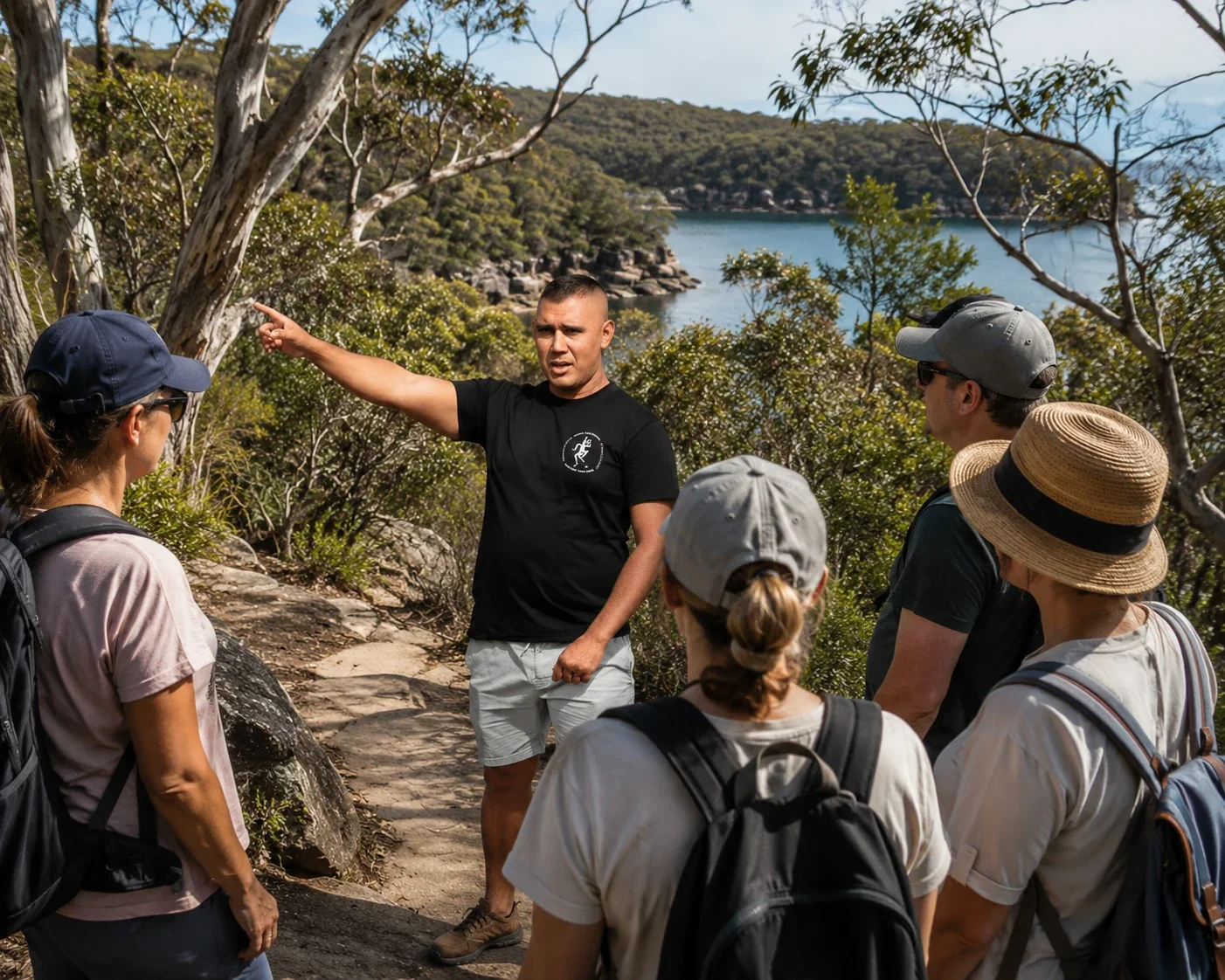
Each of these places sits on the Country of its Traditional Owners. The Royal National Park, for example, is on Dharawal Country. Around Sydney, you can walk engraving and midden sites with Natcha on a Ku-ring-gai Chase Aboriginal walking tour, in the Royal National Park, or at La Perouse.
What can you gain from visiting with an Aboriginal guide?
A guide turns a site you can look at into a place you can understand. Walking with an Aboriginal guide means you are visiting with permission, hearing accurate story and language, and learning how the site connects to Country, food, and daily life.
It also keeps your visit culturally safe, because a guide knows what can be shared and what should not be. To see how a guided visit works in practice, read what to expect on an Aboriginal walking tour in Sydney, or browse the full range of Aboriginal walking tours across Sydney and NSW.
Understand these places with an Aboriginal guide
To understand Aboriginal sites the way they are meant to be understood, walk them on Country with an Aboriginal guide. Start with Ku-ring-gai Chase, or get in touch to plan a private, school or group visit.
What should you do if you find an Aboriginal site or object?
If you come across what may be an Aboriginal site or object, leave it untouched and report it. Aboriginal objects are protected even when they are not yet recorded.
Do not disturb it. Do not touch, move, or collect the object or material.
Note the location carefully. Record where it is, and take care not to publicise the exact spot.
Report it to Heritage NSW. Heritage NSW maintains the AHIMS register and can advise on the next steps.
Frequently asked questions
1. Can you visit Aboriginal sites in NSW?
Yes. Many Aboriginal sites are open to the public and signposted in national parks, while others are restricted and should only be visited with permission or an Aboriginal guide. Always follow on-site signage and stay on marked tracks.
2. What is the difference between an Aboriginal site and a sacred site?
An Aboriginal site is any place of cultural significance or evidence of Aboriginal occupation. A sacred or restricted site holds special cultural significance and is often not open to the public, and its location may not be published.
3. Is it illegal to disturb an Aboriginal site in NSW?
Yes. Aboriginal objects and places are protected under the National Parks and Wildlife Act 1974 (NSW), and harming them can be an offence, according to Heritage NSW. Protection applies whether or not the site is recorded.
4. Why should you not touch rock art or engravings?
Oils and moisture from skin break down the rock surface and pigments over time. NSW National Parks asks visitors not to touch art or walk on engravings so the sites survive for future generations.
5. Can you take photos of Aboriginal sites?
Usually yes at public sites, but follow any signage, avoid flash where you are asked to, and do not share the exact locations of lesser-known sites online. Some places ask that particular features are not photographed.
6. What is the difference between Welcome to Country and Acknowledgement of Country?
A Welcome to Country is delivered by a Traditional Owner or Elder of that Country to welcome visitors onto their land. An Acknowledgement of Country can be offered by anyone to show respect to the Traditional Owners.
7. Where can you see Aboriginal rock art near Sydney?
Ku-ring-gai Chase National Park (Red Hands Cave), Brisbane Water National Park (the Bulgandry Art Site), and the Royal National Park (Jibbon Head engravings) all have publicly accessible engravings or art. Several are best understood on a guided Aboriginal walking tour.
