
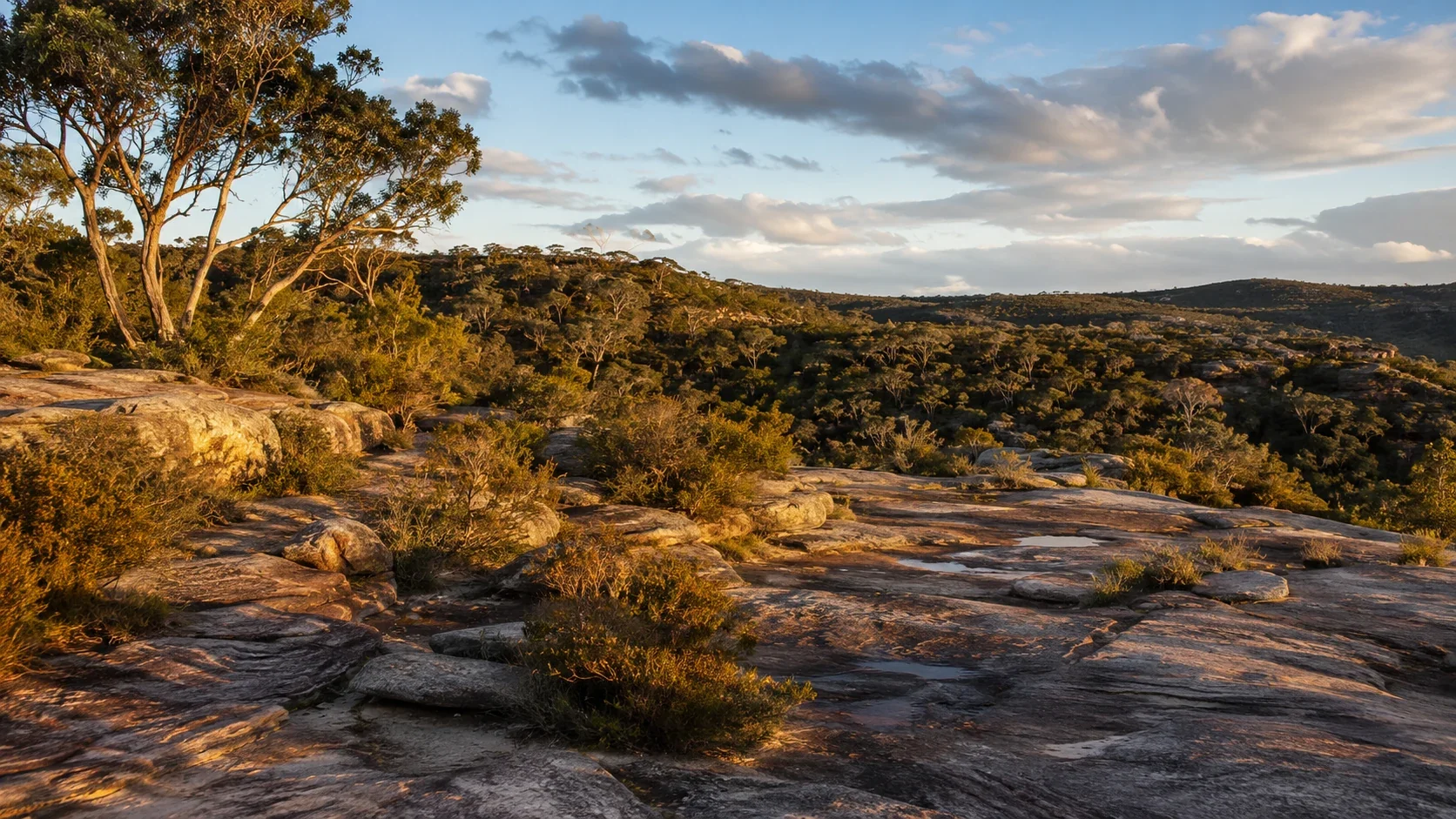
Aboriginal sites on the Central Coast are cultural places, not ordinary tourist attractions. They sit within Country, story, memory and continuing Aboriginal custodianship. The best-known public site for visitors is Bulgandry Art Site Aboriginal Place in Brisbane Water National Park, but the region holds many other cultural places that are not public visitor destinations.
This guide focuses on public, signposted and officially discussed places only. It recognises the Central Coast as Darkinjung Country and encourages visitors to defer to the Darkinjung Local Aboriginal Land Council, NSW National Parks and local Aboriginal guidance when learning about cultural places in the region.
Whose Country Is the Central Coast?
The Central Coast is widely recognised as Darkinjung Country. Darkinjung Local Aboriginal Land Council describes its boundaries as stretching from Catherine Hill Bay in the north to the Hawkesbury River in the south, the Pacific Ocean in the east and the Watagan Mountains in the west.
Central Coast Council also notes long-standing and continuing connections across the region for First Nations people who identify as Guringai, Darkinjung, Darkinoog and Awabakal. This matters because Country, identity and custodianship should be approached with care, not simplified into a casual label.
For visitors, the key point is simple: this is Aboriginal Country. Cultural places should be treated with respect, and information about them should come from Aboriginal custodians and official sources.
Natcha Cultural Tours operates in Sydney, including Ku-ring-gai Chase, Royal National Park, La Perouse and Bondi. Natcha does not present itself as the Traditional Owner of Central Coast Country. For Central Coast cultural knowledge and experiences, readers should look first to Darkinjung Local Aboriginal Land Council and local Aboriginal-led sources.
What Types of Aboriginal Sites Are Found on the Central Coast?
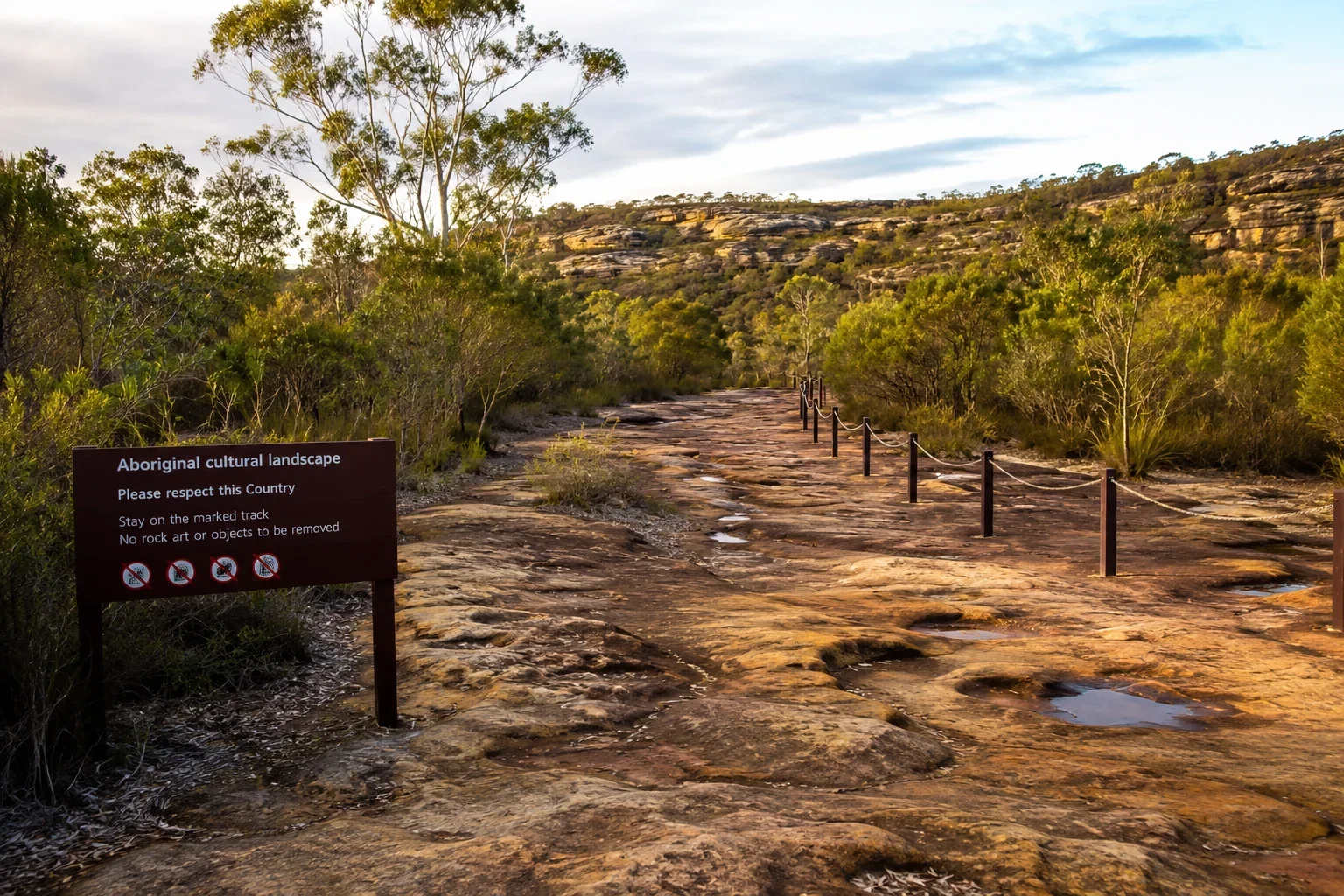
The Central Coast contains many kinds of Aboriginal cultural places. Some are visible to visitors. Others are not publicly identified, and their locations should not be shared.
Common types of Aboriginal sites in the region include:
Rock engravings: cultural markings made on sandstone surfaces.
Shell middens: places where shells, food remains and cultural material show long-term use of coastal areas.
Rock shelters: places that may be connected with living, art, teaching, rest or cultural memory.
Grinding grooves: marks left where stone tools were shaped or sharpened.
Ceremonial places: culturally important areas that may not be open to the public.
Burial places: highly sensitive places that should never be treated as visitor attractions.
Cultural landscapes: wider areas where land, water, plants, animals, pathways and story are connected.
Not every Aboriginal site is meant to be visited. Some places are fragile. Some are restricted. Some should only be accessed with appropriate Aboriginal permission. A respectful visitor does not search for hidden sites, climb around fences or share sensitive locations online.
Bulgandry Art Site Aboriginal Place
Bulgandry Art Site Aboriginal Place is the best-known public Aboriginal site on the Central Coast. It is located near Kariong in Brisbane Water National Park and is managed by NSW National Parks.
NSW National Parks describes Bulgandry Art Site Aboriginal Place as a special landscape rich in ancient Aboriginal rock art, with well-preserved engravings. The site includes a large engraving of a man thought to represent an ancestral hero, along with other engravings such as animals and cultural figures.
The site is publicly accessible by a short walking track and boardwalk. The boardwalk is there for a reason. It helps visitors view the engravings without walking across the sandstone surface.
When visiting Bulgandry:
Stay on the boardwalk.
Do not walk on the engravings.
Do not touch the engravings.
Do not trace, chalk, wet or re-groove the carvings.
Do not remove stones, plants, shells or artefacts.
Follow all NSW National Parks signs and instructions.
NSW National Parks clearly asks visitors not to walk on or touch the engravings. That instruction should be treated as a cultural and conservation requirement, not just a park rule.
Bouddi National Park and Daleys Point
Bouddi National Park is another important Central Coast landscape with publicly discussed Aboriginal cultural heritage. Love Central Coast notes that Bouddi National Park is home to around 100 recorded significant cultural sites, including shelters with art and engravings, middens and grinding grooves.
Visitors should not treat that as an invitation to search for sites. Many cultural places are not promoted for public visitation. The safer approach is to use official walking tracks, signage and visitor information.
One publicly mentioned place is the signposted Daleys Point Aboriginal Relic Site. Love Central Coast describes it as a place where visitors can learn about engravings, including whale figures, within a public visitor setting.
If you visit Bouddi or Daleys Point:
stay on marked tracks
follow signs
do not step onto cultural surfaces
do not photograph or share anything marked as restricted
avoid looking for unsignposted sites
leave all cultural material undisturbed
The aim is not to “collect” Aboriginal sites as stops on a map. The aim is to learn carefully and leave Country unharmed.
How to Visit Aboriginal Sites Respectfully
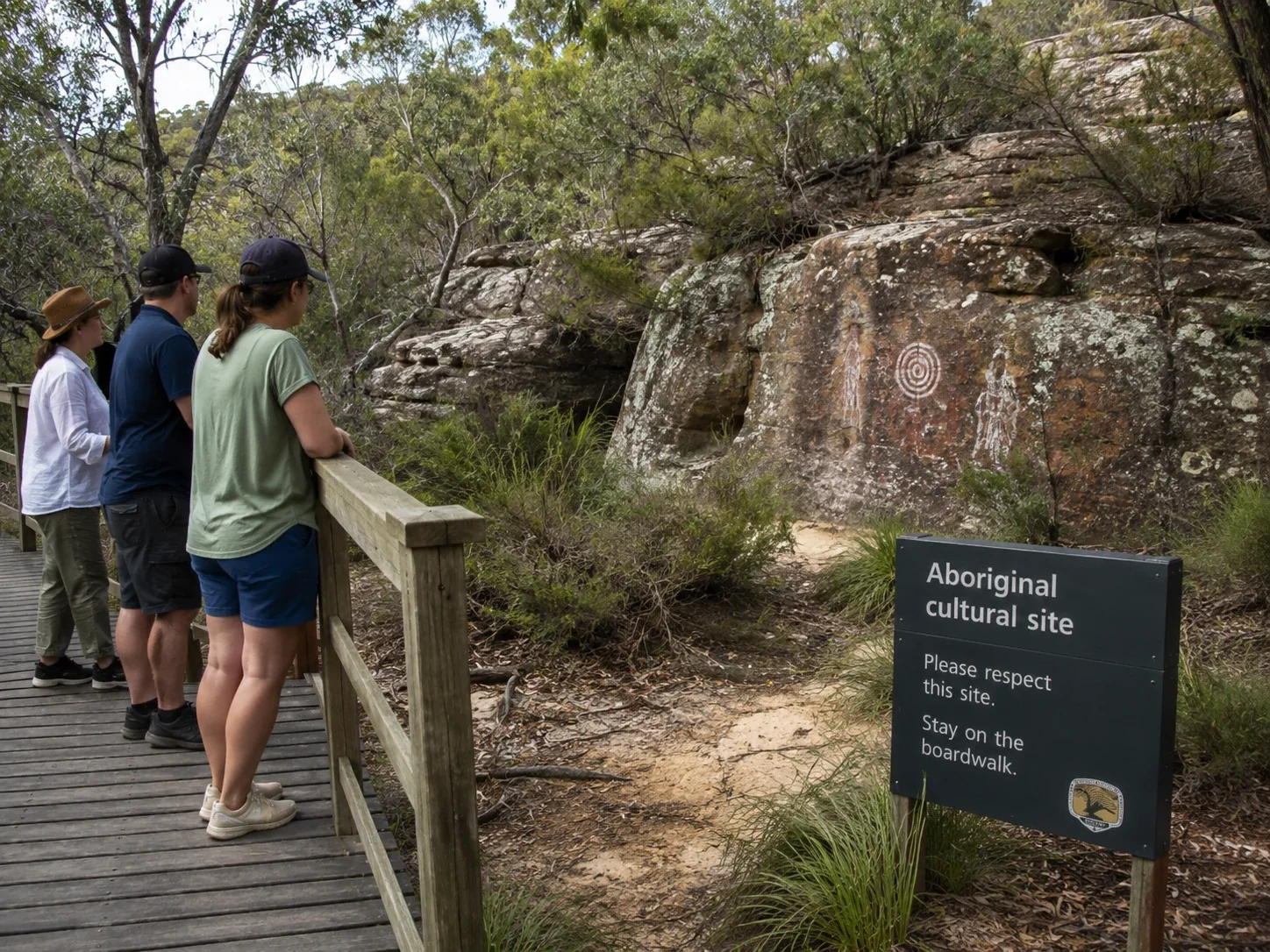
The most respectful way to visit Aboriginal sites on the Central Coast is to visit only public, signposted places and follow official guidance. Cultural places are not ruins. They are living heritage connected to Aboriginal people today.
Use this checklist before and during your visit.
1. Stay on Marked Paths and Boardwalks
Boardwalks, fences and signs are there to protect cultural places. Walking across sandstone can damage engravings even if the damage is not obvious at the time.
2. Never Touch Rock Art or Engravings
Touching, rubbing, tracing or wetting engravings can harm fragile surfaces. Do not use chalk, water, sticks, fingers or any other method to make carvings more visible.
3. Do Not Walk on Cultural Surfaces
Even one step can contribute to long-term damage. Sandstone can wear down, and engravings can become less visible over time through foot traffic.
4. Do Not Remove Anything
Do not take shells, stones, plants, artefacts or other material. What may look ordinary to a visitor may be part of a cultural place.
5. Do Not Share Sensitive Locations
Avoid posting GPS points or directions to non-public Aboriginal sites. Public sites such as Bulgandry already have official visitor information. Restricted or unsignposted places should be left alone.
6. Respect Signs, Rangers and Aboriginal Guidance
Follow NSW National Parks signs, local council information and Aboriginal community guidance. If a place is closed, fenced, restricted or not promoted for visitation, respect that.
7. Do Not Treat Sites as Photo Props
Photography may be allowed at some public places, but that does not mean every image is appropriate. Avoid climbing, posing on rock surfaces or encouraging others to move closer than they should.
8. Teach Children Before You Arrive
Families can visit public sites respectfully, but children need clear guidance. Explain that these places are not playgrounds. They are cultural places that must not be touched or walked on.
Why Visitor Respect Matters
Respect matters because damage to Aboriginal cultural places can be permanent.
Rock engravings and sandstone surfaces are vulnerable to pressure, weathering, oils from hands and careless movement. Middens, shelters and other cultural places can also be damaged by walking, digging, collecting or moving objects.
The meaning of a site is also deeper than what visitors can see. A carving, shell scatter or grinding groove is not only evidence from the past. It can be connected to ancestors, Country, story, identity and continuing responsibility.
When visitors ignore signs, step over barriers or share sensitive locations, they place cultural heritage at risk. When they follow guidance, they help protect places for Aboriginal communities and future generations.
Guided Aboriginal Experiences on the Central Coast
The best way to understand Aboriginal cultural places is through Aboriginal-led learning. On the Central Coast, visitors should look first to Darkinjung-led experiences, local Aboriginal organisations and official visitor information.
Darkinjung Local Aboriginal Land Council is the appropriate place to begin when looking for cultural context, custodianship and Aboriginal-led experiences on Darkinjung Country. NSW National Parks is the main official source for visiting Bulgandry Art Site Aboriginal Place and other national park locations.
For visitors closer to Sydney who want to learn on Country with an Aboriginal guide, Natcha’s Ku-ring-gai Aboriginal walking tour offers a sandstone Country experience south of the Central Coast. It is not a Central Coast tour, but it can help visitors understand why Aboriginal cultural places, rock engravings and visitor protocols matter.
If you are new to this kind of learning, Natcha’s guide towhat an Aboriginal cultural tour involves explains how guided experiences connect Country, story, culture and respect.
Want to learn on sandstone Country near Sydney? Natcha’s Ku-ring-gai Chase walk offers a guided Aboriginal cultural experience with Country, story and visitor respect at its centre.
View Ku-ring-gai Chase TourPlan Your Visit
Use official sources before travelling. Track conditions, park rules, road access and visitor guidance can change.
| Item | What to know |
|---|---|
| Main public site | Bulgandry Art Site Aboriginal Place |
| Location | Brisbane Water National Park near Kariong |
| Official visitor source | NSW National Parks |
| Access note | NSW National Parks says the road can become boggy after rain |
| Best practice | Stay on the boardwalk and marked paths |
| Respect reminder | Do not seek out non-public Aboriginal sites |
| Good for families? | Yes, if children are supervised and understand not to touch or walk on cultural places |
The NSW National Parks visitor information page is the best source for current details before visiting Bulgandry.
Aboriginal Sites Are Protected Cultural Heritage
Aboriginal cultural heritage is protected in NSW. Visitors should never disturb, damage, remove or interfere with Aboriginal objects or places.
This includes things that may not look important to an untrained eye. A shell, stone, groove, mark or surface may be part of a cultural site. If you find something that could be Aboriginal cultural material, leave it where it is and report it to the relevant authority rather than moving it.
Ethical engagement also means recognising Aboriginal knowledge systems and cultural authority. AIATSIS notes that ethical engagement with Aboriginal and Torres Strait Islander peoples is grounded in respect for Indigenous values, worldviews and knowledge systems.
For visitors, that means approaching sites with humility. You do not need to understand everything to behave respectfully. You need to listen, follow guidance and avoid causing harm.
Learning With Respect on Darkinjung Country
Aboriginal sites on the Central Coast are part of living cultural heritage. They are not simply places to photograph, list or tick off.
Bulgandry and other public sites can help visitors understand the depth of Aboriginal connection to Country, but respectful learning means knowing the limits. Some places are public. Many are not. Some stories can be shared. Others cannot.
The right approach is to credit Darkinjung Country, follow official guidance, stay on marked paths and leave cultural places exactly as you found them.
When visitors do that, they help protect the places they came to learn from.
Planning a school, private group or team experience in Sydney? Get in touch with Natcha to discuss a guided Aboriginal cultural tour that suits your group.
Plan a Private or Group VisitFAQs
1. Who are the Traditional Owners of the Central Coast?
The Central Coast is widely recognised as Darkinjung Country. Darkinjung Local Aboriginal Land Council is an important cultural and community authority in the region. Central Coast Council also notes connections across the region for people who identify as Guringai, Darkinjung, Darkinoog and Awabakal.
2. Where can I see Aboriginal rock art on the Central Coast?
The best-known public place to see Aboriginal rock art on the Central Coast is Bulgandry Art Site Aboriginal Place in Brisbane Water National Park near Kariong. Visitors should stay on the boardwalk and follow NSW National Parks guidance.
3. Can you visit Bulgandry Art Site?
Yes. Bulgandry Art Site Aboriginal Place is a public, signposted NSW National Parks site. Visitors can view the engravings from the boardwalk, but they must not walk on, touch, trace or interfere with the engravings.
4. Are all Aboriginal sites on the Central Coast open to the public?
No. Many Aboriginal sites are sensitive, protected, restricted or not appropriate for public visitation. Visitors should only go to public, signposted places and should not search for or share non-public site locations.
5. How do you visit Aboriginal sites respectfully?
Visit public sites only, stay on marked paths, do not touch or walk on engravings, do not remove cultural material, follow official signs and respect Aboriginal guidance. If you are unsure, do less rather than more.
6. Are Aboriginal sites protected by law in NSW?
Yes. Aboriginal objects and places are protected in NSW. Damaging, disturbing or removing Aboriginal cultural material is not acceptable and may be unlawful.
7. Are there guided Aboriginal tours on the Central Coast?
Yes, visitors should look for Darkinjung-led or locally Aboriginal-led experiences when learning on the Central Coast. For nearby Sydney-based cultural walks, Natcha offers Aboriginal cultural tours in Sydney, including Ku-ring-gai Chase, Royal National Park and La Perouse.
