
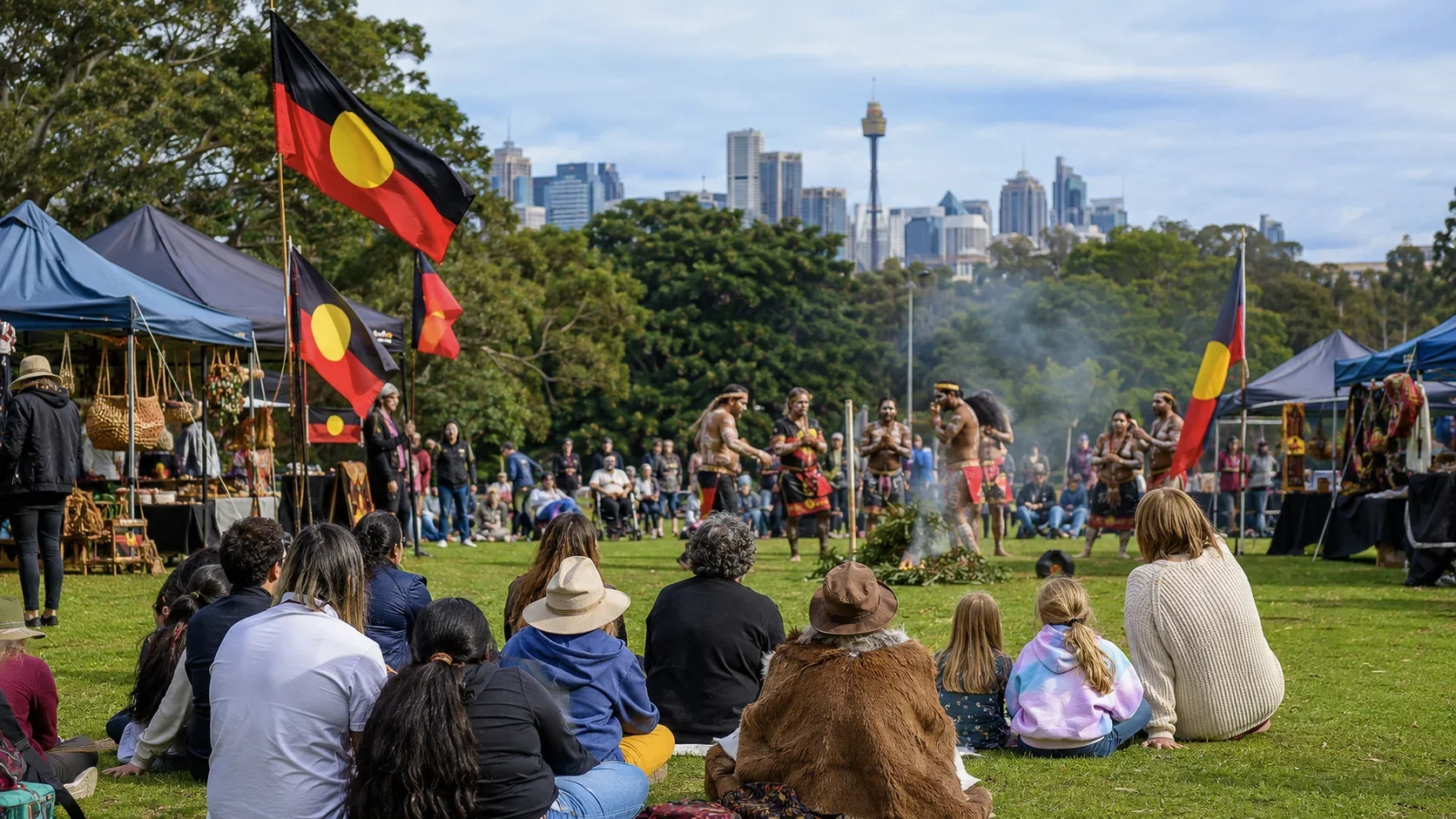
Aboriginal events in Sydney happen throughout the year. Some are large public festivals. Others are cultural dates, ceremonies, talks, exhibitions, markets, school programs, workplace events or guided experiences on Country. Many celebrate Aboriginal and Torres Strait Islander culture, while others are days of remembrance, truth-telling and reflection.
This guide explains the main Aboriginal events in Sydney, the key cultural dates to know, and how visitors, families, schools and workplaces can take part respectfully. It is not a live event listing, because programs change each year. Instead, it is an evergreen guide to the recurring dates and cultural protocols that matter.
Key Aboriginal Events in Sydney
If you are looking for Aboriginal events in Sydney, start with the recurring cultural dates and major festivals. These are the moments most visitors, schools and workplaces search for each year.
| Looking for | Quick answer |
|---|---|
| Major Aboriginal festival in Sydney | Yabun Festival, held annually on 26 January |
| Main celebration week | NAIDOC Week, held nationally in July |
| Workplace learning period | National Reconciliation Week, 27 May to 3 June each year |
| Family and community events | NAIDOC Week events, Children’s Day events, council programs and community festivals |
| Art and market events | Blak Markets and the National Indigenous Art Fair |
| Respect focus | Listen, follow protocols, ask before filming, support Aboriginal-led events and understand the meaning of the date |
For current programs, always check official event pages such asCity of Sydney Indigenous events, local council calendars, venue websites and community-led organisers.
The Key Aboriginal Cultural Dates in Sydney
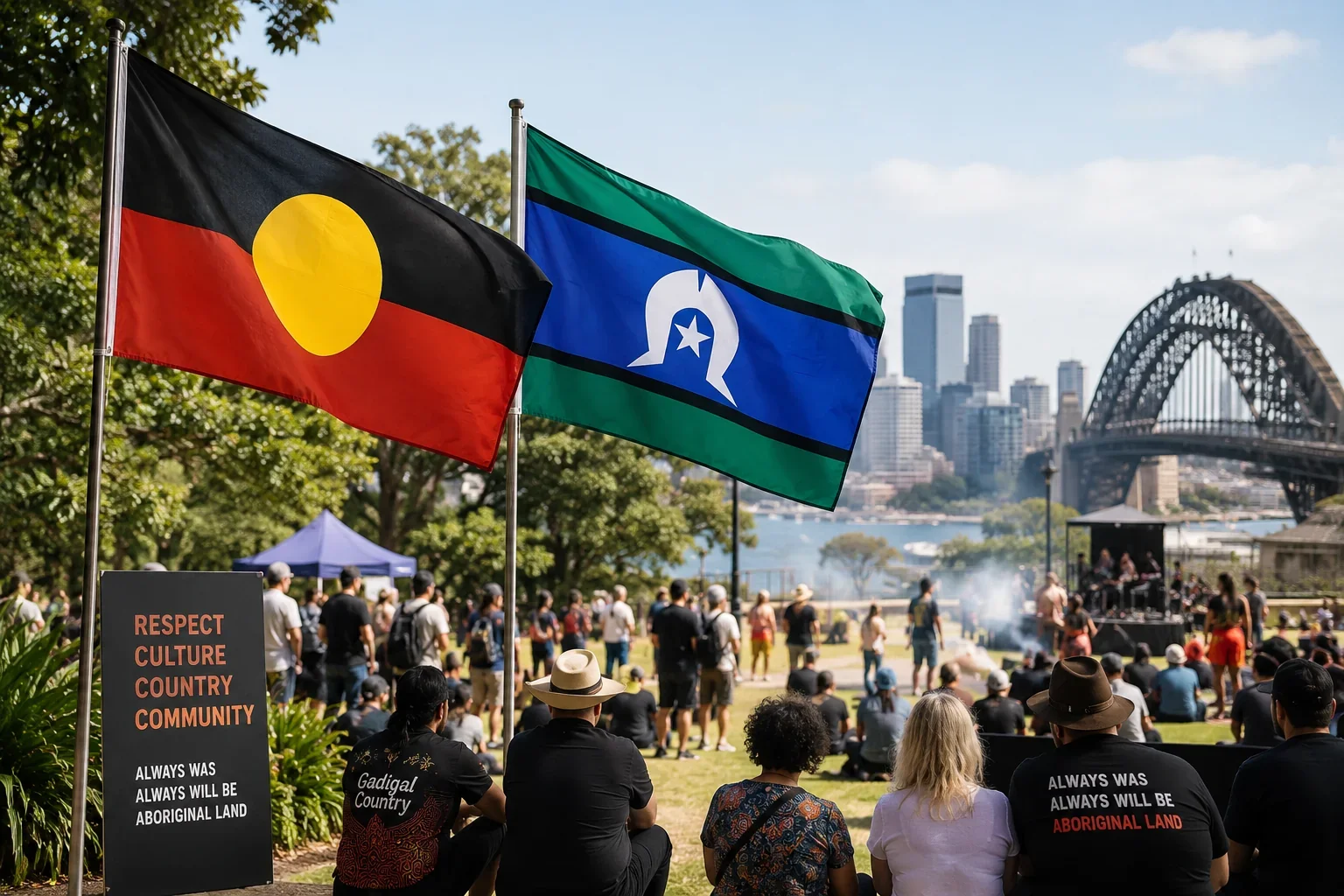
Aboriginal cultural dates are not all the same. Some are celebrations. Some are commemorations. Some are moments for truth-telling, community strength and reflection.
| Date / period | Event or date | What it marks |
|---|---|---|
| 26 January | Survival Day, Invasion Day, Day of Mourning and Yabun Festival | A date many Aboriginal and Torres Strait Islander people mark as the beginning of colonisation and a day of survival, resistance and culture |
| 26 May | National Sorry Day | A day to remember the Stolen Generations and the ongoing impact of past government policies |
| 27 May to 3 June | National Reconciliation Week | A national week focused on reconciliation, truth-telling, respect and action |
| 3 June | Mabo Day | The anniversary of the 1992 High Court Mabo decision recognising native title |
| July | NAIDOC Week | A national celebration of Aboriginal and Torres Strait Islander history, culture and achievements |
| 4 August | National Aboriginal and Torres Strait Islander Children’s Day | A day celebrating Aboriginal and Torres Strait Islander children, families, culture and community |
These dates are useful for planning, but they should not be treated as calendar boxes to tick. Each date has its own history and meaning. A workplace NAIDOC event, a public festival, a Sorry Day gathering and a Welcome to Country do not carry the same tone.
Yabun Festival
Yabun Festival is one of the most important Aboriginal events in Sydney. It is held annually on 26 January on Gadigal Country and is described by its organisers as the largest community-led one-day festival of Aboriginal and Torres Strait Islander cultures.
Yabun began in 2003 as a continuation of earlier Survival Day events from the 1990s. It remains Aboriginal-owned and led through Gadigal Information Service, the organisation behind Koori Radio.
Yabun is not simply a music festival. It is a day of culture, survival, resistance, remembrance, community and celebration. It often includes live music, talks, stalls, children’s activities, community organisations and cultural programming.
For visitors, the most important thing is to understand the date. Many Aboriginal and Torres Strait Islander people do not experience 26 January as a day of national celebration. It may be marked as Invasion Day, Survival Day or a Day of Mourning. Attending Yabun respectfully means listening to that context rather than treating the event as ordinary entertainment.
A good way to approach Yabun is to:
Listen first: Pay attention to speakers, artists and community messages.
Respect the tone of the day: It can be both joyful and solemn.
Support stallholders: Buy from Aboriginal and Torres Strait Islander artists, makers and organisations.
Ask before filming: Do not assume every performance, stall or person can be photographed.
Avoid speaking over the event: Let Aboriginal voices lead the day.
NAIDOC Week in Sydney
NAIDOC Week celebrates the history, culture and achievements of Aboriginal and Torres Strait Islander peoples. It is marked across Australia, including in Sydney, through community events, school activities, talks, performances, family days, exhibitions, workshops and workplace programs.
In 2026,NAIDOC Week runs from 5 to 12 July with the theme “50 Years of Deadly.” The theme marks 50 years of NAIDOC Week and honours the people, Elders, organisers, artists and communities who built and sustained the movement.
In Sydney, NAIDOC Week events may include:
Community celebrations: family days, concerts, stalls and children’s activities.
Cultural workshops: art, weaving, language, plant knowledge or storytelling.
Talks and panels: truth-telling, history, leadership and contemporary issues.
School programs: age-appropriate learning about culture, history and Country.
Workplace events: cultural education, guest speakers and Aboriginal-led learning.
Guided experiences: walks, tours and on-Country learning.
For visitors who want to connect cultural learning to place, anAboriginal cultural tour can help turn a calendar date into a deeper understanding of Country, story and respect.
National Reconciliation Week, Sorry Day and Mabo Day
National Reconciliation Week runs from 27 May to 3 June every year. The dates are fixed. They mark two important moments in Australia’s history: the 1967 referendum and the High Court Mabo decision.
In 2026,National Reconciliation Week carries the theme “All In.” The theme calls Australians to move beyond passive support and take practical action towards reconciliation.
National Sorry Day is held on 26 May, the day before Reconciliation Week begins. It remembers the Stolen Generations and the children who were removed from their families under past government policies.
Mabo Day is held on 3 June. It marks the 1992 High Court decision that rejected terra nullius and recognised native title in Australian law.
For workplaces, schools and organisations, this late-May to early-June period is one of the most common times to plan Aboriginal cultural learning. But it should be done with care. A morning tea or poster is not enough on its own. Stronger approaches include Aboriginal-led education, practical commitments, cultural safety training, supporting Aboriginal-owned businesses and learning directly from Traditional Custodians and cultural educators.
For organisations planning meaningful workplace learning, Natcha’scorporate cultural experiences can help teams connect Reconciliation Week or NAIDOC Week to Country, history and practical respect.
Blak Markets and Ethical Buying
Blak Markets are a strong option for people who want to support Aboriginal and Torres Strait Islander artists, designers, makers and small businesses directly.
Markets like these matter because ethical buying is part of respect. Too many souvenirs and artworks sold in Australia are not made by Aboriginal or Torres Strait Islander people. Buying from Aboriginal-led markets helps support artists, families, communities and cultural businesses.
When visiting Aboriginal markets:
Buy directly where possible: This supports the maker or community more clearly.
Ask respectful questions: Ask about the work, materials or story only if the artist is comfortable sharing.
Do not bargain aggressively: Respect the value of cultural labour and handmade work.
Ask before photographing stalls: Some artists may not want their work or face photographed.
Avoid fake Aboriginal-style products: Choose authentic products from First Nations creators.
This is one of the easiest ways visitors can turn interest into support.
National Indigenous Art Fair
TheNational Indigenous Art Fair is another major event for people interested in First Nations art, design, performance and cultural practice.
In 2026, the National Indigenous Art Fair is listed for 3 to 5 July at The Cutaway, Barangaroo. Because event details can change, visitors should always check the official event page before attending.
The value of an art fair is not only that visitors can see beautiful work. It is also a chance to understand how art carries identity, Country, story, politics, family, memory and contemporary expression.
For art lovers, the best approach is to slow down. Read artist statements. Listen to talks if they are offered. Buy ethically. Remember that Aboriginal art is not a decorative trend. It is cultural expression with meaning and ownership.
Other Aboriginal Events and Festivals in Sydney
Sydney’s Aboriginal events calendar changes from year to year. Alongside Yabun, NAIDOC Week, Blak Markets and the National Indigenous Art Fair, visitors may find Aboriginal and Torres Strait Islander programs through councils, museums, libraries, galleries, theatres, universities, community centres and major venues.
These can include:
First Nations theatre and dance
Aboriginal art exhibitions
language and storytelling sessions
cultural walks
public talks and panels
film screenings
family workshops
community planting or caring for Country activities
school holiday programs
Welcome to Country and smoking ceremonies
Aboriginal-led tourism experiences
A good starting point is theCity of Sydney Indigenous events page, which lists current programs across the city.
For visitors looking for guided experiences rather than one-off listings, Natcha’s guide toAboriginal cultural experiences in Sydney can help compare ways to learn about culture, Country and place.
What to Respect at Aboriginal Events
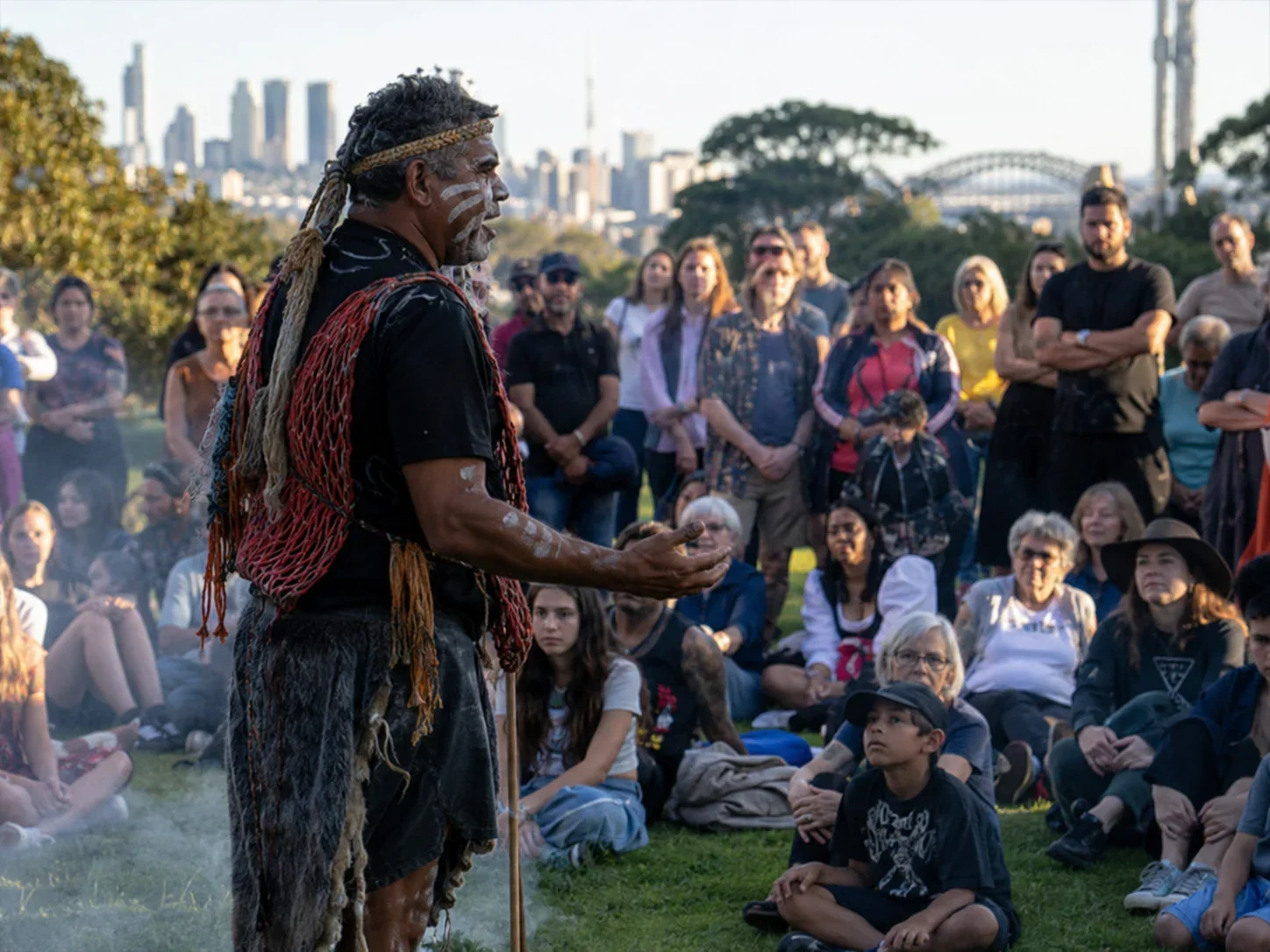
Respect is not just about being polite. At Aboriginal events, respect means understanding that culture, Country, history, ceremony and community are living things.
1. Understand the Meaning of the Date
Before attending an event, ask what the date means.
NAIDOC Week is often celebratory. National Sorry Day is reflective. 26 January can be a day of mourning, protest, survival and community strength. Reconciliation Week should be about truth and action, not just symbolism.
The same behaviour is not suitable for every event.
2. Know the Difference Between a Welcome to Country and an Acknowledgement of Country
AWelcome to Country is delivered by a Traditional Owner or recognised Aboriginal person from that Country. It may include words, ceremony, song, dance or smoking, depending on the event and local protocol.
An Acknowledgement of Country can be given by anyone. It is a way of recognising the Traditional Custodians of the land and paying respect to Elders past and present.
These are not interchangeable. If your workplace, school or organisation needs a Welcome to Country or ceremony, it should be arranged with appropriate Aboriginal people connected to that Country.
Natcha offersSmoking Ceremony and Welcome to Country experiences for organisations that want to approach cultural protocol with care.
3. Ask Before Taking Photos or Filming
Photography rules vary. Some events are public and photo-friendly. Others may include ceremony, children, Elders, cultural materials or moments that should not be filmed.
A simple rule is best: ask first.
Do not photograph children, Elders, performers, artworks or ceremony unless permission is clear. If an organiser says not to film, respect that.
4. Be Careful With Sorry Business and Deceased People
Some Aboriginal and Torres Strait Islander communities have protocols around naming, showing images of, or playing recordings of people who have died. These protocols can vary between communities.
If an event includes a warning about images, voices or names of deceased people, take it seriously. Do not share content online without understanding the protocol.
5. Respect Aboriginal and Torres Strait Islander Flags
The Aboriginal flag and Torres Strait Islander flag carry deep identity and political meaning. They should not be used casually as decoration, costumes or marketing props.
At events, treat flags with respect. Do not alter them, place text over them carelessly or use them in ways that reduce them to branding.
6. Support Aboriginal-Led Spaces
Where possible, choose events led by Aboriginal and Torres Strait Islander people, organisations, artists, educators and community groups.
This matters because Aboriginal culture should not be presented without Aboriginal voices. Public events can be welcoming to everyone, but they should still centre the people whose culture, history and Country are being shared.
7. Follow the Lead of Elders and Organisers
Every event is different. Some invite questions. Some are for listening. Some are celebratory. Some are serious. Some include ceremony. Some are family-friendly. Others are designed for adults, workplaces or community members.
Follow the lead of Elders, speakers, guides and event organisers. If you are unsure, listen first.
How Visitors, Families, Schools and Workplaces Can Take Part Respectfully
Different audiences come to Aboriginal events for different reasons. Respectful participation begins with knowing why you are there.
| Audience | Good ways to take part |
|---|---|
| Visitors | Attend Aboriginal-led festivals, join guided walks, buy from First Nations artists and learn whose Country you are on |
| Families | Choose child-friendly NAIDOC events, explain the meaning of the date and model respectful listening |
| Schools | Connect events to history, Country, culture and age-appropriate truth-telling |
| Workplaces | Plan Aboriginal-led learning, support Aboriginal businesses and move beyond token gestures |
| Community groups | Partner with local Aboriginal organisations and follow cultural protocols |
| International visitors | Learn that Aboriginal culture is living and present in Sydney, not only in remote Australia |
For teams, Natcha’s guide to Indigenous team building activities in Sydney is useful when planning a learning experience that is meaningful rather than tokenistic.
For visitors who want to experience Country directly, a La Perouse Aboriginal walking tour can connect coastal Sydney, Aboriginal culture and place-based learning in a way that a calendar listing cannot.
Where to See Aboriginal Culture in Sydney
Aboriginal culture in Sydney is not limited to one festival or one week of the year. It can be experienced through community events, cultural tours, public talks, galleries, ceremonies, markets, national parks and Aboriginal-led programs.
Some of the strongest ways to learn include:
Yabun Festival: culture, music, community and Survival Day context.
NAIDOC Week events: celebrations, talks, workshops and family programs.
Blak Markets: ethical shopping and direct support for First Nations makers.
National Indigenous Art Fair: art, design, performance and cultural expression.
Aboriginal walking tours: place-based learning on Country.
Welcome to Country and smoking ceremonies: cultural protocol for events and gatherings.
Public exhibitions and performances: contemporary First Nations creativity.
For visitors planning a broader cultural itinerary, Natcha’s tours in Sydney offer guided ways to learn on Country rather than only reading about culture from a distance.
Taking Part With Respect
Aboriginal events in Sydney offer many ways to learn, gather, celebrate and reflect. They can introduce visitors to music, art, food, ceremony, community, language, history and Country.
But the most important part is respect.
Know what the date means. Listen before speaking. Ask before filming. Support Aboriginal-led spaces. Understand that culture is not entertainment alone. It carries identity, memory, survival and responsibility.
When approached with care, Aboriginal events in Sydney can become more than dates on a calendar. They can help people understand the living culture and continuing presence of Aboriginal and Torres Strait Islander peoples in the city today.
FAQs
1. What Aboriginal events are held in Sydney?
Sydney hosts Aboriginal and Torres Strait Islander events throughout the year, including Yabun Festival, NAIDOC Week events, National Reconciliation Week programs, Blak Markets, the National Indigenous Art Fair, talks, workshops, exhibitions, ceremonies and Aboriginal-led cultural tours.
2. When is NAIDOC Week 2026?
NAIDOC Week 2026 runs from 5 to 12 July. The 2026 theme is “50 Years of Deadly,” marking 50 years of NAIDOC Week and honouring the people and communities who built the movement.
3. What is Yabun Festival?
Yabun Festival is an Aboriginal-owned and led festival held annually on 26 January on Gadigal Country in Sydney. It celebrates Aboriginal and Torres Strait Islander cultures and continues the spirit of Survival Day through music, community, talks and cultural expression.
4. When is National Reconciliation Week?
National Reconciliation Week runs from 27 May to 3 June every year. The dates mark the anniversaries of the 1967 referendum and the Mabo decision.
5. What is the difference between a Welcome to Country and an Acknowledgement of Country?
A Welcome to Country is delivered by a Traditional Owner or recognised Aboriginal person from that Country. An Acknowledgement of Country can be given by anyone as a way of recognising Traditional Custodians and paying respect to Elders.
6. What should visitors respect at Aboriginal events?
Visitors should respect the meaning of the date, listen to Aboriginal voices, follow photography rules, support Aboriginal-led events, buy ethically from First Nations creators and follow the guidance of Elders, organisers and community members.
7. Are Aboriginal events in Sydney suitable for families?
Many Aboriginal events in Sydney are family-friendly, especially NAIDOC Week activities, community festivals, markets and cultural workshops. Families should still check event details and explain the meaning of the date to children in an age-appropriate way.
8. How can workplaces mark NAIDOC Week or Reconciliation Week respectfully?
Workplaces can mark these dates respectfully by engaging Aboriginal-led educators, organising a Welcome to Country where appropriate, supporting Aboriginal-owned businesses, learning about local Country and connecting events to practical action. A one-off symbolic event is less meaningful without ongoing commitment.
