
Are Aboriginal Cultural Tours Family Friendly?

Aboriginal cultural tours can be a meaningful and family-friendly way for children to learn about Country, culture, history and the natural world. But not every tour will suit every age group. Parents often need to consider walking distance, attention span, weather, cultural protocols and whether the experience is guided in a way children can understand.
This guide explains when Aboriginal cultural tours are suitable for families, what children can learn, and how to choose the right experience in Sydney.
Are Aboriginal Cultural Tours Family Friendly?
Yes, Aboriginal cultural tours can be family friendly, especially when they are Aboriginal-led, age-appropriate and paced in a way that helps children listen, ask questions and learn through place. For many families, these tours offer more than a day out. They give children a respectful way to connect with Country, culture, stories, native plants, local history and Sydney’s natural landscapes.
The best fit is usually school-aged children who are comfortable walking outdoors and following a guide’s instructions. Younger children may still enjoy the experience, but parents should check the tour length, terrain, weather, facilities and flexibility before booking.
For families with toddlers, mixed-age children or specific learning needs, a private Aboriginal cultural tour may be the better option because the pace and focus can often be shaped around the group.
Quick Family Suitability Guide
Use this quick guide to decide whether an Aboriginal cultural tour is likely to suit your family before booking.
| Family question | Best answer | What to check before booking |
|---|---|---|
| Are children allowed on Aboriginal cultural tours? | Yes, many Aboriginal cultural tours welcome children, especially school-aged children who can walk, listen and follow guide instructions. | Check the tour’s age guidance, child pricing and whether the experience is public or private. |
| What age is best for children? | Children aged 6 and above are often a better fit because they can engage with stories, cultural learning and outdoor walking. | Confirm the tour duration, terrain and how much walking is involved. |
| Are Aboriginal cultural tours suitable for toddlers? | Sometimes, but it depends on the tour. Toddlers may find longer walks, group settings or listening-based experiences harder. | Ask whether a shorter or private tour would be more suitable. |
| Will children understand the stories? | Yes, when the tour is guided in a clear, place-based way. Children often connect well with stories, nature, animals and visible landscapes. | Choose an Aboriginal-led tour that explains culture through Country, not just facts. |
| Is there much walking? | Many cultural tours are walking-based, so families should expect time outdoors. | Check the distance, terrain, weather, shade, toilets and rest points. |
| Is it respectful for children to attend? | Yes, children can attend respectfully when they are prepared to listen, follow instructions and treat cultural places with care. | Talk to children beforehand about listening, asking questions respectfully and following the guide’s directions. |
| Should families choose a public or private tour? | Public tours can work well for older children, while private tours are usually better for younger children, mixed ages or families needing flexibility. | Compare group size, timing, pace and whether the tour can be adapted to your family. |
What Makes an Aboriginal Cultural Tour Good for Families?

A family-friendly Aboriginal cultural tour is not only about allowing children to join. For families still deciding what the experience involves, it can help to first understand what an Aboriginal cultural tour is. It should help families learn in a way that feels respectful, engaging and easy to follow. The best experiences are guided by Aboriginal people, connected to real places, paced for outdoor learning and clear about how visitors should behave on Country.
Aboriginal-Led Guidance
For families, an Aboriginal-led tour gives children the chance to learn from people with a direct cultural connection to the stories, places and knowledge being shared. This matters because Aboriginal culture is not only history. It is living culture, connected to Country, community, language, ceremony, plants, animals and responsibility.
A good guide can explain these ideas in a way that suits both adults and children, while also helping families understand what is appropriate to ask, photograph, touch or enter during the experience. Families can also learn more about Natcha’s Aboriginal guides before booking.
Learning Through Place
Children often learn best when they can connect ideas to what they can see, hear and experience around them. Aboriginal cultural tours can make learning more meaningful by connecting stories and knowledge to the landscape itself.
This may include:
Native plants and how they have been used
Animals, seasons and changes in the environment
Coastal, bushland or national park landscapes
Significant places and why they should be respected
Local Aboriginal history and ongoing cultural connection
Stories that help children understand Country in a deeper way
Instead of feeling like a classroom lesson, the experience becomes a guided walk through a living cultural landscape.
A Manageable Pace
Pace is one of the biggest factors for families. A tour may be culturally rich and well guided, but still feel difficult for younger children if it is too long, too hot, too fast or too walking-heavy.
Parents should look for a tour that matches their child’s attention span, walking ability and comfort outdoors. It also helps to check whether there are rest points, toilets, shaded areas, water breaks and clear meeting instructions before the day.
Space for Questions
A good family-friendly cultural tour should give children room to listen, think and ask questions respectfully. Children do not need to arrive with deep knowledge of Aboriginal culture, but they should be encouraged to pay attention and engage with care.
Parents can support this by reminding children that some stories, places and practices are culturally significant. The goal is not just to be entertained, but to learn, listen and leave with a better understanding of Aboriginal culture and Country.
What Age Are Aboriginal Cultural Tours Best For?
The best age for an Aboriginal cultural tour depends on the child, the tour length, the walking conditions and how the experience is delivered. As a general guide, school-aged children are usually the strongest fit because they can listen, walk with the group and connect stories to the places they are visiting.
| Age group | Suitability | Parent notes |
|---|---|---|
| Under 5 years | May be suitable for some private or shorter experiences, but not always ideal for longer public walking tours. | Toddlers may struggle with group pacing, listening time, heat, uneven ground or longer periods outdoors. A private tour may be easier. |
| 6 to 8 years | Often suitable if the child is comfortable walking, listening and following simple guide instructions. | Keep expectations realistic. Children in this age group may enjoy stories, animals, plants and visible landscapes more than detailed history. |
| 9 to 12 years | Usually a strong fit for Aboriginal cultural tours. | Children can often understand place-based stories, cultural respect, environmental knowledge and the idea of connection to Country. |
| 13 to 17 years | Very suitable, especially for deeper cultural, historical and environmental learning. | Teenagers may engage well with First Nations perspectives, local history, ecology, identity, respect and contemporary Aboriginal culture. |
| Mixed-age families | Suitable when the tour choice matches the youngest child’s needs. | Families with different ages may find a private Aboriginal cultural tour more flexible because the pace and focus can be shaped around the group. |
Parents should not choose a tour by age alone. A confident 7-year-old who enjoys nature walks may be more comfortable than an older child who dislikes walking or group activities. The safest approach is to check the tour duration, terrain, meeting point, facilities and level of flexibility before booking.
What Can Children Learn on an Aboriginal Cultural Tour?
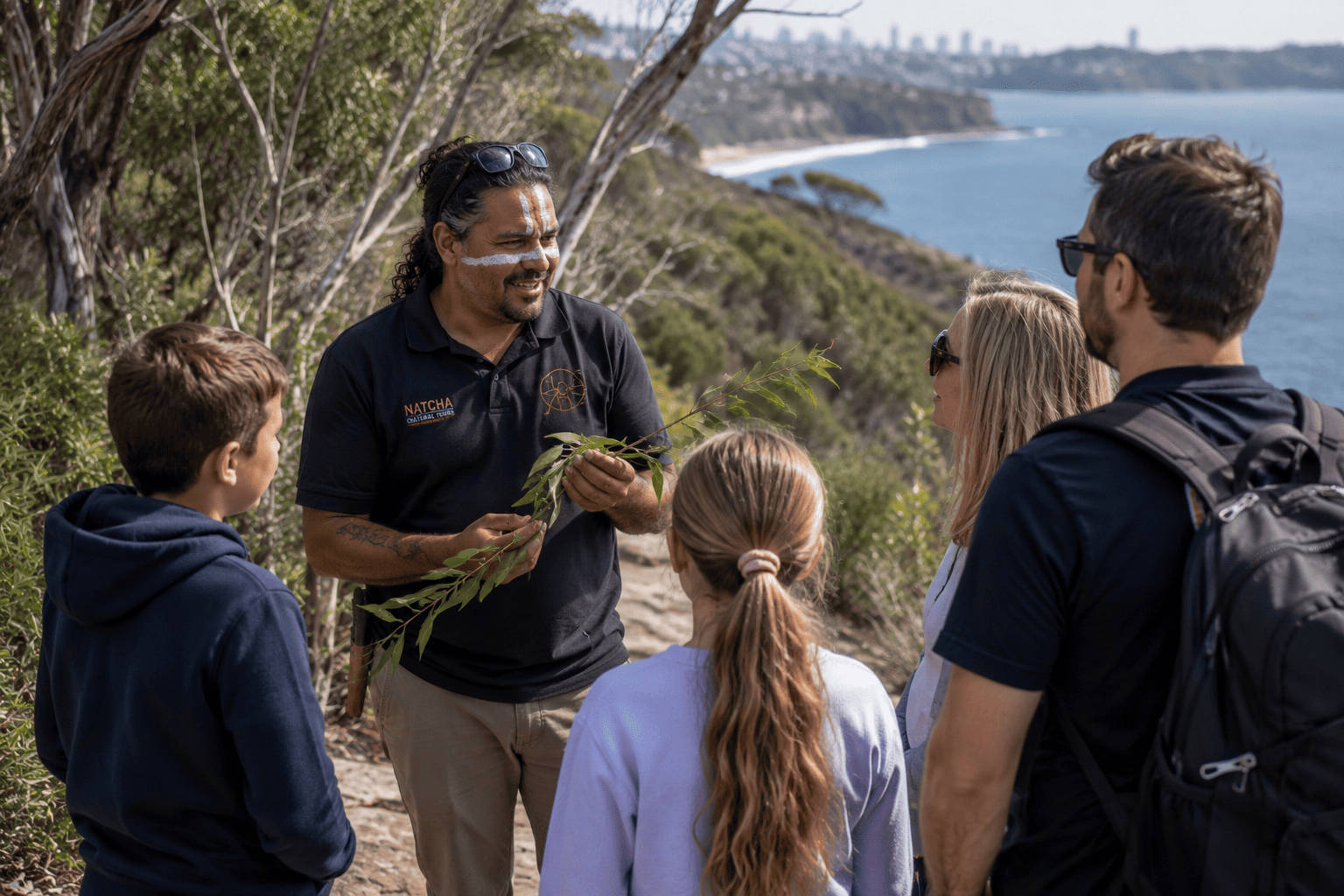
Aboriginal cultural tours can help children see Sydney in a different way. Instead of only looking at beaches, bushland, parks or coastal tracks as places to visit, children begin to understand them as part of Country, with cultural meaning, stories, knowledge and responsibility.
1. Connection to Country
Children can learn that Country is more than land. It includes people, plants, animals, waterways, seasons, stories and cultural responsibilities. This helps children understand that Aboriginal culture is deeply connected to place.
2. Respect for Significant Places
A cultural tour can help children understand why some places need to be treated with extra care. They may learn why visitors should stay on paths, listen to the guide, avoid touching certain areas and follow instructions around photos or access.
3. Aboriginal Stories and Cultural Knowledge
Children can hear stories and cultural knowledge shared in context, rather than reading about them from a distance. When this learning happens outdoors with an Aboriginal guide, it can feel more real, memorable and meaningful.
4. Native Plants, Animals and Seasons
Many children connect strongly with nature-based learning. Aboriginal cultural tours may introduce them to native plants, animals, seasonal changes and traditional knowledge connected to the local environment.
5. Sydney’s Aboriginal History
Families can learn that Sydney’s Aboriginal history is not separate from the places they visit today. Beaches, headlands, national parks and harbour landscapes all sit within older cultural stories and ongoing Aboriginal connection.
6. How to Ask Questions Respectfully
Children do not need to know everything before joining a tour. A good experience can teach them how to listen first, ask thoughtful questions and understand that some cultural knowledge should be treated with care.
7. Living Culture, Not Just History
One of the most important lessons for children is that Aboriginal culture is not only something from the past. It is living, continuing and connected to people, community, Country and everyday life today.
What Happens on the Day?
Most Aboriginal cultural tours follow a calm and guided structure, which helps families know what to expect before the experience begins. While each tour is different, families can usually expect a mix of welcome, safety guidance, walking, storytelling, cultural learning and time for questions or reflection.
1. Arrive at the Meeting Point
Families should arrive early so children have time to settle before the tour starts. This also gives parents time to check parking, toilets, water bottles, hats, sunscreen and any other essentials for the walk.
2. Meet the Guide and Group
The guide will usually welcome the group, explain the flow of the tour and help everyone understand the setting. For children, this first introduction can make the experience feel more comfortable and less unfamiliar.
3. Listen to the Cultural Introduction
Many Aboriginal cultural tours begin with an introduction to Country, the local area and the cultural importance of the places being visited. This helps children understand that the tour is not just a walk, but a chance to learn respectfully on Country.
4. Follow the Safety Briefing
Before walking begins, the guide may explain safety instructions, walking conditions, weather considerations and how the group should move through the area. Parents should make sure children understand the need to stay with the group and follow directions.
5. Walk Through Country
The main part of the tour is often a guided walk through coastal, bushland, national park or heritage landscapes. Along the way, families may stop at important places where the guide shares stories, cultural knowledge, environmental insights or local history.
6. Learn Through Stories, Nature and Place
Children often engage best when they can connect what they are hearing to what they can see around them. A guide may point out native plants, animals, landscape features, cultural sites or natural signs that help explain the connection between people, Country and culture.
7. Ask Questions and Reflect
At the end of the tour, families may have time to ask questions or reflect on what they have learned. This is a valuable moment for children because it helps them process the experience and understand why cultural respect matters beyond the tour itself.
Are Natcha Cultural Tours Suitable for Families?
Yes, Natcha Cultural Tours can be suitable for families, especially those with school-aged children who are comfortable walking outdoors, listening to a guide and learning through Country. The tours are Aboriginal-led and designed around cultural storytelling, native landscapes, significant places, reflection and respectful connection to Country.
Families can choose between public walking tours and private cultural tours. Public tours are a good fit for children who can manage the listed duration and group setting. Private tours are usually better for younger children, mixed-age families, school groups or families who want a more flexible pace.
For most families, the best choice depends on the youngest child in the group. If your child is comfortable walking, listening and learning outdoors, a public Aboriginal walking tour may work well. If your family needs more flexibility around timing, pace, questions or comfort, a private cultural tour is likely the stronger option.
Public Tour or Private Tour: Which Is Better for Families?
For families, the choice between a public Aboriginal cultural tour and a private cultural tour usually comes down to age, attention span, walking confidence and how much flexibility the group needs. Public tours can be a good fit for school-aged children who are comfortable joining a group experience. Private tours are often better for younger children, mixed-age families or groups with specific interests.
| Tour type | Best for | Pros | Things to consider |
|---|---|---|---|
| Public Aboriginal cultural tour | Families with school-aged children who can walk, listen and stay with a group. | Easy to book, structured, shared with other visitors and usually follows a clear route and timeframe. | Less flexibility around pace, timing, rest stops and individual questions. |
| Private family tour | Families with younger children, mixed ages or specific needs. | More flexible pace, timing, focus and group comfort. | Usually needs to be arranged in advance and may cost more than a public tour. |
| School or education group tour | Teachers, homeschool groups or students learning about Aboriginal culture, history and Country. | Can support curriculum-style learning, group discussion and place-based education. | Needs clear planning around supervision, timing, transport and learning goals. |
| Multigenerational family tour | Families travelling with children, parents and grandparents. | Can be shaped around different walking abilities and interests. | Accessibility, seating, toilets, shade and pace should be checked before booking. |
As a simple guide, choose a public tour if your children are old enough to follow a set group experience comfortably. Choose a private Aboriginal cultural tour if your family needs more flexibility, has younger children, wants a slower pace or would like the experience shaped around a specific interest, such as native plants, local history, cultural protocols or school learning.
How to Prepare Children Before an Aboriginal Cultural Tour
A little preparation can help children get more from an Aboriginal cultural tour. Before the day, explain that the experience is not only a walk or sightseeing activity. It is a chance to listen, learn and spend time on Country with respect.
Use this simple checklist before your tour:
Explain what the tour is about: Tell children they will be learning about Aboriginal culture, Country, stories, nature and significant places.
Talk about respectful listening: Remind them that some stories and places are important, so they should listen carefully when the guide is speaking.
Encourage thoughtful questions: Let children know they can ask questions, but they should do so politely and at the right time.
Prepare them for walking outdoors: Make sure they know the tour may include walking, standing, uneven ground, sun, wind or changing weather.
Pack the right basics: Bring water, hats, sunscreen, comfortable shoes and weather-appropriate clothing.
Check food and toilet needs: Younger children may need snacks or toilet stops before the tour begins, especially if the experience is in a national park or coastal area.
Explain photo rules: Tell children that some places, objects or moments may not be suitable for photos unless the guide says it is okay.
Remind them not to touch cultural places: Children should avoid touching rock art, engravings, plants, objects or significant areas unless the guide clearly invites them to.
Set the tone before arrival: Help children understand that the goal is to enjoy the experience while showing care for Country, culture and the group.
Preparing children in this way makes the tour easier for the guide, more respectful for the group and more meaningful for the family.
What Should Parents Check Before Booking?
Before booking an Aboriginal cultural tour for your family, check the practical details as well as the cultural fit. A tour may be suitable for children in general, but the right choice depends on your child’s age, walking ability, comfort outdoors and how much flexibility your family needs.
| Booking factor | Why it matters for families | Question to ask before booking |
|---|---|---|
| Recommended age | Some tours are better suited to school-aged children than toddlers or very young children. | Is this tour suitable for my child’s age group? |
| Tour duration | Longer tours can be harder for younger children or children with shorter attention spans. | How long does the full experience run from start to finish? |
| Walking distance | Aboriginal cultural tours often take place outdoors on Country, so walking ability matters. | How much walking is involved? |
| Terrain | Coastal tracks, bushland paths, sand, stairs or uneven ground may not suit every family. | Is the walk flat, steep, uneven or pram-friendly? |
| Weather conditions | Heat, wind, rain or limited shade can affect how comfortable children feel during the tour. | What happens if the weather changes? |
| Toilets and facilities | Younger children may need toilets, water breaks or rest points during the experience. | Are toilets, shade or rest areas available nearby? |
| Transport and parking | Families need clear arrival plans, especially when travelling with children. | Is the tour self-drive, transfer-based or easy to access by public transport? |
| Group size | Large groups may feel harder for some children, while smaller groups can feel calmer. | How many people are usually on the tour? |
| Photography guidance | Some cultural places, stories or moments may have photo restrictions. | Are there any rules around taking photos? |
| Cultural protocols | Children should understand how to behave respectfully on Country. | Are there any cultural protocols families should know before the tour? |
Checking these details helps families choose a tour that feels comfortable, respectful and realistic. If you are unsure, contact the tour operator before booking and explain your children’s ages, walking ability and any needs your family may have.
Are Aboriginal Cultural Tours Respectful for Children?
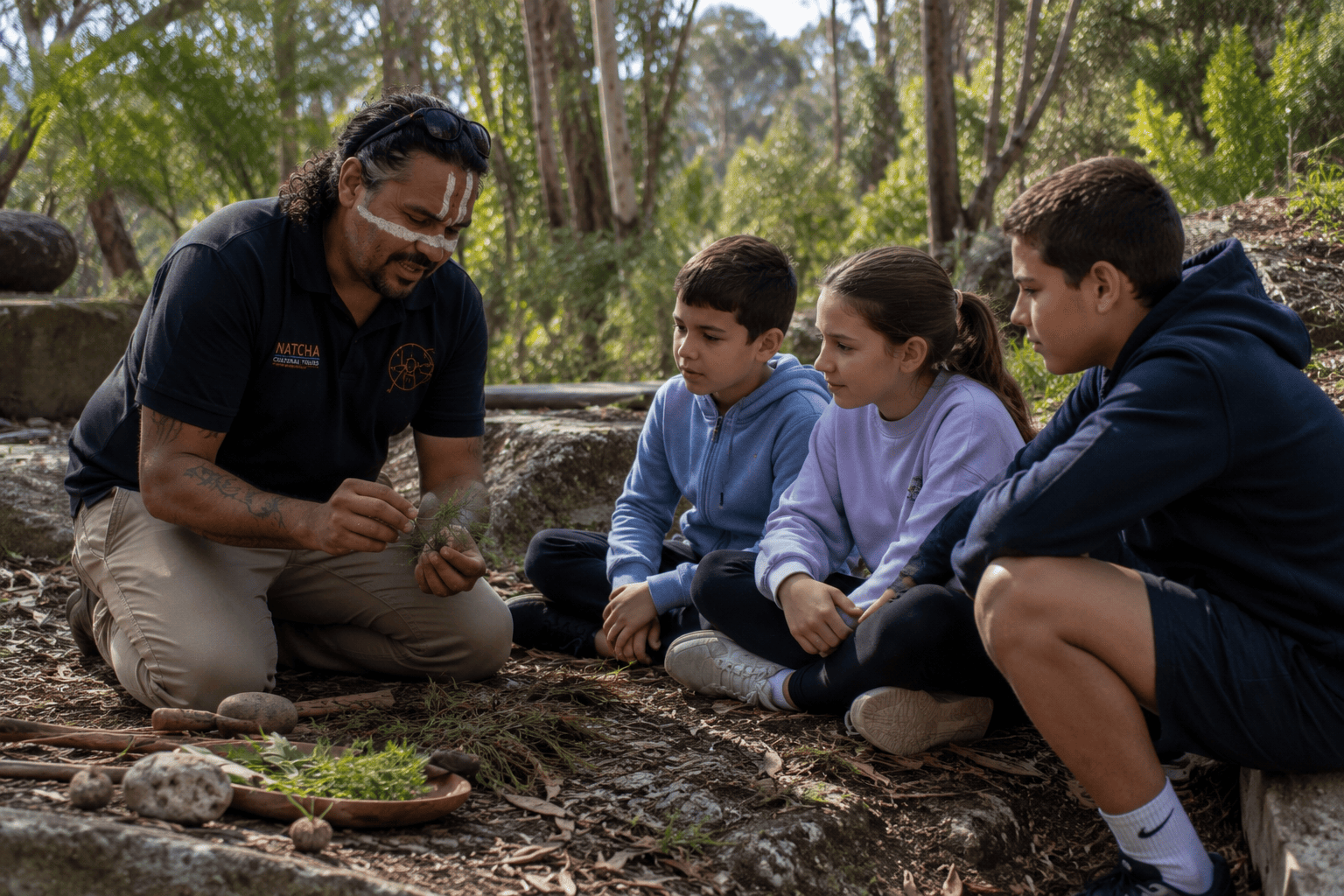
Yes, Aboriginal cultural tours can be respectful for children when families understand the purpose of the experience before they arrive. These tours are not only outdoor activities or sightseeing walks. They are opportunities to learn on Country, listen to Aboriginal perspectives and understand why certain places, stories and cultural practices should be treated with care.
Children do not need to know everything about Aboriginal culture before joining a tour. What matters most is that they are ready to listen, follow the guide’s instructions and behave respectfully around cultural places.
Parents can help by encouraging children to:
Listen when stories are being shared: Some stories carry deep cultural meaning and should be heard with care.
Stay with the group: Children should avoid wandering away, especially in national parks, coastal areas or culturally significant places.
Follow photo guidance: Some places, objects or moments may not be appropriate to photograph.
Avoid touching cultural sites: Rock art, engravings, plants, objects and significant areas should only be touched if the guide says it is appropriate.
Ask questions respectfully: Curious questions are welcome when they are asked politely and at the right time.
Treat Country with care: Children should avoid littering, damaging plants, climbing on sensitive areas or treating cultural places as play spaces.
When children are prepared in this way, an Aboriginal cultural tour can become a respectful and memorable learning experience for the whole family.
Are Aboriginal Cultural Tours Educational for School Groups?
Aboriginal cultural tours can be highly valuable for school groups because they give students a chance to learn through Country, not just from a classroom resource. When guided by Aboriginal educators, students can connect cultural knowledge, local history, environmental learning and respectful listening to real places they can see and experience.
For schools, homeschool groups and youth programs, an Aboriginal cultural tour can support learning around:
Connection to Country: Students can better understand how people, place, plants, animals, waterways and stories are connected.
Aboriginal perspectives: A guided tour can help students hear Aboriginal knowledge and history from Aboriginal voices.
Local Sydney history: Students can learn that Sydney’s beaches, headlands, parks and harbour landscapes sit within much older cultural stories.
Environmental knowledge: Tours may include native plants, animals, seasonal changes and traditional knowledge connected to the local area.
Respectful behaviour: Students can learn how to move through significant places with care, follow cultural protocols and ask thoughtful questions.
Reflection after learning: A tour can give students a stronger starting point for classroom discussion, writing tasks or group reflection.
For school groups, a private Aboriginal cultural tour is usually the best option because the timing, pace and learning focus can be planned around the group. Teachers can also use Natcha’s guide toAboriginal school excursions in Sydney when planning. Teachers should discuss student ages, supervision, transport, accessibility, weather plans and learning goals with the tour operator before booking.
Common Myths About Aboriginal Cultural Tours and Families
Some families hesitate to book an Aboriginal cultural tour because they are unsure whether children will understand it, enjoy it or behave appropriately. In most cases, the concern comes from not knowing what the experience involves. A good Aboriginal-led tour is guided, place-based and designed to help visitors learn with respect.
| Myth | Reality |
|---|---|
| Children are too young to understand Aboriginal culture. | Children can understand more than many adults expect when culture is explained through stories, nature, places and simple examples. |
| Aboriginal cultural tours are only for adults. | Many tours can suit families, especially when children are school-aged, comfortable outdoors and able to follow guide instructions. |
| The tour will feel like a school lesson. | A good cultural tour is usually place-based and interactive. Children learn by walking, listening, observing and asking questions. |
| All Aboriginal cultural tours are the same. | Every tour is different. Location, guide, cultural focus, walking distance, group size and tour length can all change the experience. |
| A shorter tour is always better for kids. | Shorter can help, but the best tour depends on pace, engagement, shade, rest points, terrain and how the guide connects with the group. |
| Private tours are only for corporate groups. | Private Aboriginal cultural tours can also work well for families, schools, homeschool groups and multigenerational groups that need flexibility. |
| Children need to know Aboriginal history before joining. | Children do not need detailed knowledge before the tour. They simply need to arrive ready to listen, learn and show respect. |
Understanding these myths can help parents choose with more confidence. The most important step is to match the tour to your child’s age, walking ability, attention span and comfort in outdoor group settings.
So, Should You Take Kids on an Aboriginal Cultural Tour?
Yes, if your children are comfortable walking outdoors, listening to a guide and learning through stories, nature and place, an Aboriginal cultural tour can be a valuable family experience. It gives children a chance to see Sydney beyond beaches, parks and landmarks, and understand the deeper cultural meaning of Country through cultural nature experiences in Sydney.
For most families, school-aged children are the best fit. They are usually old enough to follow group instructions, ask thoughtful questions and connect cultural stories with the places they are visiting. Younger children may still enjoy the experience, especially on a private tour, but parents should check the duration, terrain, weather and flexibility before booking.
If your family wants a meaningful cultural experience in Sydney, Natcha Cultural Tours offers Aboriginal-led public and private tour options across significant coastal, bushland and national park locations. You can book a tour with Natcha Cultural Tours that best matches your child’s age, walking ability and comfort outdoors.
FAQs About Family-Friendly Aboriginal Cultural Tours
1. Are Aboriginal cultural tours suitable for children?
Yes, Aboriginal cultural tours can be suitable for children, especially school-aged children who are comfortable walking, listening and following guide instructions. The best tours for families are Aboriginal-led, clearly paced and connected to stories, nature, Country and local places children can see and understand.
2. What age is best for an Aboriginal cultural tour?
Children aged 6 and above are often a good fit for Aboriginal cultural tours because they can usually engage with stories, cultural learning and outdoor walking. However, suitability depends on the child, the tour length, terrain, weather and how comfortable they are in a guided group setting.
3. Can toddlers join Aboriginal cultural tours?
Toddlers may be able to join some Aboriginal cultural tours, but longer walking tours may not be ideal for every young child. Parents should check the duration, terrain, toilet access, shade, pram suitability and group pace before booking. A private tour may be easier for families with toddlers.
4. Are Aboriginal cultural tours good for teenagers?
Yes, Aboriginal cultural tours can be especially valuable for teenagers. Older children and teens are often able to engage with deeper themes such as connection to Country, Aboriginal history, environmental knowledge, cultural respect, identity and contemporary First Nations perspectives.
5. What should children wear on an Aboriginal walking tour?
Children should wear comfortable walking shoes, sun-safe clothing and weather-appropriate layers. A hat, sunscreen and water bottle are also important, especially for outdoor tours in coastal, bushland or national park settings. Parents should check the weather and terrain before the day.
6. Do children need to understand Aboriginal history before the tour?
No, children do not need detailed knowledge of Aboriginal history before joining a tour. A good Aboriginal-led experience will introduce cultural ideas through Country, stories, nature and place. It helps if parents explain beforehand that children should listen respectfully and follow the guide’s instructions.
7. Is a private Aboriginal cultural tour better for families?
A private Aboriginal cultural tour can be better for families who need flexibility around pace, timing, age range, walking ability or learning focus. Public tours can still suit school-aged children, but private tours are often easier for younger children, mixed-age families and groups with specific needs.
8. Can school groups book Aboriginal cultural tours?
Yes, Aboriginal cultural tours can be a strong option for school groups, homeschool groups and youth programs. They support place-based learning, cultural awareness, local history, environmental knowledge and respectful engagement with Aboriginal perspectives. Teachers should discuss age, supervision, transport and learning goals before booking.
