
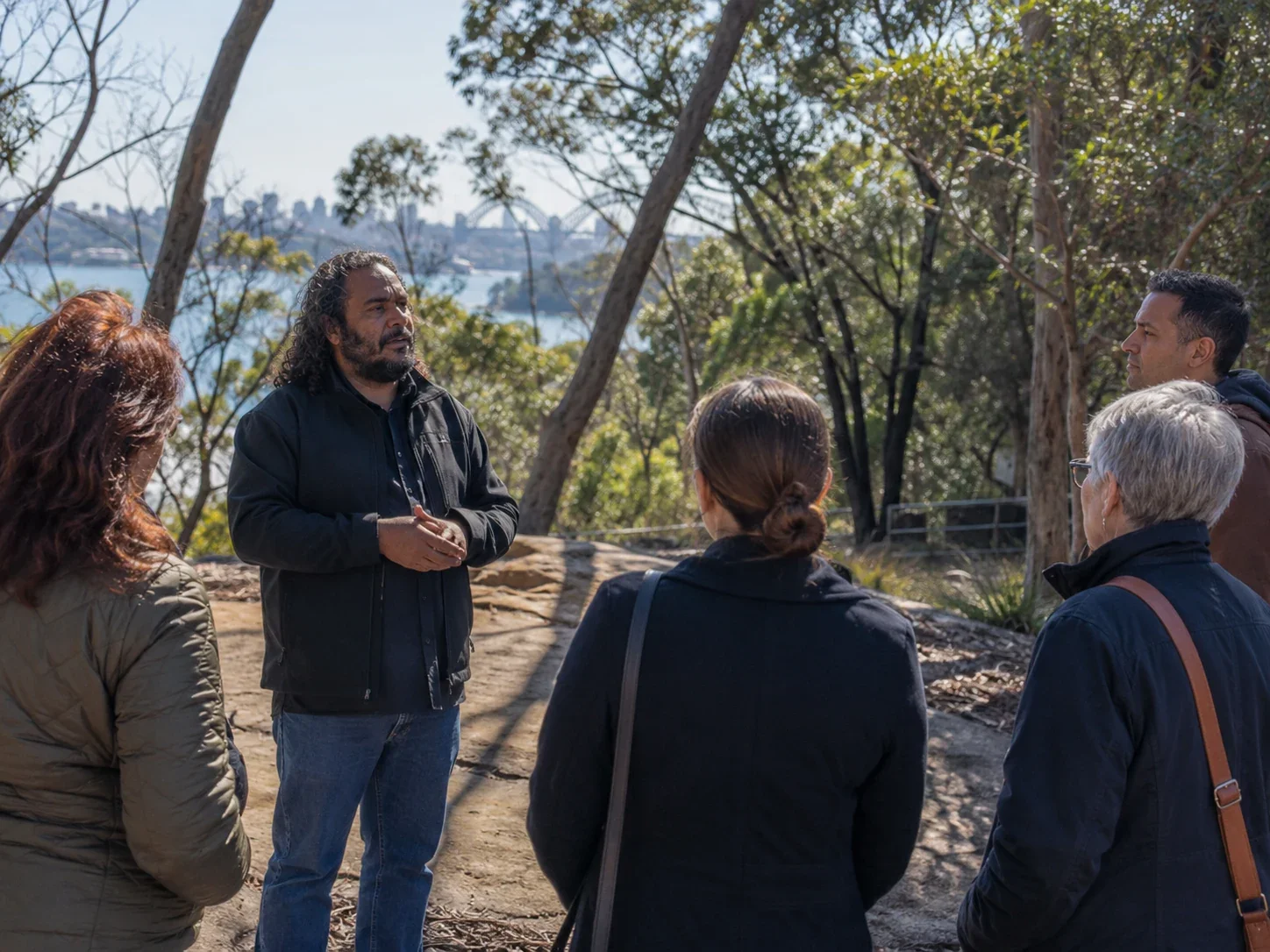
A Welcome to Country is delivered by a Traditional Custodian or Traditional Owner to welcome visitors onto Country. An Acknowledgement of Country is a respectful statement that anyone can give to recognise the Traditional Custodians and their continuing connection to Country.
That is the core difference between Welcome to Country vs Acknowledgement of Country: one is a formal welcome given by the right people for that Country, while the other is a statement of respect that can be offered by a visitor, host, teacher, speaker, workplace leader or event organiser.
Both matter. They remind people that every meeting, tour, school event, workplace gathering or public occasion in Australia takes place on Aboriginal and Torres Strait Islander Country.
What is the difference between a Welcome to Country and an Acknowledgement of Country?
A Welcome to Country is a formal welcome onto Country delivered by a Traditional Custodian, Traditional Owner or Aboriginal person authorised to speak for that Country. An Acknowledgement of Country is a statement of respect that anyone can give to recognise the Traditional Custodians of the place where they are meeting, speaking or gathering.
The difference is about cultural authority. A visitor can acknowledge Country, but they cannot welcome people to Country unless they are a Traditional Custodian or have been given the authority to do so.
Reconciliation Australia explains that a Welcome to Country is delivered by Traditional Owners, or Aboriginal and Torres Strait Islander peoples who have permission from Traditional Owners, to welcome visitors to Country. AIATSIS also states that only Traditional Owners can speak for and welcome visitors to Country, or give others authority to do so.
Welcome to Country vs Acknowledgement of Country, side by side
| Question | Welcome to Country | Acknowledgement of Country |
|---|---|---|
| What is it? | A formal welcome onto Country. | A statement of respect for Traditional Custodians and their continuing connection to Country. |
| Who gives it? | A Traditional Custodian, Traditional Owner or Aboriginal person authorised to speak for that Country. | Anyone can give one, including visitors, students, teachers, hosts and workplace leaders. |
| What is it for? | To welcome visitors onto Country and open a gathering in the right way. | To recognise the Traditional Custodians of the place where people are meeting or speaking. |
| When is it used? | Major events, formal openings, conferences, civic events, school events, public gatherings and significant occasions. | Meetings, events, presentations, school assemblies, workplace gatherings, websites, speeches and everyday communications. |
| What forms can it take? | Spoken words, song, dance, smoking ceremony or other cultural protocols, depending on the people and Country. | Usually a short spoken or written statement. |
| Can a visitor give it? | No, unless they are the right Traditional Custodian or have cultural authority to do so. | Yes, anyone can offer an Acknowledgement respectfully. |
| Main idea | “You are being welcomed onto this Country by the people with authority to welcome you.” | “I recognise and respect the Traditional Custodians of this Country.” |
What is a Welcome to Country?
A Welcome to Country is a cultural protocol where a Traditional Custodian, Traditional Owner or authorised Aboriginal person welcomes visitors onto Country.
It may be delivered through spoken words, song, dance, a smoking ceremony or another appropriate cultural form. The exact format depends on the people, Country, event and protocol.
A Welcome to Country is not a performance. It is a formal act of welcome from the people with cultural authority to speak for that place. When a Welcome is offered, visitors are being received onto Country with respect.
This is why event organisers should not write or deliver a Welcome to Country themselves unless they have the right cultural authority. If a workplace, school, council, conference or private group wants a Welcome, it should be arranged through the appropriate Traditional Custodians or an Aboriginal organisation connected with the right people.
Natcha’s Smoking Ceremony and Welcome to Country experience supports events, workplaces, schools and groups that want to open a gathering respectfully in Sydney.
What is an Acknowledgement of Country?
An Acknowledgement of Country is a statement that recognises the Traditional Custodians of the land where a meeting, event, class, tour or gathering is taking place.
Unlike a Welcome to Country, an Acknowledgement can be given by anyone. You do not need to be Aboriginal or Torres Strait Islander to offer one. What matters is that it is given respectfully, accurately and with awareness of the place you are on.
An Acknowledgement of Country may be used at the start of:
Meetings: Workplace meetings, board meetings, staff briefings and community gatherings.
Events: Conferences, launches, ceremonies, festivals and public programs.
School activities: Assemblies, excursions, lessons and teacher-led sessions.
Tours and talks: Visitor experiences, guided walks, presentations and workshops.
Written communication: Websites, reports, email signatures and event programs.
A good Acknowledgement should not feel like a line read without thought. It should connect to the place, the purpose of the gathering and the people being recognised.
Who can give a Welcome to Country?
A Welcome to Country can only be given by a Traditional Custodian, Traditional Owner or Aboriginal person with authority to speak for that Country.
This matters because Country is not generic. Different places have different Traditional Custodians, histories, responsibilities and cultural protocols. A person may have authority to welcome visitors to one place, but not another.
For organisers, the safest approach is to ask the right people. This may mean contacting a local Aboriginal Land Council, local First Nations organisation, Traditional Owner group or an Aboriginal-owned operator that works with the appropriate cultural authority.
A Welcome to Country should never be treated as something that can be copied from a script. It is not the same as reading an Acknowledgement.
Can a visitor or non-Indigenous person give an Acknowledgement of Country?
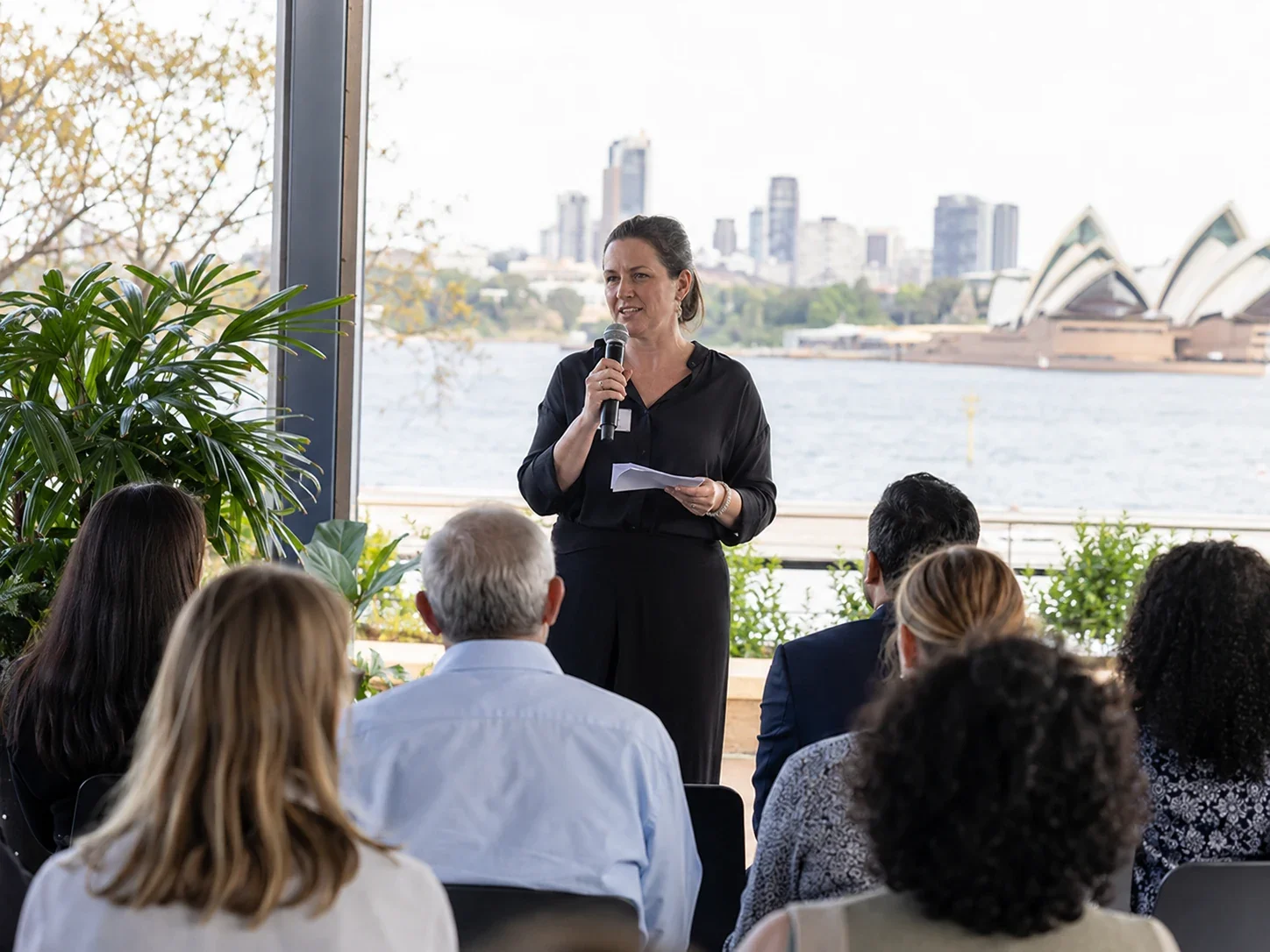
Yes. A visitor or non-Indigenous person can give an Acknowledgement of Country.
An Acknowledgement is a way to show respect for the Traditional Custodians of the place where you are speaking, meeting or gathering. It can be given by a teacher before a class, a manager before a meeting, a speaker before a presentation, a visitor at an event or a student before a school activity.
The important thing is to make it accurate and respectful. If possible, identify the correct Traditional Custodians for the specific location. Avoid making the wording too long, too casual or too focused on yourself.
Example of a respectful Acknowledgement of Country
Here is a simple Acknowledgement of Country that can be adapted for a meeting, event, presentation or group gathering:
I acknowledge the Traditional Custodians of the Country on which we meet today. I recognise their continuing connection to land, waters and community, and pay my respects to Elders past and present.
If you know the correct Traditional Custodians for the place, you can name them respectfully:
I acknowledge the [Traditional Custodians’ name] people as the Traditional Custodians of the Country on which we meet today. I recognise their continuing connection to land, waters and community, and pay my respects to Elders past and present.
Before naming a specific group, check that the name is correct for the location. Country can change across nearby places, so it is better to use a general Acknowledgement than to name the wrong Traditional Custodians.
When should each be used?
A Welcome to Country is used when visitors are being formally welcomed onto Country, while an Acknowledgement of Country can be used more regularly to show respect at meetings, events and gatherings.
Use a Welcome to Country for:
Major events: Conferences, festivals, civic events, public launches and formal gatherings.
Formal openings: New buildings, workplace events, school events, community programs and public ceremonies.
Cultural programs: Events where Aboriginal cultural protocol is central to the gathering.
Significant occasions: Moments where a formal welcome from the right people is appropriate.
Use an Acknowledgement of Country for:
Everyday meetings: Workplace meetings, online meetings and staff gatherings.
School settings: Assemblies, lessons, excursions and presentations.
Public speaking: Speeches, panels, workshops and community events.
Written material: Websites, reports, programs, email signatures and event materials.
Smaller gatherings: Occasions where a formal Welcome is not needed, but respect should still be shown.
Many events use both. A formal event may begin with a Welcome to Country delivered by the right person, then include an Acknowledgement later in the program from another speaker.
What should visitors do during a Welcome to Country?
Visitors should listen respectfully, follow the guidance of the person leading the Welcome and take part only in the way they are invited to.
A Welcome to Country is not something to watch passively as entertainment. It is a cultural protocol and an invitation to be present on Country with respect.
As a visitor, it helps to:
Arrive on time: Late arrivals can interrupt the opening of the event.
Listen carefully: Give the person delivering the Welcome your full attention.
Stand if asked: Follow any guidance from the host or person leading the Welcome.
Participate if invited: If there is a smoking ceremony, song or movement, take part only as directed.
Ask before taking photos: Some moments may be appropriate to photograph, while others may not.
Avoid talking over it: Keep conversations, phones and movement to a minimum.
Receive it respectfully: A Welcome to Country is a generous act of cultural protocol.
If the Welcome includes a smoking ceremony, guests should follow the same respectful approach. For people attending one for the first time, the article on smoking ceremony protocols for guests explains what to expect and how to take part respectfully.
Common mistakes to avoid
The most common mistake is treating Welcome to Country and Acknowledgement of Country as the same thing. They are related, but they are not interchangeable.
Avoid these mistakes:
Calling an Acknowledgement a Welcome: If you are not the right Traditional Custodian or authorised person, you are giving an Acknowledgement, not a Welcome.
Using the wrong Traditional Custodians’ name: Check the correct Country before naming a specific group.
Making it too generic: “I acknowledge the traditional owners” can sound rushed if no thought is given to place or context.
Reading too quickly: Slow down and treat the words with respect.
Turning it into a personal speech: Keep the focus on Country, Traditional Custodians, Elders and respect.
Treating it as a tick-box: It should not feel like a line added only because it is expected.
Copying a Welcome: A Welcome to Country should be arranged with the right people, not copied from an online example.
Using inappropriate language: Use respectful terms such as Aboriginal and Torres Strait Islander peoples, Traditional Custodians, Traditional Owners, Elders and Country.
A simple, accurate and sincere Acknowledgement is better than one that tries too hard or uses language without understanding it.
Why do Welcome to Country and Acknowledgement of Country matter?
Welcome to Country and Acknowledgement of Country matter because they recognise that Aboriginal and Torres Strait Islander peoples have continuing connection to Country, and that this connection did not end when modern cities, schools, workplaces and event spaces were built.
They also help visitors understand that they are not gathering on neutral ground. Every place has a deeper history, living culture and ongoing responsibility attached to it.
In Australia, people may hold different views about these protocols. The purpose, however, is straightforward: to show respect, recognise Traditional Custodians and begin gatherings with awareness of Country.
For visitors, this can be a meaningful first step in understanding Aboriginal culture beyond a surface level. For workplaces and schools, it can create space for more thoughtful learning, especially when paired with deeper experiences such asAboriginal cultural tours, cultural workshops or guided walks on Country.
Booking a Welcome to Country or smoking ceremony in Sydney
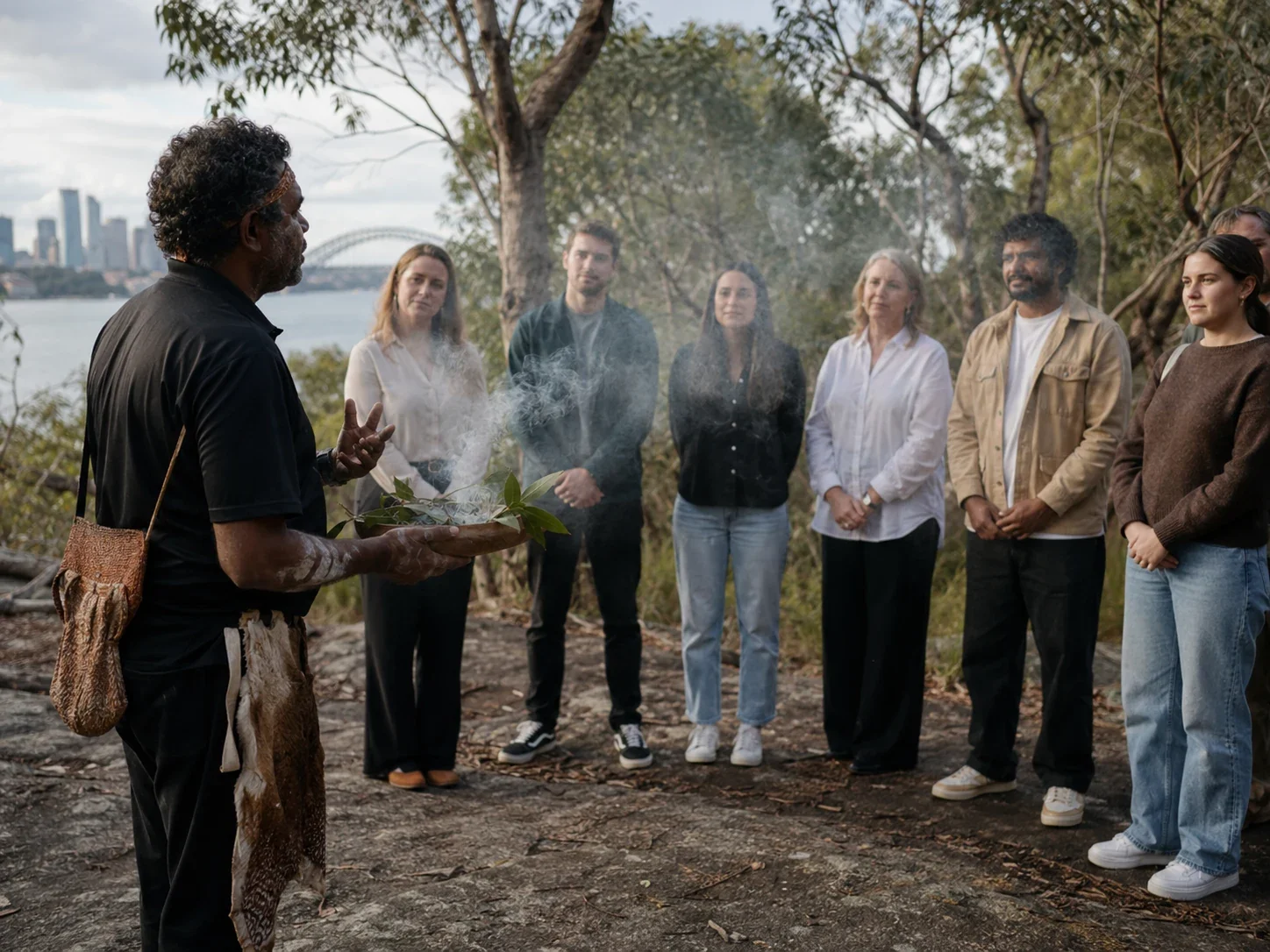
A Welcome to Country or smoking ceremony in Sydney should be arranged through Aboriginal people with the right cultural authority for the event and place.
Natcha Cultural Tours provides Welcome to Country and smoking ceremony experiences for events, workplaces, schools and groups across Sydney and NSW. These experiences are designed as cultural protocols, not entertainment, and help guests understand the meaning of being welcomed onto Country.
For organisations, a Welcome to Country may sit within a broader day of learning, reflection or team connection. Natcha’s corporate cultural experiences can support workplaces that want to connect cultural protocol with leadership, place, respect and responsibility.
Schools planning cultural learning can also connect a Welcome or smoking ceremony with Aboriginal school excursions in Sydney, especially when students are learning about Country, culture, history and respectful participation.
If you are planning an event and are unsure what is appropriate, send the event type, date, location and group size through the contact page.
Choosing the Right Protocol for Your Event
The simplest way to remember the difference is this: a Welcome to Country is given by the right people to welcome visitors onto Country, while an Acknowledgement of Country is a respectful statement anyone can give.
For visitors, the role is to listen, respect the moment and understand that the welcome is not symbolic background. It is a cultural protocol connected to Country, people and place.
For organisers, the responsibility is to choose the right protocol, use accurate language and involve the right people when a formal Welcome is needed. Done properly, both a Welcome to Country and an Acknowledgement of Country can help a gathering begin with respect.
Frequently asked questions
1. What is the difference between a Welcome to Country and an Acknowledgement of Country?
A Welcome to Country is delivered by a Traditional Custodian, Traditional Owner or authorised Aboriginal person to welcome visitors onto Country. An Acknowledgement of Country is a respectful statement that anyone can give to recognise the Traditional Custodians and their continuing connection to Country.
2. Who can give a Welcome to Country?
A Welcome to Country can only be given by a Traditional Custodian, Traditional Owner or Aboriginal person with authority to speak for that Country. Visitors, event organisers and non-Indigenous speakers should arrange a Welcome through the appropriate people rather than giving one themselves.
3. Can anyone give an Acknowledgement of Country?
Yes. Anyone can give an Acknowledgement of Country, including visitors, students, teachers, workplace leaders and event hosts. It should be respectful, accurate and connected to the place where the gathering is happening.
4. Do you have to pay for a Welcome to Country?
A Welcome to Country is usually arranged as a paid cultural service for events, workplaces, schools and formal gatherings. This recognises the time, knowledge, cultural authority and responsibility of the person delivering it. Fees vary depending on the event, location and format.
5. What is an example of an Acknowledgement of Country?
A simple example is: “I acknowledge the Traditional Custodians of the Country on which we meet today. I recognise their continuing connection to land, waters and community, and pay my respects to Elders past and present.” If you know the correct Traditional Custodians for the location, name them respectfully.
6. Why are Welcome to Country and Acknowledgement of Country important?
They are important because they recognise Traditional Custodians, continuing connection to Country and the fact that every gathering in Australia takes place on Aboriginal and Torres Strait Islander lands and waters. They help people begin meetings and events with respect.
7. Is a Welcome to Country the same as a smoking ceremony?
No. A Welcome to Country is a formal welcome onto Country. A smoking ceremony is a cultural protocol that may be included as part of a Welcome to Country, but the two are not the same.
8. How do I arrange a Welcome to Country in Sydney?
To arrange a Welcome to Country in Sydney, contact the appropriate Traditional Custodians, a local Aboriginal organisation or an Aboriginal-owned operator connected with the right people. Natcha Cultural Tours offers Welcome to Country and smoking ceremony experiences for events, workplaces, schools and groups across Sydney and NSW.
