
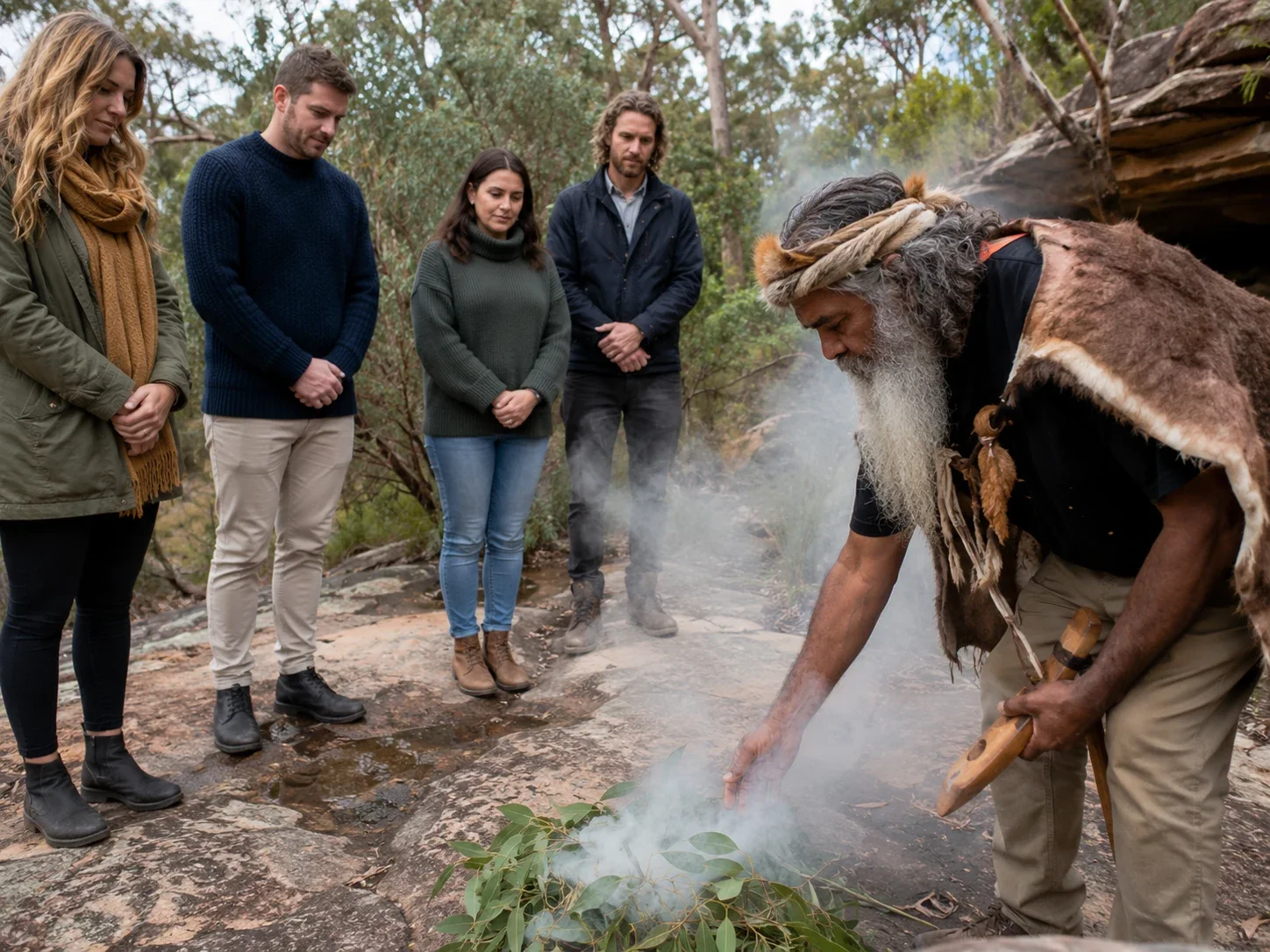
If you are attending a smoking ceremony as a guest, the main thing to know is simple: follow the guidance of the person leading the ceremony, listen respectfully and take part only in the way you are invited to. Smoking ceremony protocol is not about memorising strict rules. It is about arriving with respect, being present and understanding that you are being welcomed into a cultural moment, not watching a performance.
A smoking ceremony may be part of a Welcome to Country, a workplace event, a school program, a cultural tour, a community gathering or a private occasion. The details can vary depending on Country, community, purpose and the person leading it.
What is a smoking ceremony, in short?
A smoking ceremony is an Aboriginal cultural practice where smoke from native plants is used for cleansing, welcome, healing, protection and connection to Country.
It is led by Aboriginal people with the right cultural authority. In an event setting, it may welcome guests, open a gathering, prepare people to enter Country respectfully or mark an important moment.
If you want the deeper cultural background, this guide to the meaning and purpose of an Aboriginal smoking ceremony explains the significance in more detail.
What happens during a smoking ceremony, and what will I see?
During a smoking ceremony, an Aboriginal cultural leader or authorised person creates smoke from native plants and guides guests through the ceremony in a way that suits the Country, group and occasion.
As a guest, you may see:
A cultural opening: The person leading the ceremony may explain the purpose of the gathering and the meaning of the welcome.
Smoke being created: Native leaves or plant materials may be smouldered to produce smoke.
Guests being invited to participate: You may be invited to pass through the smoke, stand near it or be cleansed by it.
Spoken words or Welcome to Country: The ceremony may include a Welcome to Country, cultural explanation, story or reflection.
A transition into the event: The ceremony may lead into a tour, school program, corporate session, conference, public event or private gathering.
This is not a how-to guide. The ceremony is led by the right people, and the specific protocol may vary between Nations, communities and Country.
For example, Natcha’s Smoking Ceremony and Welcome to Country experience is led by a First Nations guide and can be arranged for groups across Sydney. Guests are guided through the experience on the day, so they know how to take part respectfully.
How long does a smoking ceremony take?
A smoking ceremony is usually a short but meaningful part of a larger event, often taking several minutes rather than a full session on its own.
The exact length depends on the purpose of the gathering, the number of guests, whether a Welcome to Country is included and how the person leading the ceremony chooses to guide the group. For organisers, it is best to allow enough space in the event schedule so the ceremony does not feel rushed.
If you are attending as a guest, you do not need to worry about the timing. Arrive on time, listen to the instructions and follow the flow of the ceremony.
What should I wear and how should I prepare?
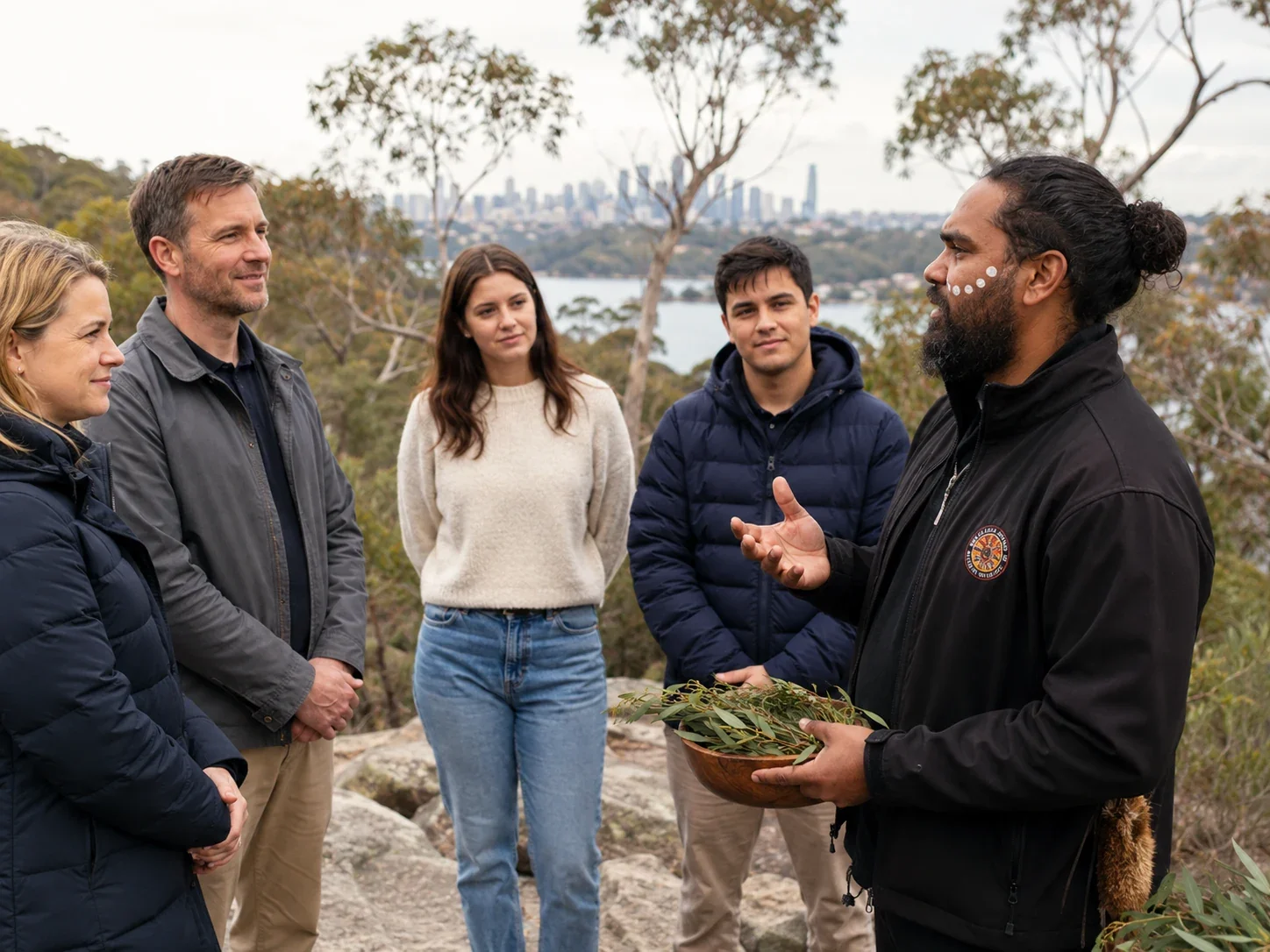
You do not need special clothing for a smoking ceremony, but you should dress respectfully and prepare as you would for a meaningful cultural event.
Dress for the setting: If the ceremony is outdoors, wear practical shoes and clothing suited to the weather, grass, bushland, sand or uneven ground.
Dress respectfully: For corporate, school or formal events, wear what is appropriate for the occasion.
Arrive on time: Late arrivals can interrupt the flow of the ceremony.
Silence your phone: Keep your attention on the person leading the ceremony.
Come with respect: You do not need to know everything beforehand. You only need to listen, follow guidance and be present.
Avoid treating it casually: A smoking ceremony is a cultural protocol, not background entertainment before the “real” event begins.
For school groups, teachers and organisers should brief students before the day. Natcha’s guide to Aboriginal school excursions in Sydney can also help schools think about respectful cultural learning before attending.
Do I have to take part?
You should take part if you are invited and you are comfortable doing so, but you can respectfully step back if you have a health, accessibility or personal reason.
In many ceremonies, guests are invited to walk through or stand near the smoke. Some people may be guided through the smoke one by one, while others may participate as a group. The person leading the ceremony will explain what to do.
If you are unsure, wait and watch the guidance given to the group. Do not push ahead, make your own movements or copy something you saw elsewhere. Let the ceremony leader set the protocol.
If you cannot participate because of smoke sensitivity, asthma, pregnancy, anxiety or another reason, step back quietly or tell the organiser beforehand. Respectful non-participation is better than forcing yourself into a situation that may not be right for you.
How do I move through the smoke?
Move through the smoke only when you are invited, and follow the directions given by the person leading the ceremony.
You may be asked to walk slowly through the smoke, stand in a particular place or allow the smoke to move around you. Keep your movements calm and respectful. Avoid joking, rushing, posing for photos or turning the moment into a performance.
The important point is not whether you move perfectly. The important point is that you listen, follow the lead and understand the ceremony is being offered with cultural meaning.
Can I take photos or film a smoking ceremony?
Always ask before taking photos or filming a smoking ceremony.
Some ceremonies may allow photos at certain times, especially at public or corporate events. Other parts may not be suitable to record. The safest rule is: when in doubt, put the phone away.
If photos are allowed:
Ask first: Check with the organiser or person leading the ceremony.
Do not interrupt: Never move into the ceremony space to get a better shot.
Avoid close-up filming without permission: Especially of the person leading the ceremony, guests participating or ceremonial materials.
Do not post without context: If sharing publicly, be respectful and accurate.
Respect a no-photo instruction immediately: Do not ask repeatedly or try to capture the moment secretly.
A smoking ceremony is not a photo opportunity. If photography is allowed, it should remain secondary to listening and participating respectfully.
What is considered disrespectful at a smoking ceremony?
Disrespectful behaviour at a smoking ceremony includes ignoring the person leading it, talking over the ceremony, treating it as entertainment, taking photos without permission or trying to copy the ceremony yourself.
| Do | Do Not |
|---|---|
| Listen to the person leading the ceremony. | Do not talk over the ceremony or treat it as background noise. |
| Participate if invited and comfortable. | Do not force yourself forward or move through the smoke before being guided. |
| Ask before taking photos or video. | Do not record secretly or turn the ceremony into content. |
| Stand where you are asked to stand. | Do not enter the ceremony space without permission. |
| Let the organiser know about health or access needs. | Do not make jokes about smoke, plants, culture or protocol. |
| Treat the ceremony as a welcome. | Do not describe it as a show, performance or entertainment. |
| Respect that protocols vary. | Do not assume every ceremony should look the same. |
The simplest way to avoid disrespect is to slow down, stay quiet when asked, follow the lead and remember that you are being welcomed into a cultural protocol.
Etiquette checklist for guests
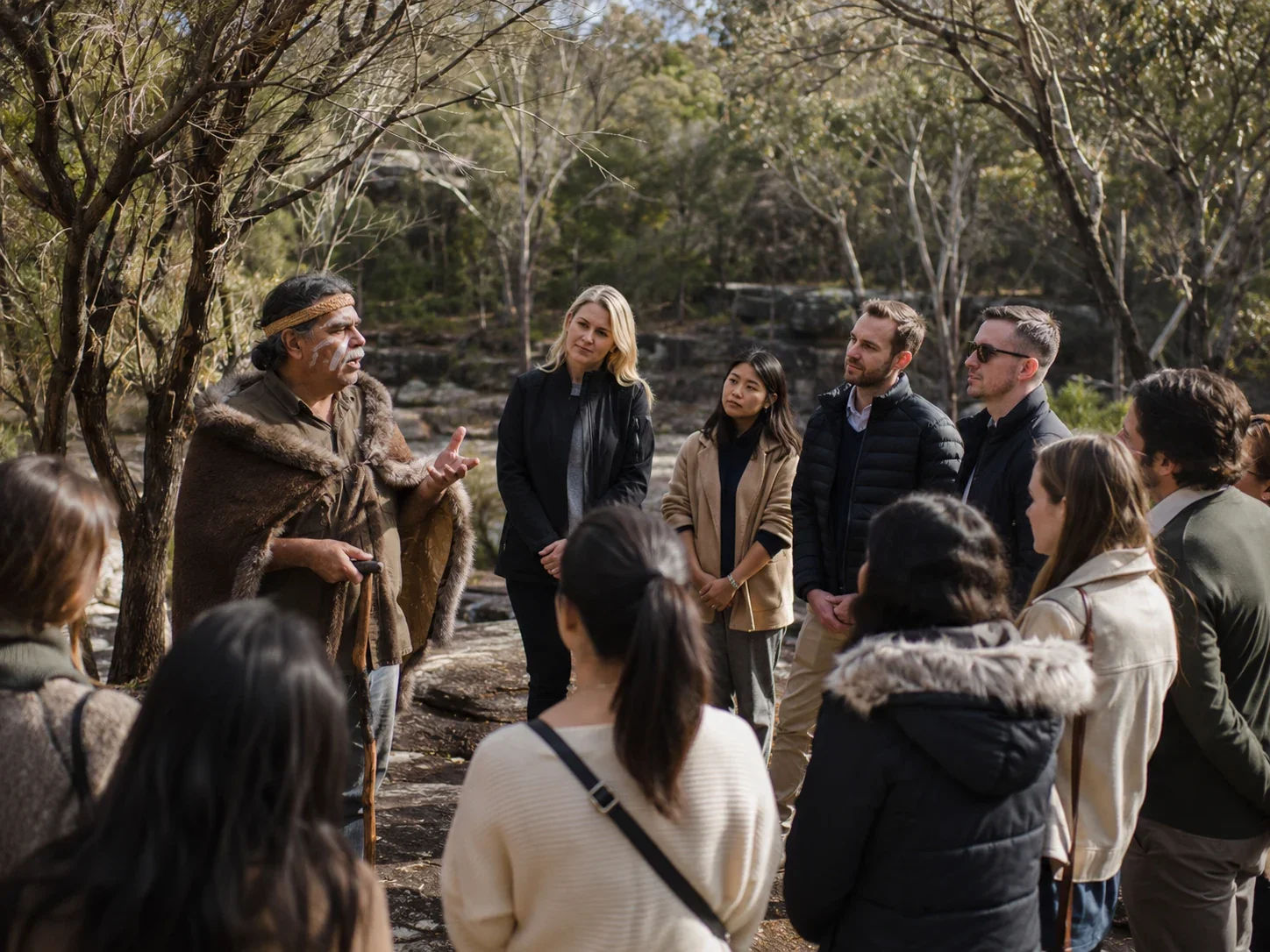
Before attending a smoking ceremony, keep this simple checklist in mind:
Arrive on time.
Dress respectfully and for the setting.
Listen to the person leading the ceremony.
Stand or move only where invited.
Take part respectfully if you are comfortable.
Step back quietly if you cannot participate for health or personal reasons.
Ask before taking photos or filming.
Keep phones silent and conversations low.
Do not touch ceremony materials unless invited.
Do not copy or self-perform the ceremony later.
Treat the ceremony as cultural protocol, not entertainment.
For many guests, the best approach is simple: listen more than you speak, observe before acting and let the person leading the ceremony guide the moment.
Accessibility, smoke sensitivity and health considerations
If you have asthma, a respiratory condition, smoke sensitivity, pregnancy-related concerns or another health need, let the organiser know before the ceremony if possible.
You may be able to stand further back, avoid walking directly through the smoke or participate in another respectful way. Organisers should also tell the person leading the ceremony about access needs before the event, so the ceremony can be planned with care.
Guests should never be pressured into taking part in a way that affects their health. Respect works both ways: respect for the ceremony and respect for the wellbeing of the people attending.
What should organisers tell guests beforehand?
Organisers should briefly prepare guests so they understand that the smoking ceremony is a cultural protocol and know how to behave respectfully.
A short guest briefing can include:
What the ceremony is: Explain that it is a cultural welcome or cleansing ceremony led by Aboriginal people with cultural authority.
How guests should behave: Ask guests to listen, stay quiet when needed and follow the leader’s guidance.
Photography rules: Tell guests to wait for permission before taking photos or filming.
Health considerations: Invite guests with smoke sensitivity or access needs to speak with the organiser before the ceremony.
Event timing: Let guests know when the ceremony will happen so they arrive on time.
Respectful language: Avoid framing the ceremony as entertainment, a performance or a symbolic add-on.
For workplaces, a smoking ceremony may sit within a broader cultural learning or team experience. Natcha’s corporate cultural experiences can help teams connect the ceremony to deeper learning about Country, respect and responsibility.
Is a smoking ceremony the same as a Welcome to Country?
No. A smoking ceremony and a Welcome to Country are related, but they are not the same.
A smoking ceremony uses smoke from native plants for cleansing, welcome and preparation. A Welcome to Country is a formal welcome onto the land of Traditional Owners. A smoking ceremony can be included as part of a Welcome to Country, but each has its own role.
AIATSIS explains that only Traditional Owners can welcome visitors to their Country, or give others authority to do so. Reconciliation Australia also explains that a Welcome to Country is delivered by Traditional Owners or Aboriginal and Torres Strait Islander people with permission, while an Acknowledgement of Country can be offered by anyone.
For guests, the protocol is the same in spirit: listen, follow the guidance and recognise that the welcome carries cultural authority.
Arranging a smoking ceremony or Welcome to Country in Sydney
If you are arranging a workplace, school, council, community or private event, the respectful path is to book a smoking ceremony through Aboriginal people with the right cultural authority.
Natcha Cultural Tours offers Smoking Ceremony and Welcome to Country experiences in Sydney, guided by First Nations knowledge holders and shaped for events, workplaces, schools and private groups. Guests are guided on the day, so they understand how to participate respectfully.
For organisers who want a broader event experience, Natcha also offers corporate cultural experiences and tailored group options. If you are still working through the right format, group size or location, you can contact Natcha Cultural Tours with your event details.
A smoking ceremony should never be treated as a box to tick. When arranged properly, it can create a meaningful opening that helps guests arrive with respect, awareness and a stronger connection to Country.
Frequently asked questions
1. What should I expect as a guest at a smoking ceremony?
As a guest, you can expect to be welcomed, guided and invited to take part respectfully. The person leading the ceremony may explain the purpose, create smoke from native plants and guide guests through or near the smoke. Your role is to listen, follow instructions and treat the ceremony with respect.
2. How long does a smoking ceremony last?
A smoking ceremony is usually a short part of a larger event, often taking several minutes. The exact length depends on the event, group size, whether a Welcome to Country is included and how the person leading the ceremony chooses to guide it.
3. Do I have to walk through the smoke?
You should walk through the smoke only if invited and if you are comfortable doing so. If you have asthma, smoke sensitivity, pregnancy-related concerns or another reason not to participate directly, you can respectfully step back or let the organiser know before the ceremony.
4. Can anyone attend a smoking ceremony?
Yes, guests can attend a smoking ceremony when they are invited as part of an event, tour, school program, workplace gathering or community occasion. Guests should follow the guidance of the person leading the ceremony and respect any instructions around participation, photography and movement.
5. Can I take photos at a smoking ceremony?
You should always ask before taking photos or filming. Some ceremonies may allow photos at certain times, while other parts may not be suitable to record. If you are unsure, do not photograph.
6. What is considered disrespectful during a smoking ceremony?
Disrespectful behaviour includes talking over the ceremony, filming without permission, entering the ceremony space without being invited, making jokes, treating the ceremony as entertainment or trying to perform your own version later. The safest approach is to listen, stay present and follow the person leading the ceremony.
7. How do I arrange a smoking ceremony for my event in Sydney?
To arrange a smoking ceremony in Sydney, contact Aboriginal people or an Aboriginal-owned operator with the right cultural authority and experience. Natcha Cultural Tours offers Smoking Ceremony and Welcome to Country experiences for workplaces, schools, community groups and private events across Sydney.
